







CHARLTON, Thomas Edward
| Service Number: | 930 |
|---|---|
| Enlisted: | 18 September 1914 |
| Last Rank: | Private |
| Last Unit: | 9th Infantry Battalion |
| Born: | Stockton, New South Wales, Australia, 21 June 1892 |
| Home Town: | Townsville, Townsville, Queensland |
| Schooling: | Not yet discovered |
| Occupation: | Miner |
| Died: | South Brisbane, Queensland, Australia, 8 October 1947, aged 55 years, cause of death not yet discovered |
| Cemetery: |
Lutwyche Cemetery, Brisbane, Qld Anzac Portion 7, Lutwyche Cemetery, Brisbane. |
| Memorials: | Mount Morgan Gold Mining Company Honour Roll |
World War 1 Service
| 18 Sep 1914: | Enlisted AIF WW1, Private, 930, 9th Infantry Battalion | |
|---|---|---|
| 24 Sep 1914: | Involvement Private, 930, 9th Infantry Battalion, --- :embarkation_roll: roll_number: '9' embarkation_place: Brisbane embarkation_ship: HMAT Omrah embarkation_ship_number: A5 public_note: '' | |
| 24 Sep 1914: | Embarked Private, 930, 9th Infantry Battalion, HMAT Omrah, Brisbane | |
| 3 Feb 1919: | Discharged AIF WW1, Private, 930, 9th Infantry Battalion, 1st MD |
Help us honour Thomas Edward Charlton's service by contributing information, stories, and images so that they can be preserved for future generations.
Add my storyBiography contributed by Evan Evans
From Australian Remembrance Army
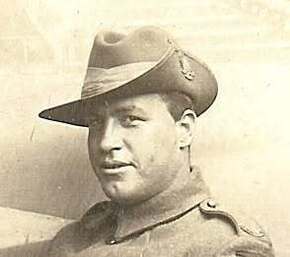
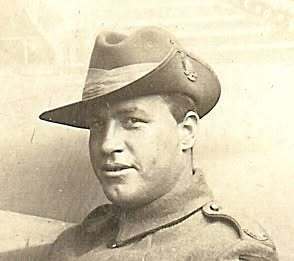
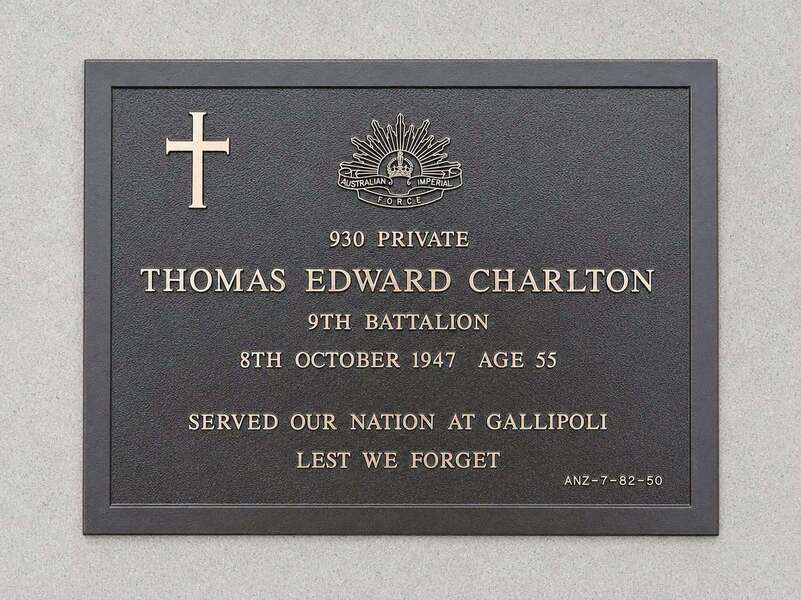
Private Thomas Edward Charlton, Service No. 930, an Australian World War One veteran who served our nation at Gallipoli, is among almost 800 previously unmarked WWI veterans’ graves in Lutwyche Cemetery we have now marked with plaques in recognition of their service for Australia.
We unveiled his plaque in Lutwyche Cemetery on 15 April 2023, along with a further 246 plaques on the previously unmarked graves of Australian World War One veterans:
See Australian Remembrance Army Facebook page
Thomas Edward Charlton was born on 21 June 1892 at Stockton, New South Wales, to Tom Charlton and Mary Ann Charlton, née Barry.
On 18 August 1914, he enlisted in the Australian Imperial Force at Townsville, Queensland. At the time of his enlistment, he was 22 years of age, single, and working as a miner. He gave his address as “Morgana,” Sturt Street, Townsville, Queensland, and nominated his mother, Mrs M. Charlton, of Canning Street, West Wallsend, New South Wales, as his next of kin. His enlistment papers recorded that he had previously served with the Catherine Hill Bay Rifle Club.
On 24 September 1914, he embarked from Brisbane, Queensland, aboard HMAT Omrah with the 9th Battalion.
His service records show that he served with the 9th Battalion during the Gallipoli campaign. In a later statement contained in his file, Charlton stated that he landed on the Gallipoli Peninsula on 25 April 1915. Character evidence later recorded in the same file stated that he had shown gallantry during the landing, taking ammunition into the firing line under heavy fire, and that he had done excellent work as a scout.
Charlton remained on Gallipoli until late October 1915. He was admitted to hospital at Gallipoli on 29 October 1915, with debility recorded. He was then transferred from Gallipoli to Lemnos and admitted to hospital there on 7 November 1915. On 23 November 1915, he embarked aboard the Minneapolis for England.
After reaching England, Charlton was admitted to Beaufort War Hospital, Fishponds, Bristol, in late November 1915. This admission followed his evacuation from Gallipoli because of sickness.
In February 1916, Charlton appeared before a Regimental Court Martial at the Australian Intermediate Depot, Abbey Wood. The proceedings recorded that he had been granted furlough from the Australian Military Office, London, from 7 December 1915 until 22 December 1915, but had failed to report at the end of that leave. He gave himself up to Sergeant Millard of the Australian Military Police in London on 8 February 1916. He pleaded guilty to being absent without leave and was sentenced to 42 days’ detention. The same proceedings recorded character evidence from Sergeant J. C. Coe, 9th Battalion, who stated that he had known Charlton for about six years, that Charlton had borne an excellent character, and that he had shown gallantry during the Gallipoli landing.
After further service in England, Charlton proceeded overseas to France, and later rejoined the 9th Battalion in the field.
In September 1917, Charlton was recorded as wounded in action, sustaining a gunshot wound to the left shoulder. Following the injury, he was treated through an Australian Field Ambulance, admitted and transferred to a casualty clearing station, moved by ambulance train, and then transferred for further hospital treatment. He was later sent to England for convalescence.
Charlton’s brother, Private Harry Charlton, Service No. 1526A, also served with the 9th Battalion, and was killed in action on 8 October 1917.
Charlton’s later records show periods at convalescent and command depots in England, including Hurdcott, Sutton Veny and Weymouth.
By September 1918, Charlton was recorded for return to Australia. His casualty forms state that he was returned because of debility and tinnitus. On 20 September 1918, he embarked for Australia aboard HT Barambah. He disembarked in Australia on 8 October 1918 and was discharged from the Australian Imperial Force on 3 January 1919.
After the war, Thomas Edward Charlton was recorded living at Swansea, near Newcastle, New South Wales. On 14 March 1933, he married Ellen May Godfrey at Newcastle, New South Wales. Their son, was born later that year.
In June 1935, Charlton made a statutory declaration stating that his original discharge papers had been lost. He gave his address as care of the Post Office, Swansea, Newcastle, New South Wales, and confirmed his wartime service.
By 1943, Charlton was recorded as living at South Brisbane.
Private Thomas Edward Charlton died on 8 October 1947, aged 55, and was buried in Anzac Portion 7, Lutwyche Cemetery, Brisbane.
After decades without recognition at his place of burial, his grave now bears a plaque commemorating his service to Australia — ensuring his name endures among those remembered for their duty and sacrifice.
His identity and dignity have now been restored.
We have remembered him.
Lest We Forget
Click images to start slideshow.