







BAYLEY, John Thomas
| Service Number: | 5979 |
|---|---|
| Enlisted: | 11 March 1916 |
| Last Rank: | Private |
| Last Unit: | 15th Infantry Battalion |
| Born: | Maryborough, Queensland, Australia, 11 September 1897 |
| Home Town: | Maryborough, Fraser Coast, Queensland |
| Schooling: | Not yet discovered |
| Occupation: | Assistant storeman |
| Died: | Brisbane, Queensland, Australia, 25 August 1975, aged 77 years, cause of death not yet discovered |
| Cemetery: |
Mount Thompson Memorial Gardens & Crematorium, Queensland Plot Columbarium 3, Section 11 |
| Memorials: | Ballarat Australian Ex-Prisoners of War Memorial, Maryborough City Hall Honour Roll, Maryborough Granville War Memorial |
World War 1 Service
| 11 Mar 1916: | Enlisted AIF WW1, Private, 5979, 15th Infantry Battalion | |
|---|---|---|
| 8 Aug 1916: | Involvement Private, 5979, 15th Infantry Battalion, --- :embarkation_roll: roll_number: '11' embarkation_place: Brisbane embarkation_ship: HMAT Itonus embarkation_ship_number: A50 public_note: '' | |
| 8 Aug 1916: | Embarked Private, 5979, 15th Infantry Battalion, HMAT Itonus, Brisbane |
Help us honour John Thomas Bayley's service by contributing information, stories, and images so that they can be preserved for future generations.
Add my storyBiography contributed by Stephen Brooks
John Thomas Bayley took part raid on 1 February 1917, near Gueudecourt, when the 15th Battalion attacked a section of the German front line known as Stormy Trench. The party consisted of 150 men and six officers, or one and half companies. The attack started at about 7.00 p.m. on a frontage of 500 metres. Although the enemy trenches were only 100 metres from the Australian lines, inadequate artillery support caused the attack to fail. A German counter attack at 11 p.m. was beaten off. In the face of relentless German shelling of the captured trenches, and a stronger German counter attack at 4.30 a.m. the Battalion was forced to retire. Although 52 German soldiers were captured, the 15th Battalion’s casualties were 38 men killed, over 20 captured by the Germans and over 80 wounded.
John was one of the men captured by the Germans, badly wounded in the left leg by bomb fragments. The Germans sent a form through, dated 11 days after his capture, stating he was in a Cambrai Military Hospital, with grenade shrapnel injuries to his left hip, lower leg and left ankle. Born in September 1897, he was only 19 years of age.
During August 1917 he was interned at Stettin, Germany, and on 27 December 1917 he was transferred to Switzerland for internment. He wrote to his parents in July 1918 saying he had undergone a successful operation in Switzerland to repair his leg. He arrived back in England around Christmas 1918 and was returned to Australia in March 1919.
John married during 1921 and raised a daughter. He lived at Maryborough in Queensland for much of his life, passing away in 1975.
The following article was published in the Maryborough Chronicle, 10 May 1919, under the heading “A PRISONER OF WAR. EXPERIENCES OF PRIVATE J. BAYLEY. AN INTERESTING CHAT.”
Private J. Bayley, son of Mr. and Mrs. J. Bayley, highly-respected residents of Granville, returned to his home a few days ago. When approached yesterday he reluctantly gave a representative of this paper a brief outline of his experiences as a prisoner of war. Attached to the 15th Battalion, he left his native land for the seat oi war in August. 1916, and his experience were much the same as other 'Aussie' volunteers until February, 1917. After nine days in the front line, however, his fortune changed, and he was destined to be a prisoner of war for many weary months. At seven o'clock at night on February 1st he said, 'we hopped over the top and captured some German trenches at Gueudecourt. Severe fighting followed all night and at about daybreak on the following day the Huns made a determined counter-attack and captured portion of our trench. A shrapnel shell burst near me, and I took the count with twelve wounds about the left leg and thigh. (One wound has left an ugly scar about a foot long on the calf of his leg).
Within two minutes of being wounded I was in the hands of the German bombers, who carried me along their trenches and put me down in a German dug-out. I afterwards learned about 20 other Australians were taken at the same time. There I remained for a day and a night, the only attention my injuries receiving being a bandage that I wrapped round my leg. The Germans took no further notice of me than offering me a cup of coffee. Next morning I was picked up by some German stretcher-bearers, and at night reached a dressing station. My wounds were dressed, and I was given something to eat — the first nourishment since I was wounded. My next journey took me to Bapaume, and there I was searched and my money and all my private property were taken from me. the only article that was later returned being a prayer book. I was next taken hy car to Douai, in company with three other Australian prisoners, and after a day's stay there we were removed to Cambrai. We were two days there. One day a little Belgian boy came along and gave me some tobacco and paper, and I made a cigarette which- I was smoking in bed when a member of the German Red Cross came along, took the cigarette from me and hit me a couple, of times on the head with his hand. We were next put on a Red Cross train and sent to Germany. During the journey we were struck by the kindness of a German Red Cross lady who supplied us with cigarettes every morning.
Our food was about as good as one could expect, and was principally boiled fruit. Our destination was Stettin, which we reached on February 12th, and we were taken to a German hospital and placed under the care of a Russian doctor. My wounds were dressed for the first time for eight days and blood poisoning had set in. The doctor treated us well and the Germans never interfered. I was three months in bed, my diet being mostly barley water. The next three months I spent on crutches. One day a German officer came along and spoke to me. I took no notice of him at first, and when he addressed me again, I laughed at him. With that he hit me across the head with his hand. I lost my balance and fell to the ground, when he followed up his attack by kicking me. I got up again and went to the barrack, when the officer came along and gave me another shove and over I went again. On another occasion I was experimenting with a thermometer which the Russian doctor had given me and accidentally broke it. I was ordered to pay ‘3 marks 50' (about 3/6). We were next shifted to Elysieum Hospital, about, six miles from Stettin. Our food was mostly barley and coffee made from burnt chestnuts. But the Red Cross parcels — a God send to prisoners of war — now began to arrive regularly and we could afford to refuse the German rations which at this stage were not fit for pigs.
On 4th August, at Mannheim, I was examined by a German doctor for an exchange of prisoners, and later in the month Swiss and German doctors passed us for exchange. While at Mannheim we had the satisfaction of seeing — on Christmas Eve — 17 of our aircraft bombing the town and they did great amount of damage to the chemical works and the ammunition factories.
On December 26th we arrived at Switzerland and what a welcome we received! The Swiss people flocked around our carriage and treated us to chocolates and sandwiches and all sorts of good things. We went to Murren, a picturesque holiday resort in the Alps, 5500 feet above sea level. Here we indulged in all sorts of winter sports, including skating and tobogganing. We stayed there till August, end then went to Vevy on Lake Geneva for a course of mechanical instruction. Altogether we were about twelve months in Switzerland. Private Bayley spoke enthusiastically of the magnificent scenery of Switzerland and the kindly treatment to soldiers received while in that country. He arrived in England on December 23, 1918. and after a short stay in the King George's Hospital set out for his homeland.”
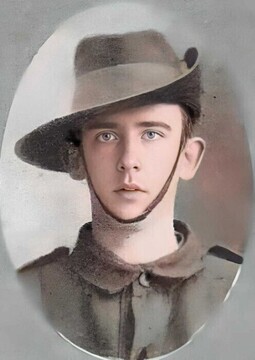
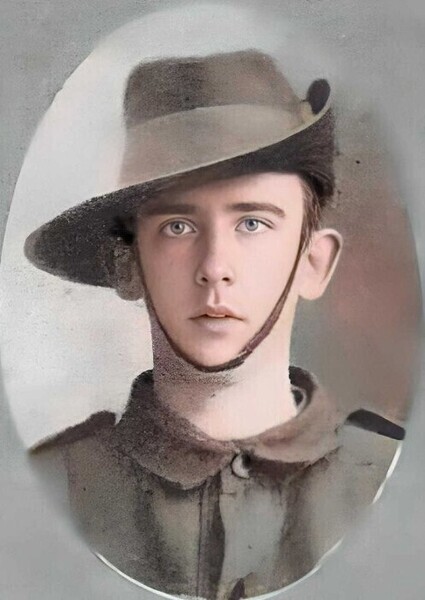
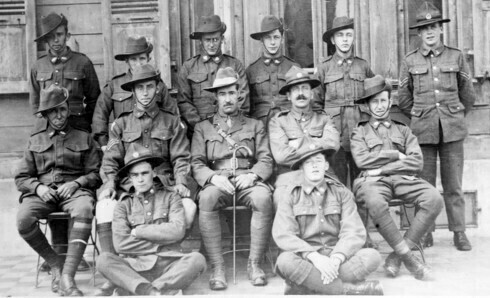

Click images to start slideshow.