



EGAN, Michael James
| Service Number: | 2983 |
|---|---|
| Enlisted: | 1 August 1916 |
| Last Rank: | Private |
| Last Unit: | 47th Infantry Battalion |
| Born: | Cumnock, New South Wales, 27 April 1887 |
| Home Town: | Alstonville, Northern Rivers, New South Wales |
| Schooling: | Not yet discovered |
| Occupation: | Carter |
| Died: | Cancer of the Larynx, Murwillumbah Hospital, 17 April 1962, aged 74 years |
| Cemetery: |
Murwillumbah Catholic Cemetery, NSW |
| Memorials: | Nimbin District War Memorial |
World War 1 Service
| 1 Aug 1916: | Enlisted AIF WW1, Private, 2983 | |
|---|---|---|
| 27 Oct 1916: | Involvement Private, 2983, 47th Infantry Battalion, --- :embarkation_roll: roll_number: '19' embarkation_place: Brisbane embarkation_ship: HMAT Marathon embarkation_ship_number: A74 public_note: '' | |
| 27 Oct 1916: | Embarked Private, 2983, 47th Infantry Battalion, HMAT Marathon, Brisbane | |
| 5 Jan 1920: | Discharged AIF WW1, Private, 2983 |
Help us honour Michael James Egan's service by contributing information, stories, and images so that they can be preserved for future generations.
Add my storyBiography contributed by St Ignatius' College
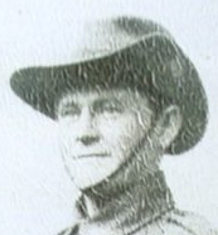
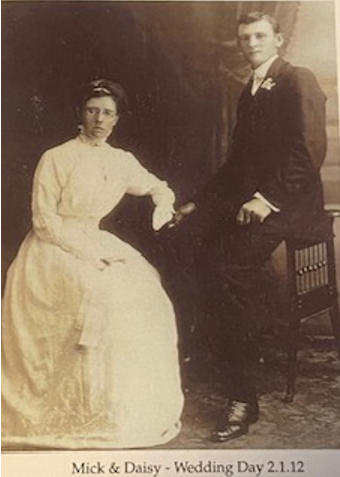
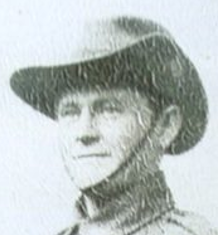
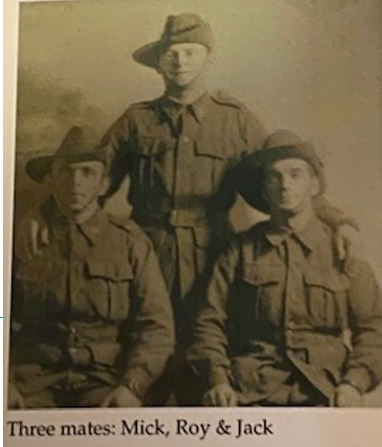
Michael James “Mick” Egan was born in May 1887 27 April. He grew up in rural New South Wales, the grandson of an Irish immigrant, and spent his working life as a Carter and smallscale Farmer prior to the war. He married Daisy Elizabeth Cudby in 1912 and by 1916 they had two sons, Jim and Jack. On 1 August 1916 Mick walked into the recruiting office at Lismore and enlisted in the Australian Imperial Force. He went to Bells Paddock for initial training, then embarked for England aboard the troopship Marathon and continued training at Codford.
Codford training camp was cold and muddy. Mick’s notes and family stories recall influenza sweeping through the huts and men waiting in line for treatment. He caught influenza there himself and later wrote that the time in camp dragged on, drill, kit inspections, route marches and the hope of a letter from Daisy.
Training taught him the basic soldiering — marching, handling equipment, loading wagons and working as part of a team — things he could use later when moving stores and ammunition in the line.
After training he was posted to the 47th Infantry Battalion, 7th Reinforcement. As a private he did the everyday work that kept a battalion running: bringing rations and water to forward posts, driving supply wagons, standing watch in the parapet and helping bury the dead when the duty was needed. The 47th saw hard fighting on the Western Front. Mick was at the Ypres sector and fought through First Passchendaele and Polygon Wood. He described the mud of Passchendaele, the way the rain turned fields into sucking clay, and the noise of the guns that never really stopped. In his diary fragments he wrote terrifying notes about men killed by high‑explosives and shrapnel; his short lines home mask the trauma of seeing such horrors.
On 26 September 1917 a shell hit him at Ypres and badly wounded his left foot. He was evacuated through clearing stations and sent back to England to Southwark Military Hospital and then Dartford. The recovery was slow and frustrating. He spent weeks under dressings, was on and off a walking stick, and had time in London on furlough later in December while the 47th was broken up to give reinforcements to other units. That separation from his mates and the slow recovery gave him time to think about and write home to the family he had left behind.
In January 1918, once fit again, Mick underwent 3 months of training in Grantham UK, where he was later transferred to the 4th Machine Gun Battalion. Machine gun battalions were formed to strengthen firepower in support of the infantry; crews were trained on the Vickers, Lewis and Maxim machine guns. Mick learned how to set up a gun, keep it fed with ammunition and fire it in support of attacks or to stop enemy advances. He also did the less glorified but still vital work: laying water pipes, digging support trenches and cutting wire so advancing infantry could get through.
The fighting in 1918 was fierce. The German Spring Offensive tested the Allied lines and later the Allied Hundred Days Offensive pushed the enemy back. Mick served at Villers‑Bretonneux and in the woodlands near Hangard with his machine gun. At the recapture of Villers‑Bretonneux he was likely exposed to gas and was admitted with pyrexia fever in late May 1918. He picked up a septic foot in June and, in August at Hangard Wood, he received another shell wound to his right leg on 8 August. Each time he was sent to a clearing station or convalescent depot and then returned to duty when he could. Service records show he returned to work as a driver on 7 September 1918, a role that used his pre-war civilian skills and helped move guns and supplies under fire.
Mick’s letters and the memories of those who knew him showed him as a very calm, practical man. He disliked the constant noise of gunfire, the mud that ruined boots and the smell of cordite. He loved letters from Daisy, the comforts of a hot meal and being around his battalion members. He did not seek glory; he wanted to do his job, keep his mates alive when he could, and come home to his family.
He sailed for Australia on the Swakopmund troop ship in August 1919 and was discharged in Brisbane. Back home he worked for the local council, ran a cream‑carting business and in 1921 bought the Tweed area’s first motor lorry. The roads and economy made that business hard, so he later bought a 400‑acre dairy farm at Doon Doon in 1927 and raised a larger family: Ray, Joan, Bob and Wal joined Jim and the younger of the two Jack, who tragically died during WWII at a POW camp in Changi, Singapore. The war left lasting marks: wounds that never completely healed and the habits of a man who had learned how fragile life could be. In the early 1960s he was diagnosed with cancer, moved closer to his son Jim, and died in 1962 at the age of 75.
Bibliography
· NAA_ItemNumber3536068.pdf
· Australian War Memorial (2025a). AWM4 Subclass 24/4 - 4th Australian Machine Gun Battalion. [online] Awm.gov.au. Available at: https://www.awm.gov.au/collection/C1339216 [Accessed 9 Sep. 2025].
· Australian War Memorial (2025b). Private Michael James Egan. [online] Awm.gov.au. Available at: https://www.awm.gov.au/collection/P11030839 [Accessed 7 Sep. 2025].
· Egan, M.J. (2011). The World War One Diary of Michael James Egan.
· The AIF Project (2025). Details. [online] Adfa.edu.au. Available at: https://aif.adfa.edu.au/showPerson?pid=89625 [Accessed 8 Sep. 2025].
· Virtual War Memorial Australia and Larkins, S. (2024). 4th Machine Gun Battalion. [online] Tt123.com.au. Available at: https://vwma.tt123.com.au/explore/units/516 [Accessed 12 Sep. 2025].
· Australian War Memorial 2021, 1918 - Dernancourt and Villers-Bretonneux: Halting the Germans | The Australian War Memorial, www.awm.gov.au.
· AWM London n.d., Polygon Wood: ‘Roar of a Gippsland Bushfire’, Australian War Memorial, London.
· City of Paramatta Research Collections 2018, Sergeant Barber, Battle Of Hangard Wood, Villers-Bretonneux, France, April 1918 | Parramatta History and Heritage, Nsw.gov.au, viewed 12 September 2025, <https://historyandheritage.cityofparramatta.nsw.gov.au/blog/2018/04/09/sergeant-barber-battle-of-hangard-wood-villers-bretonneux-france-april-1918>.
· Sir John Monash Centre 2018, The Battle of Villers-Bretonneux, Sir John Monash Centre.
· Wikipedia 2021, Battle of Polygon Wood, Wikipedia.
· Wikipedia Contributors 2019, First Battle of Passchendaele, Wikipedia, Wikimedia Foundation.
Additionally, Copilot AI was used to transcribe unreadable documents.
Click images to start slideshow.