





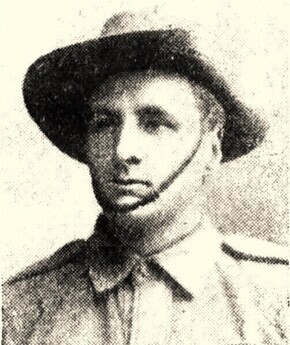
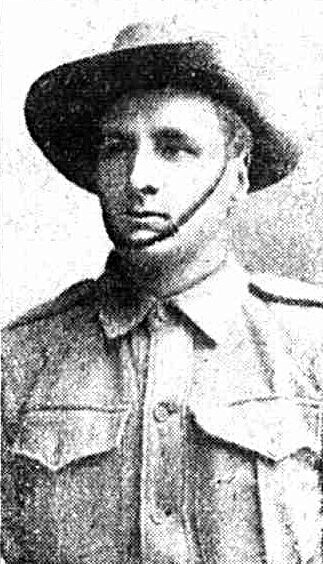
NELSON, Albert Horace
| Service Number: | 890 |
|---|---|
| Enlisted: | 26 September 1914, Rosehill Camp, New South Wales |
| Last Rank: | Corporal |
| Last Unit: | 13th Infantry Battalion |
| Born: | Trafalgar Park, near Salisbury, Wiltshire, England, 2 September 1890 |
| Home Town: | Petersham, Marrickville, New South Wales |
| Schooling: | Downside School, Somerset, England and Maredsous Abbey, Belgium |
| Occupation: | Station Overseer |
| Died: | Natural causes, Dunsfold, Surrey, England, 23 June 1957, aged 66 years |
| Cemetery: | Not yet discovered |
| Memorials: |
World War 1 Service
| 26 Sep 1914: | Enlisted AIF WW1, Private, 890, 13th Infantry Battalion, Rosehill Camp, New South Wales | |
|---|---|---|
| 22 Dec 1914: | Involvement Private, 890, 13th Infantry Battalion, --- :embarkation_roll: roll_number: '11' embarkation_place: Melbourne embarkation_ship: HMAT Ulysses embarkation_ship_number: A38 public_note: '' | |
| 22 Dec 1914: | Embarked Private, 890, 13th Infantry Battalion, HMAT Ulysses, Melbourne | |
| 25 Apr 1915: | Involvement AIF WW1, Private, 890, 13th Infantry Battalion, ANZAC / Gallipoli | |
| 3 May 1915: | Wounded AIF WW1, Private, 890, 13th Infantry Battalion, ANZAC / Gallipoli, GSW arm | |
| 3 Sep 1919: | Discharged AIF WW1, Corporal, 890, 13th Infantry Battalion, England, Medically unfit |
Help us honour Albert Horace Nelson's service by contributing information, stories, and images so that they can be preserved for future generations.
Add my storyBiography contributed by Michael Silver
6th Earl Nelson of Trafalgar and Merton in Surrey, 7th Viscount Merton, 8th Baron of the Nile and Hillsborough in Norfolk
Albert Francis Joseph Horatio Nelson was born on 2 September 1890 at Trafalgar House, Salisbury. He was the oldest son of The Hon. Edward Nelson, who later succeeded as the 5th Earl Nelson in 1948, and Geraldine Cave; he was educated at Downside School, Somerset and Maredsous Abbey, Belgium. He was the great-great grandnephew of Admiral Horatio Nelson, 1st Viscount Nelson and hero of the Battle of Trafalgar.
An adventurous character, he started rubber planting in Malaya in his early twenties and later had various jobs in Australia including gold prospecting and pearl fishing, admitting pearl fishing was not an outstanding success but managed to ‘rub along’. A strongly built man, he enlisted as Albert Horace Nelson in the Australian Imperial Force whilst working as a station overseer at the outbreak of war in 1914. He was part of the landing at Gallipoli with the 13th Battalion AIF, where he was wounded. Later he was assessed as having a hearing impairment and assigned to home service in England where he was later discharged.
Two of his brothers also enlisted in the A.I.F. Henry Nelson, the 7th Earl Nelson served with the Australian Naval and Military Expeditionary Force early in the war, whilst Charles Sebastian Joseph Horation Nelson joined under the alias Joseph Cooke and was assigned to the 20th Battalion.
In later life Albert Nelson was a mining engineer and also a lecturer in astronomy and anthropology, being appointed Fellow of the Royal Astronomical Society (FRAS), Fellow of the Royal Geographical Society (FRGS) and Fellow of the Royal Society of Arts (FRSA). He authored two books: Life in the Universe (1953), and There is Life on Mars (1955). Through his interests in astronomy he became personally associated with American astronomer Edwin Hubble.
On 16 January 1924, he married Amelia Cooper (died 1937), a Californian and widow of John C. Scott. They were divorced in 1925. In 1927, he married Marguerite Helen O'Sullivan (died 6 February 1969) in Scotland. They were married again in England in 1942.
Albert Francis Joseph Horatio Nelson assumed the title of 6th Earl Nelson of Trafalgar and Merton in Surrey, 7th Viscount Merton, 8th Baron of the Nile and Hillsborough in Norfolk following the death of his 90 year old father in 1951.
The story of the collateral relatives of the great Admiral Horatio Nelson and their succession to the Nelson titles is rather extraordinary.
Admiral Nelson and his wife, Frances "Fanny" Nisbet were estranged, and he left no legitimate heir. But he was passionately attached to the famous Emma, Lady Hamilton (nee Amy Lyon), who lived with him as “housekeeper”, and she had a daughter, Horatia, by him in January 1801.
Nelson was killed on 21 October 1805 off Cape Trafalgar, Spain. Since he died without legitimate issue, his viscountcy and his barony created in 1798, both "of the Nile and of Burnham Thorpe in the County of Norfolk", became extinct upon his death. However, the barony created in 1801, "of the Nile and of Hilborough in the County of Norfolk", passed by a special remainder, which included Nelson's father and sisters and their male issue.
In November 1805, Nelson’s oldest brother Reverend William Nelson was created by George III, Earl Nelson and Viscount Merton, of Trafalgar and of Merton in the County of Surrey, in recognition of his late brother's services. Parliament granted a lump sum of £99,000 (£100 million at today's property values) for a stately home – Trafalgar House, near Salisbury. The House of Commons also awarded a fitting annual pension of £5,000, to last for as long as there were Lords Nelson.
The payment of the annuity to the Lords Nelson caused ongoing controversy in the British parliament from the mid-1880s, shortly after the end of World War I and again before and after World War II. When the first Earl, Reverend William Nelson, died without surviving male issue, his Earldom and his pension passed to his nephew, Thomas Bolton, the son of his sister Susannah. The second Earl was paternally a Bolton, and not a Nelson. Despite calls for the annuity to be commuted to a lump sum, all subsequent Earls drew the £5000 annual pension, despite not having anything to do with Admiral Nelson's victories or his service.
The election of Clement Attlee’s government in 1945 resulted in the passing of the “Trafalgar Estates Act” in 1947, which removed the pension but allowed the family to keep Trafalgar House – the house however was sold in 1948 to pay death taxes following the death of the 4th Earl the previous year. With the death of Albert's father, the 5th Earl in 1951 the family annuity of £5,000 ceased.
In 1952, Albert Nelson, now the 6th Earl, sought the assistance of British Prime Minister, Sir William Churchill for help over what he called "the greatest breach of faith ever perpetrated by any British government". Albert claimed that there had been a pledge in Parliament that the estate would escape full death duties, according to the custom that such gifts to military heroes were exempt. He noted that tax in 1951, after the 5th Earl's death, had "meant the virtual confiscation of almost all the Nelson fortune".
Churchill referred the matter to the civil servants. His private secretary eventually writing to the Earl to say that, although sympathetic, Sir Winston could not introduce retrospective legislation.
After selling his home ‘Normanswood’ at Farnham, Surrey in 1951 due to the increasing financial pressures, Albert Francis Joseph Horatio Nelson, 6th Earl Nelson spent his later years near Dunsfold, Surrey at his residence he called ‘Merton Place’ – a reflection to Admiral Horatio Nelson’s final residence in London.
Albert died childless in 1957 and was succeeded by his brother Henry Edward Joseph Horatio Nelson, 7th Earl Nelson, a tea planter of Madeira, Portugal.
References:
https://en.wikipedia.org/wiki/Albert_Nelson,_6th_Earl_Nelson
http://nla.gov.au/nla.news-article2701006
https://www.allabouthistory.co.uk/History/England/Thing/Earl-Nelson-of-Trafalgar-and-Merson-in-Surrey.html?hdg3g2EF
https://www.nytimes.com/1956/02/12/archives/nelson-heir-asks-a-lump-payment-government-weighs-appeal-for-award.html
https://www.legislation.gov.uk/ukpga/Geo6/10-11/34/enacted
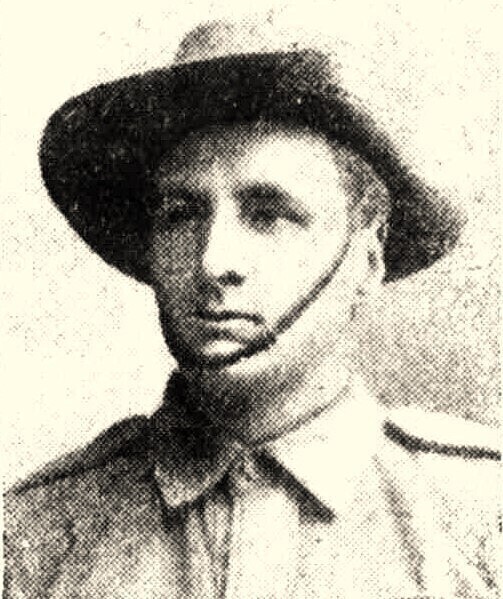
Click images to start slideshow.