







SPENCE, Colin John
| Service Number: | NX33552 |
|---|---|
| Enlisted: | 2 July 1940 |
| Last Rank: | Private |
| Last Unit: | 2nd/18th Infantry Battalion |
| Born: | West Taieri, New Zealand , 1 April 1912 |
| Home Town: | Longueville, Lane Cove, New South Wales |
| Schooling: | Not yet discovered |
| Occupation: | Teacher |
| Died: | Forster, New South Wales, Australia, 12 November 2005, aged 93 years, cause of death not yet discovered |
| Cemetery: |
Gloucester General Cemetery, New South Wales, Australia |
| Memorials: | Armidale Teachers' College WW2 Roll of Honour |
World War 2 Service
| 2 Jul 1940: | Enlisted Australian Military Forces (WW2) , Private, NX33552, 2nd/18th Infantry Battalion | |
|---|---|---|
| 23 Oct 1942: | Discharged Australian Military Forces (WW2) , Private, NX33552, 2nd/18th Infantry Battalion |
Help us honour Colin John Spence's service by contributing information, stories, and images so that they can be preserved for future generations.
Add my storyBiography contributed
Australian War Memorial - Accession Number REL35500.001
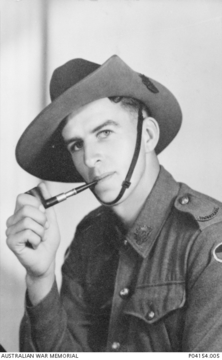
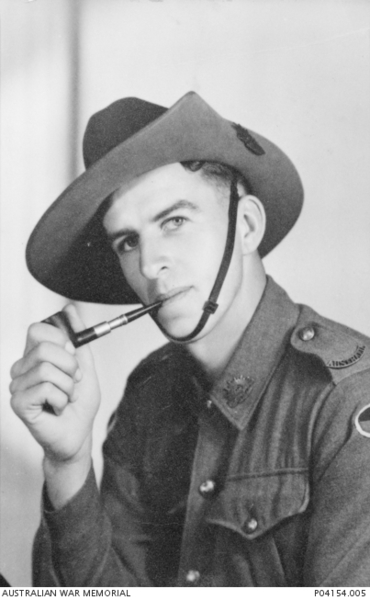
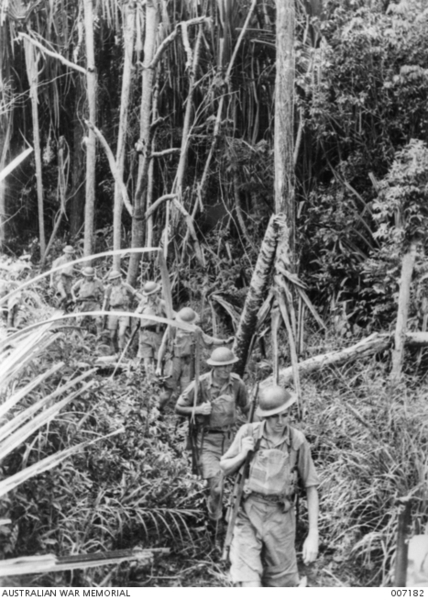
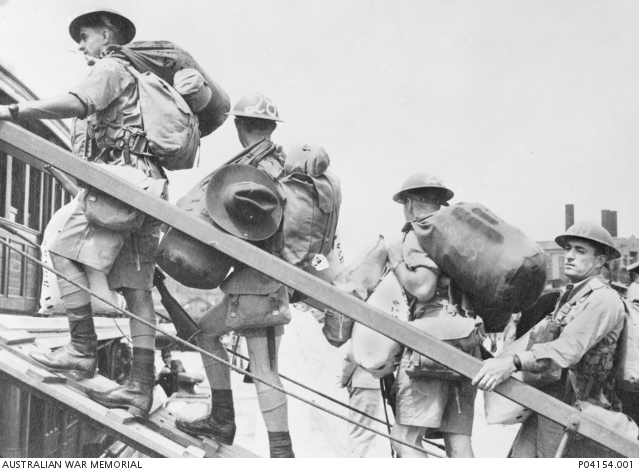
Colin John Spence was born in West Taier, New Zealand, in April 1912, and arrived in Australia as a young man. He was employed as a school teacher at Gloucester, NSW before joining the AIF in July 1940. Allocated the service number NX33552, he was posted to 2/18 Infantry Battalion, part of the 8th Australian Division, which was sent to Malaya in early 1941. Following the Japanese invasion in December, the battalion was deployed on the eastern side of the Malayan peninsula, and successfully ambushed the advancing Japanese 55th Infantry Regiment on the Mersing-Jemaluang road on the night of 26-27 January 1942. For his leadership and gallantry in the Jemaluang action, Spence was later awarded the Distinguished Conduct Medal (DCM), but was also severely injured by a sword blow, the wound running from his right shoulder to left waist. He recalled that, at the time, the sensation felt similar to being struck across the back with a length of bamboo, and that he experienced no particular discomfort until he saw the expressions on the faces of his colleagues.
The citation for the award of the DCM reads as follows: 'On the night of the 26th/27th January, 1942, during AIF operations in Malaya, the 2/18th Battalion, AIF, was holding portion of the Mersing-Jemaluang Road. The Platoon to which Pte C J Spence belonged was in position on a knoll near the Waterworks Road, with his section covering the main road. When the enemy was engaged, the Section Commander was killed and Pte Spence took charge. His initiative and leadership of the section resulted in the enemy (about one platoon) being repulsed. The enemy officer rallied the platoon and again attacked Spence's section. Spence gallantly led his section, although outnumbered three to one. The enemy officer surprised Spence, inflicting a sword slash from shoulder to hip necessitating approximately 150 stitches. Despite his severe wound, Spence killed the officer and, by directing the fire and movement of his section, repelled the attack successfully and inflicted heavy casualties on the enemy. Weakening rapidly from loss of blood, he ordered the movement of his section to a better position, to which they carried him. His feat of courage and leadership was outstanding.'
Evacuated to Singapore, he was operated on at 2/10 Australian General Hospital the following day by Lieutenant Colonel (later Sir) Albert Coates. In early February, just before the surrender of Singapore, Spence was evacuated to Australia with 100 others aboard an Indian ship. Owing to the serious nature of his wound, and the time needed for it to heal, he was discharged from the Army in October 1942, and resumed his career as a teacher. He worked in coastal areas for many years; since it was thought that sea bathing would assist the healing process.
Col Spence died at Forster, NSW in November 2005, aged 93.
Click images to start slideshow.