







SIM, Francis Broadley
| Service Number: | NX33808 |
|---|---|
| Enlisted: | 20 July 1940 |
| Last Rank: | Sergeant |
| Last Unit: | 2nd/4th Field Park Company |
| Born: | Arncliffe, New South Wales, Australia, 6 November 1917 |
| Home Town: | Arncliffe, Rockdale, New South Wales |
| Schooling: | Not yet discovered |
| Occupation: | Storeman |
| Died: | Natural Causes, New South Wales, Australia, 24 November 1999, aged 82 years |
| Cemetery: |
Woronora Memorial Park, Sutherland, New South Wales Henry Kendal Rose Garden 4 #035 |
| Memorials: |
World War 2 Service
| 20 Jul 1940: | Enlisted Australian Military Forces (WW2) , Private, NX33808, Royal Australian Engineers | |
|---|---|---|
| 1 Aug 1940: | Transferred Australian Military Forces (WW2) , Sapper, Field Park Company/ies | |
| 10 Apr 1941: | Involvement Australian Military Forces (WW2) , Sergeant, NX33808, 2nd/4th Field Park Company, Siege of Tobruk | |
| 4 Sep 1943: | Involvement Australian Military Forces (WW2) , Sergeant, NX33808, 2nd/4th Field Park Company, New Guinea - Huon Peninsula / Markham and Ramu Valley /Finisterre Ranges Campaigns | |
| 13 Sep 1945: | Discharged Australian Military Forces (WW2) , Sergeant, NX33808 |
Help us honour Francis Broadley Sim's service by contributing information, stories, and images so that they can be preserved for future generations.
Add my storyBiography contributed by Steve Larkins
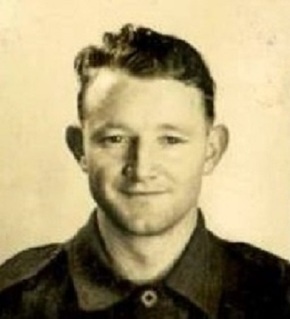
John Broadley SIM (1917-1999)
ONE MAN’S WAR
Frank was born in November, 1917, the son of a Scots/Australian stonemason who had himself served in the First AIF.
Like many young men at that time, Frank left school at 14 yo because the Great Depression had deprived many adults of work and youngsters of the time needed to help support their families.
The call for volunteers for the part-time militia, was answered by Frank, along with many others. At that time, his unit was still known as the Light Horse, although it became increasingly mechanised between the wars.
When war was declared by Great Britain on Germany in response to their invasion of Poland, on 3rd September, 1939, and immediately thereafter by Australia, Frank was at a Light Horse training camp at Albion Park on the south coast of NSW.
Frank, who had obtained his Driver’s Licence at the ripe old age of 14, was immediately assigned to drive the most senior officer visiting the camp back to Sydney forthwith.
According to Frank throughout that drive, this General kept encouraging him to enlist along with him when they arrived. Frank resisted, thinking this was something he really should discuss with his family first.
When the General re-emerged after formally enlisting he said: “You see Sim …..NX1. You could have been NX2”.
Instead Frank became NX33808 when he enlisted on 20th July, 1940.
He was originally posted to Liverpool, then Ingleburn and appointed Acting Corporal in September and Acting Sergeant in November.
By the time of his Pre-Embarkation Leave in late November, 1940 he was part of the 2nd /4th Field Park Company of the 9th Division Engineers; a “sapper”.
Frank was already courting his sweetheart Eva Paterson, who was to become his wife . His marriage was duly annotated on his service record.
So when it came time to depart for the Middle East, Eva was there to farewell him. And I’m sure some people here can remember that back in those more relaxed times, it was common for farewells to take place on board the ship rather than on the shore.
But neither Frank nor Eva heard the “All Ashore” horn so Eva was still on board as the Queen Mary weighed anchor and made its way majestically down Sydney Harbour. Both were mortified when Eva had to be “piped off” with the Admiral and returned to shore on the Admiral’s barge.
Meanwhile he had enjoyed rapid progression through the ranks successively promoted to Corporal in September and Sergeant the following month.
Frank suffered terribly from sea-sickness, so the journey to the Middle East from Australia, was not a comfortable one for him. His unit was destined to join the 9th Division Engineer, commanded by Major General Lelie Morsehead.
So, by the end of 1940 Frank was on his way to the Middle East/North Africa as a Sergeant in the 9th Division Engineers. When the Afrik a Korps advanced relentlessly eastwards, the 9th Division was tasked to defend the port of Tobruk. For 7months from April 1941 - November 1941 he was one of the fabled “Rats of Tobruk”.
Indeed, Frank was one of the Engineers who wired and blew up the concrete bridge leading to Tobruk which started the siege.
The end of the Siege of Tobruk did not mean the end of Frank’s war, of course, and he went from there to the second battle of El Alamein. This was where Rommel’s forces (the so-called “Desert Fox”) were defeated for the first time and Churchill famously said: “Before Alamein we never had a victory; after Alamein we never had a defeat”.
Whilst never mentioned in despatches, Frank was written up in The Army News in a report dated Monday16th November, 1942 headlined as
“TWO DIGGERS. 800 GERMANS AND ITALIANS” which reads as follows:
“The full facts of how two Australians, of the Ninth Division, captured, without aid, more than 800 prisoners in the Western Desert in the Eighth Army’s victorious drive, were released in Cairo yesterday.
The men were Sergeant Frank Sim of Sydney, armed with a revolver, and Lance Corporal Harry Spearman, of Mosman, Sydney, armed with a rifle.
They were clearing a road of derelict vehicles when two Germans poked their heads over a ridge. Sim said “You go on with the job and I’ll go and get those two”. He went and got them. Then Spearman and Sim saw 20 more Germans coming from a hut. They both went and got them. Two more were lying in the grass nearby. Spearman fired a few rounds after them and they came running towards the Australians.
After sending the prisoners away in trucks, Sim and Spearman were told there were more hiding behind a ridge. Spearman said “There must have been 800 altogether. All I could see were Italians with Frank running round in the middle of them. They could have eaten us alive if they wished.
We thought the best thing was to load about 250 in 25 trucks and send them down the road. The trucks were also loaded with ammunition, machine guns and anti-tank guns.
“We formed up the remainder and made them march to the prison camp.”
…….One can only assume those 800 men were very keen to surrender.
In January, 1943 Frank was headed home via Suez, disembarking in Sydney on 21st February, 1943.
He obviously popped the question to his sweetheart Eva pretty soon after his arrival because they were married on 13th March, just 3 weeks later.
But Frank’s war was not yet done. He attended a bomb disposal course at Wagga Wagga before being sent to Port Moresby. He took part in the Battle of Finschaffen in September and October, 1943. There on the beach in Finschaffen he ran into his brother Arch who was with the 7th Division. It was the first time they had seen each other since the war began.
Frank was almost captured by the Japanese but was saved by a soldier by the name of Keith Stephens……..and later named his 2 sons, my brothers, Keith and Stephen.
It may have been fortuitous that Frank contracted a severe dose of dengue fever which resulted in him being shipped home to Australia in March 1944.
He spent the remainder of the war, until his discharge on 13th September, 1945 as part of the Royal Australian Engineers Training Centre at Wagga Wagga.
Even there, of course, there were hazards and sadly Frank was a direct witness to a tragic accident involving new recruits in training.
On 21st May, 1945 a group of young men, aged only 18 or 19 were learning how to prepare charges for some night training exercises. Frank had one group; another officer had the other. There should not have been any detonators involved- but someone made a tragic error in the other group and 26 young lives were lost - it was Australia’s worst Army training accident.
So that is the tale, in very brief outline, of just one soldier’s war. In WWII alone nearly a million Australian men and women served. And some 105,000 New Zealanders. Frank was just one tiny part; every one of them has a story and every one of them deserves our gratitude. Just as every one of those who served in WWI and in the conflicts since deserve our gratitude. Very few of us today can comprehend the willingness to sacrifice for the greater good that each one of our service personnel embodies.
LEST WE FORGET
By his daughter Isobel Sim 2026
Click images to start slideshow.