







SEATON, David William
| Service Number: | 5647 |
|---|---|
| Enlisted: | 11 July 1916, Enlisted in Liverpool NSW and allocated to the 15th reinforcements for the 20th Infantry Battalion. |
| Last Rank: | Private |
| Last Unit: | 20th Infantry Battalion |
| Born: | Glanville, South Australia , 7 June 1876 |
| Home Town: | Alexandria, City of Sydney, New South Wales |
| Schooling: | Not yet discovered |
| Occupation: | Rock Chopper |
| Died: | Liverpool, New South Wales, Australia , 26 March 1952, aged 75 years, cause of death not yet discovered |
| Cemetery: |
Eastern Suburbs Memorial Park, NSW Roman Catholic FM 25, Position 806 |
| Memorials: |
World War 1 Service
| 11 Jul 1916: | Enlisted AIF WW1, Private, 5647, 20th Infantry Battalion, Enlisted in Liverpool NSW and allocated to the 15th reinforcements for the 20th Infantry Battalion. | |
|---|---|---|
| 9 Sep 1916: | Involvement Private, 5647, 20th Infantry Battalion, --- :embarkation_roll: roll_number: '13' embarkation_place: Sydney embarkation_ship: HMAT Euripides embarkation_ship_number: A14 public_note: '' | |
| 9 Sep 1916: | Embarked Private, 5647, 20th Infantry Battalion, HMAT Euripides, Sydney | |
| 27 Mar 1917: | Wounded AIF WW1, Private, 5647, 20th Infantry Battalion, Sustained shrapnel wound (slight) to the chest in France. | |
| 7 Jun 1918: | Embarked AIF WW1, Private, 5647, 20th Infantry Battalion, Embarked in England aboard HMAT Essex for return to Australia, due to chronic rheumatism. | |
| 24 Oct 1918: | Discharged AIF WW1, Private, 5647, 20th Infantry Battalion, Discharged medically unfit in the 2nd Military District, Sydney. |
YOUNG LARRIKIN TO SOLDIER.
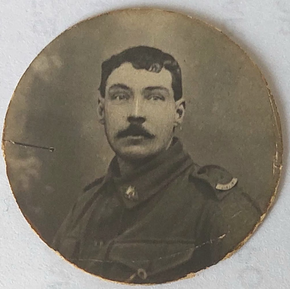
William David SEATON (known as David), was born 7/6/1876 in Port Adelaide, South Australia, but moved to Sydney as a young boy.
David SEATON had an interesting(!) life before twice enlisting in the Army, he coming into contact with Police over a period of time, however, he was generally a petty criminal and street offender. Newspaper articles indicate he started his criminal activities very early in life. The Evening News of 21/12/1885 indicates as a 10 year old he was arrested with his 7 year old brother, Richard SEATON, and another boy for breaking into a house in George Street, Parramatta (street he lived in), and stole money and a ring. At his court appearance David was sentenced to be locked up for 3 days, while brother Richard was discharged. His custody was spent on the Nautical School Ship "Vernon" moored off Cockatoo Island. He had previously been in trouble in Adelaide for stealing a watch, and as a result spent 12 months in the Magill (Adelaide) Institution, an Industrial School.
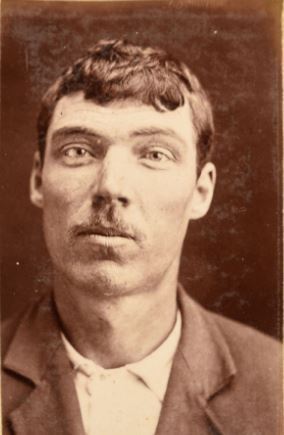
William SEATON's official NSW Criminal Record commences at Balmain on 13/10/1893 for playing the illegal game of "Heading Them" (Two Up), where he was fined. He was arrested over the next 7 years another 14 times on 20 charges including Stealing, Vagrancy, Riotous Behaviour, Trespass, Assault Police, Malicious Damage, and Indecent Language. Penalties ranged from a small fine up to 3 months gaol up to that time.
Previously, on 1/3/1899, and 3/3/1899, William SEATON made in the Evening News under the headlines of "A Balmain Larrikin - Probable Use of the Lash - Scene in Court" and "The Terror of the Lash”. William had appeared in Balmain Court on a charge of Assaulting Police and Indecent Language. He was sentenced to 4 months gaol, and upon hearing that sentence he became violent, and swore at the Magistrate. He was further charged in the court with more Indecent Language, however, the Magistrate adjourned the matter to the following day indicating the sentence for this new offence may involve a whipping of not less than 10 lashes, or no more than 30 lashes. This sentence had to be handed down by two Magistrates. The following day the Magistrate appeared by himself, indicating he had been consulted by other Magistrates, and although William "rendered himself liable to a flogging", he would only be fined.
On 14/12/1900 David assaulted a man walking in Balmain, and took his parcel. He received 3 months gaol. On 5/6/1901 he was sentenced to 18 months goal for stealing a horse from a stable, and a cart and harness from an allotment on the night of 17/4/1900, and selling it. This sentence would have taken him up to his marriage on 6/11/1902. 11 months after his marriage he was sentenced to 4 years gaol at Bathurst Gaol for Robbery with Violence, when he and 2 men had driven a sulky to Edgecliff and waylaid a defenceless woman, wrenching her arm and stealing her purse. After his release from gaol he was later sentenced on 7/5/1907 to 6 weeks gaol for Assault. Overall, William SEATON spent time in gaols at Parramatta, Darlinghurst, Biloela (Cockatoo Island) and Bathurst.
During WWI David SEATON enlisted in the Australian Army on 13/12/1915, and was attached to D Company 19th Battalion. On 14/2/1916, during his training at the Liverpool Army Camp a number of recruits rioted. They boarded trains, and travelled to Central Railway Central, Sydney, where they drank large quantities of alcohol up to around midnight, causing trouble as they did. Local and Military Police were called in to quell the riotous behaviour. It was at this point that violence flared, resulting in the death of one riotous soldier having been shot by the MP's, and the wounding of another four by MP gun fire. One Police Officer was injured, as were a further three soldiers, including David SEATON. A newspaper clipping of the day indicates "David SEATON D Company 19th Battalion 58 Gerrard St, Alexander - injured". A further newspaper article on 15/2/1916, had a statement from SEATON, indicating he was an innocent bystander during the riots, but when at Central Railway Station, whilst holding a fire hose, he was struck on the head with a baton, hit in the chest with a rifle barrel, and when he attempted to flee, was shot in the hip by the MP’s. The injured were treated at the Garrison Hospital. It was a direct result of this drunken riot that hotels were forced to close at 6pm for some 60 years later. David was only to remain in the Army another 6 weeks when on 3/4/1916 his record indicates "Discharged - Unlikely to become an Efficient Soldier". It is not known if he was charged criminally over his actions.
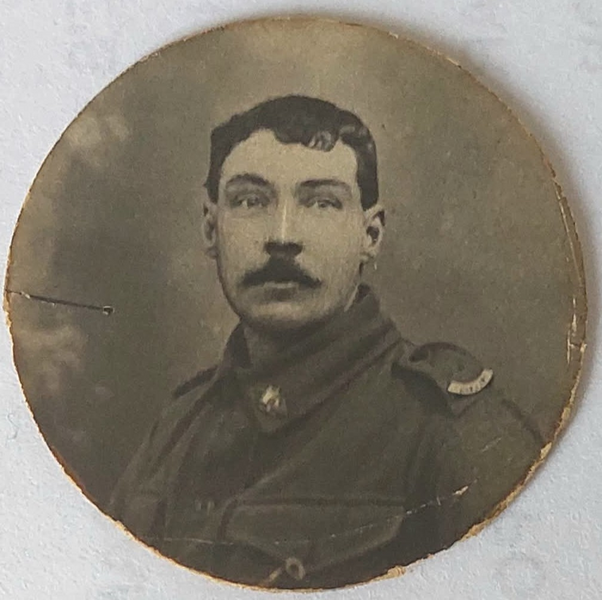
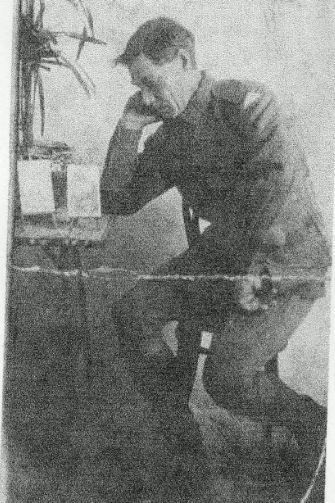
Ironically though, it was on 11/7/1916 that David William SEATON re-enlisted into the Army, as No.5647, a member of the 15th Re-enforcements 20th Battalion. He gave his occupation as a stone cutter/sewer miner. He sailed from Australia on 9/9/1916, arriving in Plymouth 26/10/1916. He received a shrapnel wound to his chest on 27/3/1917 whilst in France. He recovered, and returned to action. He was fined 7 days pay for Drunkenness on 27/7/1917. He was then in and out of Field Hospitals during the last part of 1917, then returned to England where he went AWOL from 1/2/1918 to 17/3/1918 for which he was given 28 Days field Punishment and fined 73 days pay. He returned to Australia on 1/8/1918, and discharged 24/10/1918 due to his age and chronic rheumatism.
Little is known of him after the war. He was a cement floor layer, and was living at 81 Darely Street, Newtown. He died at Liverpool Hospital on 26/3/1952 suffering from cancer to the lip and larynx. He was buried at Botany on 28/3/1952.
(Les de Belin - grandson of Seaton's brother-in-law, Ernest Fred de Belin)
Submitted 8 December 2017 by Les de Belin
Biography contributed by Karan CAMPBELL-DAVIS
David William SEATON was born in Glanville, South Australia, on 7th June 1876, to parents Helen (nee WALLACE) and William John SEATON. He married Marion Augustus de BELIN in 1902, and they had four children, the youngest going on to serve in the Royal Australian Navy during WW2 (until his death in Darwin from peritonitis).
A married, 40 year old rock chopper living in Alexandria, Sydney at the time, David re-enlisted in the Australian Imperial Force in Liverpool, New South Wales, on 11th July 1916. (This was after he'd been discharged on 1st April 1916 by the Provost Marshal, after three months of recruit training at Casula with the 19th Infantry Battalion AIF, citing the reason as being that David was "unlikely to become an efficient soldier"). He was subsequently assigned as a Private, regimental number 5647, and allocated to the 15th reinforcements for the 20th Infantry Battalion. Following completion of his recruit training at Liverpool Camp, David embarked in Sydney aboard HMAT "Euripides" on 9th September 1916, for active service overseas.
Arriving in Plymouth, England on 26th October 1916, David marched into the 5th Training Battalion in Rollestone, to undertake further training in preparation for trench warfare on the Western Front. He embarked in Folkestone aboard the "Princess Henrietta" on 13th December 1916, to proceed to France, arriving at the 2nd Australian Divisional Base Depot in Etaples the next day. David joined the 20th Infantry Battalion in the French village of Dernancourt on 17th December 1916.
David was evacuated with defective vision to the 6th Australian Field Ambulance hospital in Bellevue Farm, near Albert, on 12th February 1917. He returned to his Unit on 6th March 1917. Three weeks later, on 27th March, David was wounded in action near Bapaume, sustaining a slight shrapnel wound to the chest. He was evacuated via the 5th Australian Field Ambulance to the 9th (British) Casualty Clearing Station in Aveluy. On 29th March, David was transferred via Ambulance Train to the No. 3 Stationary Hospital in Rouen, where he arrived the next day. By 7th April, David was at the 2nd Convalescent Depot in Rouen, where he was found to be Class A (medically fit for active service), and was marched out to the 2nd Australian Divisional Base Depot in Etaples.
By July 1917, the 2nd A.D.B.D. had moved to Le Havre, and on the 27th July David was charged with the offence of being drunk in camp whilst on active service. He was subsequently awarded as punishment the forfeiture of 7 day's pay. On 30th July David was marched out to rejoin his Unit, meeting up with the 20th Battalion in Quercamps on 1st August 1917. Only sixteen days later, David was again evacuated via the 5th Australian Field Ambulance, and admitted to the No. 58 General Hospital in Saint-Omer on 23rd August, with pyrexia (fever) of unknown origin. From there, he was transferred to several different Convalescent Depots, before arriving at the 3rd Rest Camp in Ecault on 6th October 1917.
On 8th October 1917, David again marched into the 2nd Australian Divisional Base Depot in Le Havre, and rejoined his Unit in Abeele, West Flanders, on 19th October. On 17th January 1918, the 20th Infantry Battalion were still in Belgium, when David proceeded on leave to England for a period that was supposed to be of two week's duration. However, he failed to return after that period, and a Court of Enquiry was convened in the field on 25th February, after which David was declared to be an illegal absentee. David surrendered himself to the Officer Commanding (Australian) Troops, in London, at 10.30am on 17th March 1918. He was remanded in custody and returned to Belgium, to be dealt with by the Commanding Officer of 20th Infantry Battalion. On 22nd March, David was found guilty of the offence of being absent without leave from 7.30am on 1/2/1918 until 10.30am on 17/3/1918. He was awarded as punishment 28 days' Field Punishment No. 2 (additional hard labour, which may be carried out whilst restrained in handcuffs or fetters/ankle shackles), and to forfeit 73 days' pay.
On 17th April 1918, with the 20th Infantry Battalion back in France, David was again evacuated via the Field Ambulance to the 41st Casualty Clearing Station in Namps, with pyrexia (fever) of unknown origin. He was admitted to the No. 6 General Hospital in Rouen on 19th April. On 30th April, David marched into the Australian Intermediate Base Depot in Rouelles where he underwent a Medical Board examination on 6th May, after which he was reclassified as being category 'E' (permanently unfit for service). No longer fit for active service due to age and rheumatism, David marched into No. 2 Australian Command Depot in Weymouth, England on 19th May, pending return to Australia.
On 7th June 1918, David embarked in England aboard HMAT "Essex" for return to Australia, due to chronic rheumatism. He arrived in Sydney on 1st August 1918, where he was discharged in the 2nd Military District, Sydney, on 24th October 1918, due to being medically unfit. For his service, David was later awarded the British War Medal and the Victory Medal, along with the Discharged Returned Soldier's Badge and Silver War Badge.
David William SEATON died on 26th March 1952, his death being registered at Liverpool, New South Wales. He was 75 years old. David was buried in the Roman Catholic section of the Eastern Suburbs Memorial Park, Matraville (formerly known as the Botany Cemetery) on 28th March. His grave, which he shares with his wife Marion, remains unmarked (as at time of writing, March 2026).
Compiled by Karan CAMPBELL-DAVIS from historical records held by the National Archives of Australia (Service Record); Australian War Memorial (20th Inf Bn Unit War Diaries); Births, Deaths and Marriages NSW; the Ryerson Index; Find A Grave website; and various newspaper articles on Trove.
Click images to start slideshow.