





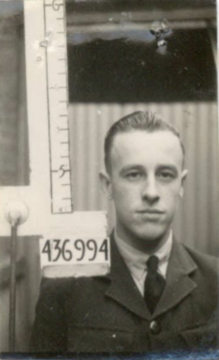
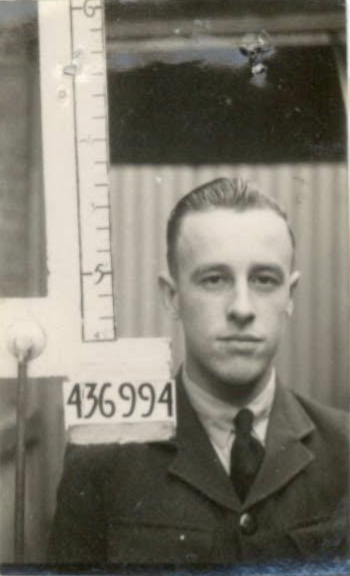
WHITE, John Richard
| Service Number: | 436994 |
|---|---|
| Enlisted: | 5 June 1943 |
| Last Rank: | Warrant Officer |
| Last Unit: | No. 20 Squadron (RAAF) |
| Born: | Jardee, Western Australia, Australia, 30 April 1925 |
| Home Town: | Mandurah, Mandurah, Western Australia |
| Schooling: | Jardee State School & City Commercial College, Perth, Western Australia |
| Occupation: | Junior Clerk, Bunning Bros. Ltd. |
| Died: | Mandurah, Western Australia, Australia, 16 December 2009, aged 84 years, cause of death not yet discovered |
| Cemetery: |
Fremantle Cemetery, Western Australia Cremation: Ashes collected by Funeral Director. |
| Memorials: |
World War 2 Service
| 5 Jun 1943: | Enlisted Royal Australian Air Force, Warrant Officer, 436994 | |
|---|---|---|
| 5 Mar 1946: | Discharged Royal Australian Air Force, Warrant Officer, 436994 | |
| 5 Mar 1946: | Discharged Royal Australian Air Force, Warrant Officer, 436994, No. 20 Squadron (RAAF) |
John Richard White - My Life Story
To my sometimes vague recollections, this is the story of my life, from day one.
I was born in Jardee Hospital in south-western Australia on the 30th April, 1925 to my wonderful mother Mabel Ellen White. I was the talk of the maternity section, as I was a 6 months baby weighing in at under 4 pounds (Ibs) in the old scale. Later in life I was informed that my mother made a remark that I was likened to a “little skinned rabbit”.
Doctor Cass who officiated at my birth was the only doctor at Jardee. My mother encouraged me to accept a dummy dipped in a mild solution of watered-down brandy. I wonder if that is the reason why I still enjoy a sip of spirits now and again.
I had a few mishaps in my younger days. When I was 4 years old, the head of a tomahawk wielded by my older sister Ida, came off and sliced the inside of my right thigh which required stitches. Then, at 6 years of age, I jumped off a high log and broke my right leg which required a plaster cast. I had only recently started my schooling, which immediately suffered a setback in that I was confined to bed with a cradle support for 6 weeks. It is a lot different today where patients are up on their feet quickly.
On returning to school, my first “Bubs” teacher was Miss Dunne and as I progressed through, Miss Gladstone taught me until I moved into the higher classes with our only male teacher Jon Ulbrik handling classes 1 to 7. I left school at 14 having passed 7th standard, which was at that time considered an average education in country schools. I enjoyed school life generally and joined in the activities of my schoolboy friends. We made our own entertainment without any finance, while at the same time, preserving and not destroying other’s property.
I thoroughly enjoyed mental arithmetic, geography and English at school which helped me very much later and throughout my life. For sports I was average at pole vaulting, quite good at running and also played football for Jardee “C” grade which was the youngest team (12–14 year olds). The junior teams were from Pemberton and Manjimup and ended up being mixed teams. I didn’t receive any trophies, but was reported for putting my knees into an opponent’s back to take a mark. How things and rules have changed today! I received a 2-week penalty for this misdemeanour.
While I was at school I procured a dog which became my very close friend. His name was Tiger and he was a black Kelpie cross. He only left my side when I went to school. One of the strange things about him was that he never hurt the family cat, but would brutally mangle all other cats which strayed into his domain.
One day our cat got its paw caught in a swiveling part of a chair. I rushed to free it and was attacked viciously suffering some deep claw lacerations. With blood everywhere, my dad saw red (blood and anger) and grabbing his log chopping axe, cut the cat in half! I needed medical attention, but several days of bathing in warm very salty water eventually healed the vicious tears on my arms and legs.
During my childhood, my two main friends were Laurie Bryant and Barney Battilana. I was quite friendly with most of the lads at school. Among them were: Kevin Nelson, Keith and Leslie Kazakoff, Ron Styles, Ken Trezise, Rob Hamilton (from the Junior Farmers Club) and Col Richardson and his brother “Dummy”, who was a mute.
I omitted to make mention of a government land grant given to my father to work at clearing. It was at Chinnabirrup just out of Jardee. On all occasions I went with him and worked to his direction, mainly stacking dry limbs around the trees and setting them on fire to avoid cutting down the dead tree by axes and saws. These trees usually burnt down to ashes and became fertilizer.
One day dad arrived home from working on his block with a surprise inside his flannel shirt. It was a baby Currawong (commonly called a squeaker). My sister Ellen wrapped it up and wheeled it around in her doll’s pram. It grew into a magnificent bird and learned to talk. It would often call to Tiger by name which mystified the dog as he couldn’t work out who was calling him.
Once, Tiger was instrumental in saving my father’s life. While crossing a cattle yard, my father was chased by a bull. He would never have made it to the yard-rail, but Tiger rushed at the animal from behind and fastened his teeth onto a delicate part of the beast’s anatomy which halted the bull in full stride. It was the first time I had ever heard an animal scream.
As Tiger got older, he became sick and eventually died of an infestation of tapeworms. It was a very sad day for me and I maintain it was the family’s fault for giving him too much milk to drink.
The highlight of each week was my father’s pay day when my youngest sister and I received the handsome sum of one penny, being less than one cent in today’s monetary value. We would race off to the local store for a “halfpenny pick” bag of lollies.
My eldest sister Ida was placed in “service” with farming families around Donnybrook, so for much of my childhood was not around. We did see her for occasional weekends when she was granted days off.
Bad luck again dogged me. At the age of 8 having accidentally ripped my leg on some rusty barbed wire, I was to suffer the agony of the wound turning septic and having it bathed with near boiling water. My mother cried while having to bathe this poisonous tear, knowing the agony I suffered, as she had suffered similar treatment in her youth.
A favourite summer pastime was a train trip from Jardee to Fonty’s Pool. This was a freshwater pool created by the Italian Fontanini family in Manjimup. The train passengers were seated in railway open trucks on horsehair cushions borrowed from the local hall. The ladies had to have their umbrellas up to fend off the hot ash from the locomotive. There were a few spot-hole burns in the umbrellas as well as clothing by the time we arrived.
I learnt to swim at Fonty’s by being tossed in the deep end by not very thoughtful and supposed friends. After being initially cross at these friends, I was elated to find that I could actually swim and made the most of it from then on. When I later moved to Perth, I frequented Crawley Baths in Mounts Bay Road and eventually plucked up the courage to dive off the high platform (after I had done a bit of practice on the lower ones first).
I spent many weekends building model aeroplanes with Colin Flood. His parents were quite wealthy which was just as well as our family was quite poor. One time Colin and I went on a hunting trip out from York on horseback. The horses for hire were so well trained that one could lay the barrel of the rifle between their ears and they would hardly flinch when the rifle was discharged.
The owner of the property was a real old sage and produced a 20-gauge shotgun and asked if we would like to fire it. With toes dug in while lying in the “prone” (lying flat out on my stomach with the gun resting on the ground) position, I tried a shot and was pushed back almost 4 feet by the recoil!
Some years later while working at Sandovers Fremantle, I mentioned this incident to the manager who told me he had heard of a 20-gauge shotgun and that as a matter of fact he had a box of 30 cartridges stored in the explosives shed. He said that as they had no sale value, I could have them. Imagine my old friend at York! I have never known a man so elated and thankful when I presented them to him.
From the age of 8 to 13, my close school friend Barry Battilana and I trapped rabbits for an old lady, Mrs McGinn, who ran a boarding house for single mill workers. We usually got 2 rabbits each night and sold them dressed (i.e., skinned, gutted and cleaned) for sixpence a pair, the proceeds going to our mothers to help with living.
I bought my first push bike (bicycle) for two pounds seven shillings and six pence. This money was earned collecting beer bottles and receiving two pence a dozen. I used the bike to accompany my father for week-end block clearing. Dad entered me in a three-mile road race over a corrugated gravel road. We left from the lolly shop in Jardee around the surrounding roads and back. To my delight (and dad’s) I won the race and collected the prize of five shillings — and on my new bike!
My mother made sure I attended the Salvo’s (Salvation Army Citadel) every Sunday morning. We formed a choir and sang the usual religious songs of the times. I was the only male singer in the group.
I recall the incident which made me begin a life of smoking. I was nine at the time and my brother-in-law-to-be and I were combing the bush around Jardee trying to find three cows which had strayed. It was bucketing down with rain and we found a hollow tree to shelter in. We had one hurricane kerosene lantern between us. Bill McFarlane rolled a cigarette, lit it and handed it to me and I had my first puff. This led to a lifetime habit until I quit because of health problems — on doctor’s orders!
At the age of 14, my parents decided to send me to Perth to look for work as they couldn’t afford to keep me at home and jobs in Jardee at that time were quite scarce. I stayed with my grandmother Williams and my uncle Charlie, her son, in their house in Monk Street, South Perth.
My uncle put my name down for an examination for a telegraph messenger job. Of the 300 lads who sat for it, only 45 were required. Owing to one silly spelling error I was judged 47th. At that time, the GPO (General Post Office), a government department, was a haven for Catholics, and my uncle later found out that the 45 successful applicants were all Catholics which seemed just too much of a coincidence for his liking. This situation was to rear its ugly head again later in my life.
I was then compelled to look for work urgently, and secured a job at the Perth Jarrah Mills, a subsidiary of Bunning Bros, later to become Bunnings. By watching the truck drivers, I taught myself to drive and would often drive the lumber down to the wharf at Fremantle. I didn’t officially get my license to drive until I was 18. As a young man, one of my favourite smells was the bulk Chinese coffee warehouse in James Street, Perth.
One of my duties was loading trucks with green blocks of firewood which in time helped to improve my physique. In between loading, I was sent to Cottesloe by push bike (bicycle) from the office in West Perth to deliver paperwork. All of this for the princely sum of ten shillings and two pence per week. (I will leave you to work out these values at today’s currency). A willingness to work hard did not go unnoticed and I was transferred to Bunnings head office where, after serving some time as an office boy, I was promoted to office clerk.
My destiny was controlled by Cupid’s arrow when my darling Margaret Doreen Harris began working there. I was completely and hopelessly smitten and I knew then that we were meant for each other. I spent a lot of weekends repairing the condition of her parent’s house at 48 Wright Street, Highgate which was appreciated greatly. This wasn’t “crawling” — I honestly enjoyed the work.
Living in South Perth with mum and dad, there were many occasions when we would go prawning with a drag net at Como. This was a “must” during the prawning season. Back then, each drag of the net for 60 yards or so would result in about 2 gallons of prawns. These were cooked in the copper at 27 Brandon Street and with any luck (and a few bob to spare) we would have a couple of beers to go with them. Unfortunately, people ruin such simple things, and with our huge population, each similar drag today would probably only net weed (or rubbish).
From the age of 17, I suffered badly from boils and other infections. As I intended to join the Air Force, I was desperate to rid myself of this affliction. A representative of Bunnings, who had friends at the Swan Brewery, took me there, where I was forced to eat a 2-pound jar of brewer’s yeast daily. After 2 weeks I was clear of the abomination, but what a truly horrible taste that yeast was!
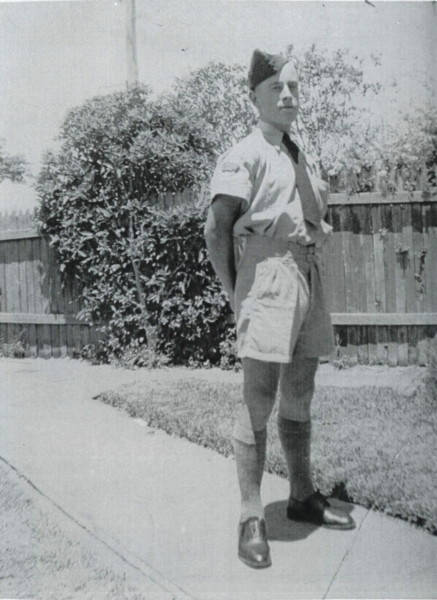
I never drank alcohol until I turned 18. We lived in Brandon Street and my father bought me my first drink at the nearby Hurlingham Hotel in Canning Highway, South Perth. This was to celebrate my enlistment into the RAAF (Royal Australian Air Force) and then I was posted to Number 1 ITS (Initial Training School) at Clontarf. My first real test came in the dental section — 4 extractions and 5 fillings — all performed in the chair in one sitting and with very small amounts of numbing agents, resulting in a fat, sore face for a few days.
On completing training, I was assigned to WAGS (Wireless Air Gunners School) at Ballarat in Victoria. My previous training in the Air Training Corps now held me in good stead. I was fairly advanced in sending and receiving Morse code. I enjoyed my radio training because this was carried out in Wackett single engine and De Havilland twin engine Rapide aircraft — and I loved flying!
During our time at Ballarat, two or three of us trainees would hire horses for half a day to gallop around Lake Windarie and surrounding areas. While out one day, I half turned in the saddle to check on the whereabouts of my mates and didn’t duck my head in time. I collected a tree limb across my chest. Luckily I fell into some cushioning grass and was able to take the horse back to the stables albeit a little shaken up!
Having “passed out” of Ballarat, I was posted to Sale for Air Gunnery Training which was an exciting experience. One time I was in the turret of an Anson aircraft doing shooting practice on a target drogue (a long sleeve-like canvas tube which was towed by a Fairy Battle aircraft). I fired the twin Browning guns just forward of the target as instructed, but somehow managed to sever the drogue from its towing cable. At the time, there was quite a discussion about who was to blame and all fingers were pointed in my direction. The drogue was later found and returned to the gunnery school, repaired and used on other training flights.
I spent some time in Mt Gambia having been sent there for Morse code instruction of the navigators and was granted four days leave which meant I had to get home from Mt Gambia. By pulling a few strings, the CO (Commanding Officer) got me on a flight in a Beaufort Bomber. The main trouble was that there was no Perspex (plastic) in part of the nose-cone, and the only place to sit was directly in line with the hole up front. I can still recall how bitterly cold that trip was, but it was all worth it to see my sweetheart again, even if it was only for a few days. I flew back on a Douglas DC-3.
When my training as a WAG was completed, I was posted to a DC-3 Dakota squadron at Dunreath (now known as Perth Airport). Most flights were to north-west centres with very few to the east which made me happy because the eastern states meant nothing to me and were a long way from my sweetheart.
After a few months I received a posting to Rathmines to a Catalina Flying Boat Squadron. I seemed to spend a great deal of time operating the aircraft’s radar which was used extensively on night flights and — oh — what a strain on the eyes over a 21-hour trip. Another duty I had was to occupy the port blister position with its .5 machine gun.
A metal ladder was clipped to the outside of the fuselage to assist in climbing into and out of the flying boat. Unfortunately, one day I omitted to unclip and stow this ladder inboard. On take-off, the water pressure was huge and twisted the ladder into a curled-up piece of metal. I received a “rocket” (telling off) from the skipper for this bad lapse of take-off drill. Luckily for me, a replacement was fitted ready for take-off the next morning and I was happy to be still a member of the crew.
After some time, our flying boat and crew were posted to a flying boat base at Melville Bay, a little area north-east of Darwin where we camped in tents. One night, Ron Condie, our navigator, heard a noise outside. Thinking it might be the local “indigenous” chaps trying to steal something, he grabbed his torch and a .38 pistol and made ready to give somebody a big fright.
On parting the tent entrance flap, he was confronted with a huge salt-water crocodile glaring at his torch. Well, Ron screamed and took off through the back of the tent, taking the whole tent structure with him. The croc turned and bolted away into the sea. It took a good half day to reconstruct our living quarters. From then on I think all four of us could hear rustling every night.
We had only completed a few flights of aggression when hostilities ceased. Our aircraft was ordered to pick up sick and distressed servicemen waiting in Manila. We took off for Manila and when the aircraft was 30 miles past Mindanao Island, the co-pilot dozed off, and before catastrophe could be avoided, the Catalina crashed into the sea. Three crew members were killed — both pilots and the stand-by radio operator.
Managing to get the dinghy inflated, the four remaining crew were barely afloat and shocked by the loss of our crew mates. The most frightening problem were the sharks as they persisted in “bunting” the dinghy and rubbing their rough skin against the soft rubber sides and casting an “evil eye” at us — I still have nightmares about that sight.
After 16 hours rising and falling in the massive swell, a boat was sighted about 3 miles away. Our navigator activated a distress flare, the only object that had not been pilfered from the dinghy and, luckily, the captain of the boat sighted one of the 13 stars the distress flare contained — due to the huge swell. The ship was an American submarine chaser and we were gently taken on board and eventually delivered to a service hospital in Davao on Leyte Gulf.
After our injuries had somewhat mended, we were flown back to Pearce, Western Australia by a Liberator aircraft, and I was eventually discharged with bad nerves. I was in the RAAF for three years and four months, including training. I believe my mother’s life had been shortened when she received notice from the Defence Department that I was “missing — believed killed”.
Back to reality and my cherished sweetheart. What a homecoming! I clearly remember the words spoken by my intended Mother-in-Law. She stated that unless I could save 100 pounds she might put a hitch to our wedding plans. To marry Margaret was the ultimate goal to save for — it just had to be — and I eventually succeeded.
Our courtship was a tender, loving affair, continually pledging our love for each other. We didn’t go out very much, because money was very scarce, but we were happy to be with each other. Of course the most memorable day was my wedding day to such a precious person — my Margaret. We were married in St. Albans Church in Beaufort Street, Mt Lawley on 22nd June 1946. As always she looked good enough to eat and we both shed a few little tears of happiness.
When that wonderful day arrived, the reception was held in the kitchen at 48 Wright Street. We had booked our honeymoon at the Harvey Hotel and took the train to Harvey. It was a bitterly cold June, ideal for honeymooners, and was the coldest June on record. We went walking most of the time and witnessed the freezing-over of the Harvey Weir. In that week, the residents of Collie and Manjimup had light snow falls. We bought a battery-operated wireless for music and news and that radio lasted for 12 years.
After we were married, we moved into 48 Wright Street with Margy’s parents along with her brother Len and his wife Gladys. It was quite a squeeze for a while especially when the children came along until Len and Glad built their own home in McGann Street, Maylands and moved out. We remained in that house until 1984 when we sold up to move to Mandurah on my retirement.
One day we decided to go for a dip at Coogee. It was an overcast sky and we indulged in about an hour or so sunbaking. When we got home we then realized how badly burnt we were and spent two days in bed with “sunburn poisoning”. The doctor prescribed a solution that helped greatly and I was still able to go to work.
My dad, brother-in-law Bill and I rode our bikes to South Fremantle to do some fishing one day. We hired a rowing boat from “Wingy” Howard (he only had one hand, but boy, could he play the piano and organ), who charged us one pound between the three of us. Dad couldn’t catch anything, even though he changed positions in the boat, bait, lines etc., while Bill and I caught dozens of sand-whiting and King George whiting. Dad was not happy at all, but I reckon it was because he didn’t smoke and Bill and I did!
When Margy and I decided on a family, we were saddened and distraught by two miscarriages. However, when our first child John arrived safely, we were in a new world, and then to be gifted with a beautiful daughter Sandra two years later, we were in heaven. Although money was still a problem, we endeavoured to give them our all to make them happy children and they didn’t let us down.
Both of them enjoyed using a two-seat rocker which I had made for something to do. They would use this for countless hours trying to tip it over on its front. I don’t think they ever did. I also built a wooden cot from some prized Silky Oak with the utmost care and attention to detail. My dear wife said she did not know that I was so clever — Ahem! (Preen, preen)
When they were still relatively babies to us, we were often invited to parties and other outings and they almost always went with us. If they got tired, we would lay them on the floor on a rug under our table with our feet touching them and reassuring them that we were still there; they would fall asleep. Most of the time, they were still asleep when we arrived home after picking them up and carrying them into and out of the car.
Early in our married life, we would have wonderful stays at Koo-Lyn Flats — a boarding house on Mandurah Terrace in Mandurah. Margy’s uncle Jack knew the owners and we got a reduced rate because of this friendship. This was with my darling wife, John and Sandra, and my very favourite mother-in-law. Uncle Jack would drive the family down in his car and I would ride my motorbike.
The children caught trumpeter fish in daylight and the old man of Koo-Lyn and I fairly reefed the tailor in at night using strips of trumpeter. I recall once taking my mother-in-law on the pillion seat of the BSA Bantam motor cycle to Pinjarra to sit and enjoy a couple of “coldies” in the pub. We didn’t have much money, but that stay will remain in my memories because we had to make do.
One day John and Sandra were playing on a slide in the small park near our home. John suddenly ran in and yelled that Sandra had cut her foot off! Margy and I raced down to the park to find Sandy had really sliced her foot open on a part-broken bottle buried in the soft sand at the foot of the slide. We ran with her to the local doctor who had his surgery only 100 yards from the park. She was bandaged up and all smiles in no time (tough little bird). We never found out who was responsible for this vile happening.
One can only guess the amount of time we gave to them jointly for their educational and sporting activities — at which they both succeeded. John became involved with football and cricket and Sandy with — well, you name it and she played it. When each turned 10 years old, they received and learned to ride a bicycle, which they did very well.
When they reached the age to participate in organized sport, Margy and I were fully engaged moving around the different sporting grounds and giving assistance where needed, and, of course, encouragement. John was into football and cricket and Sandy played basketball for team sports.
At one time I was a little unpopular with the family because I bred “wogs” or “gentiles” or “maggots” which were excellent bait for fishing. I would buy a pig’s head and leave it outside until the blowflies “struck” it and these little wrigglers were produced. Not knowing the ways of their behaviour, I collected and placed them in screw-top jars in the refrigerator to slow their transformation into adult flies. I also added pollard for them to eat and quickly grow fat for bait.
Taking them into consideration, I put holes in the top of the jars to allow them to breathe. You guessed it! They all got out through the holes in the lid and were all over the food in the fridge and when we opened the door, spilled out and scattered onto the kitchen floor. Margy had to replace the food and clean out the fridge and we all scrambled around sweeping up the little blighters which we had sprayed with stacks of fly spray. Needless to say, I wasn’t allowed to repeat that exercise again!
John was mostly interested in sport, but Sandra was the “gun” fisherwoman. Some people said that she could catch a marlin in a horse trough. She and I spent many productive evenings when we were established in Mandurah fishing for tailor from the local beaches. They were called tailor because they always attacked their prey by striking at the tail — hence their name.
The children always enjoyed camping at Dunsborough. Sandra was trusted to walk up to a local dairy for milk. She would walk through the waiting cows by pushing them aside, without the slightest fear. Brother John, who escorted her, would sit and wait outside. He never was too sure of cattle.
Harking back to the camping site there, one of my duties was to make a track with a shovel through the bush between the tents and beach to eliminate any chance of walking on a snake. The track had to be a minimum of three foot wide. Both children enjoyed every minute of the Christmas holidays always finding plenty to do. They would go swimming, fishing or exploring the area, but always under our supervision.
I purchased a rifle to take the children shooting, which they were very keen to do and thoroughly enjoyed the outings. I drilled into them all the safety aspects of handling a gun I could think of. However, I think we were all really too soft to hunt any of those soft furry animals as we mostly missed (it was probably deliberate). We mainly aimed at tin cans or bottles on fence posts or logs. Both kids were reasonable shots.
Son John and I went shooting along the railway line near Gingin. We managed to bag quite a few Bronzewing Pigeons that day. However, after plucking, cleaning and cooking them we found that the amount of meat on them was so small that it was hardly worth all the trouble. There was barely a mouthful or two to eat from each bird. John also shot a hawk through the head while it was in flight although I can’t recall if that was the same trip. It was quite remarkable all the same — even if it really was a fluke shot!
Another time, John and I were invited to go fishing from a reef which was part of a farmer’s land which protruded into the sea at Yanchep. The tailor abounded, and were ravenous and we caught 19 fish between us. Our catch was appreciated by the owner who gave us one fish each to take home. We weren’t told that we would be fishing for the land owner! Come in suckers!
When John got his driver’s license I bought him an Austin A30 car which I helped him paint and get fixed up mechanically. He and his friend Peter Rose went traveling down to Albany and all round the south-west. A remarkable little car that!
He studied and became a teacher and began teaching in the country. He married a girl Glenda and they had two sons and a daughter — Malcolm, Alan and Lana. We didn’t see a great deal of them much while the kids were growing up as they were in the country, but we did visit them from time to time in the places like Koorda and Kambalda where John had been posted.
They returned to Perth eventually and built a house in Roleystone where he was teaching. Sadly, the marriage failed and they divorced, but Glenda would still drop in at Mandurah for a visit to see us occasionally.
He re-married about 10 years ago to Karenne and they built another house in Roleystone. John is still a teacher and deputy principal. He sometimes fills in as headmaster when required. His children have grown up with children of their own now. Malcolm has two boys of his own while Lana also has two boys and another baby on the way.
Sandra married John Rogers and they have been married for almost 40 years. I used to refer to him by the nickname “Two yards of pump water” because he was tall and rather thin back then. In her older years I referred to Sandra as “short-arse” (for obvious reasons). She (rather meanly I thought) called me her “Snow-capped Leprechaun” because of my white hair and lack of height. These nicknames have continued to this day.
They had two boys, Gary and Peter. Unfortunately, Sandra suffered an illness (German Measles) that resulted in Gary being born with a hearing problem. (Margy and I called him Gazza). It didn’t make any difference to us and we loved him all the more. It also didn’t stop him doing all the normal things that people do and becoming a loving and devoted person — and also a chef “extraordinaire”. When he got his driver’s license, he would often come down for a weekend and cook Margy and I a roast lamb dinner — or “a Tom Cruise” as he called it after a TV advertisement. In later years he would also do our washing for us.
Peter was interested in sport from an early age and played football and cricket, eventually playing first grade cricket for Bayswater-Morley, mainly as a fast bowler (demon type). Margy and I followed his success in the papers, seeking out the results of games. He even played county cricket in England. He got married and he and his wife Lisa were gifted with two gorgeous little girls. Unfortunately, they are moving to New South Wales after Christmas and will be sadly missed.
On some weekends, and most holidays, Sandra and John would come down and bring the boys. One Christmas, Peter came beach fishing with Margy and I. Margy baited his hooks and I cast out the rod. He caught about 14 or 15 whiting and was so excited — so were we. He wasn’t so keen on cleaning and gutting them though — that was left to me. When we were demolishing our “shack”, Peter took great delight in wielding the sledgehammer and smashing up the concrete steps and flooring.
Crabbing from the boat at Mandurah was a steal, mainly due to John Rogers being an expert forward hand. I can’t recall him missing to lift one net while out there and also helping greatly in the preparation of the catch when we got back. He would rinse off the crabs and meticulously remove every speck of weed so I just had to drop them into the copper to be cooked.
He did get nipped a few times, but one time in particular springs to mind. On arriving back he showed off his wound. His son Gary looked at the six dozen or so crabs in the plastic bin and earnestly asked him, “Which one was it, Dad?” What a gem!
Sandra and John would come down and stay in their holiday home at number 13 Nesbit Way. Many’s the night we would stay up playing cards (usually euchre or crib) until the wee hours of the morning with John and I drinking copious amounts of lager. Sandra would partner her mum and John with me. I think the “girls” won most times because we couldn’t see the cards properly — well, that is my excuse anyway.
About 15 years after Sandra was born, Margaret fell pregnant again and the good Lord blessed us with another son, Bradley, who enjoyed an easier earlier life than the other two as we were a great deal better off financially. Margy and I were so proud of him. While attending Mt Lawley High School he was taught to play a Euphonium. He earned a place in the school band and even played some sections solo. Our only regret was that he never continued with his musical ways, although we were willing to buy an instrument for him.
When he was a baby, Sandra and her then boyfriend John used to babysit him for us if we had to go out or just to give Margy a break. If they had trouble getting him to go to sleep, they would drive him around in John’s Volkswagen. He would go to sleep in Sandra’s arms while the car was moving, but as soon as they pulled up out the front of the house, he was wide awake. I don’t know if this was a phenomenon or just plain cussedness!
When Bradley was about 17, he talked us into moving down to Mandurah from Perth as he hoped to find employment a little easier. We demolished the weekender and built our new four-bedroom home on the site in 1984, living in daughter Sandra and her husband John’s house up the road until it was completed. I painted both these houses.
When we first moved permanently to Mandurah, I can recall when Brad had to front up to a dentist. Like all parents, we worried about him having to go through the pain, but he tricked us by handling the operation under gas and came out laughing.
In his employment years, he had various jobs and has now worked his way up to assistant manager of a fruit and vegetable outlet in an IGA supermarket and takes charge when the big boss wants a break.
Like the other two children, Bradley has become proficient with his driving and is always courteous to other drivers, and lives his life harking to one of my old adages — See good in all people, life is shorter than you think and keep your temper because no-one else wants it. Quite a good way to live I reckon.
He was a natural actor and took part in quite a few plays at the Little Theatre in Mandurah and at the Pinjarra Community Centre. Margy and I were so proud of him and reminded everyone that he was our son. There was even a blown-up photo of him in the foyer of the theatre for quite a few years. On another occasion, he took a one-day job as the Town Crier, dressed in the appropriate period costume (bell and all) and even had his photo in the local Mandurah Mail newspaper. He looked so natural in his get-up.
Bradley was communicating with Roshini Naiker, a pen-friend in Fiji, and flew over to visit with her, then flew back with her to advise us that they were married. After the initial shock, they had our blessing. They lived with us for a while before moving to Perth and have produced three well-behaved and studious sons — Phillip, Aaron and Matthew. All have followed his ways, being thorough little gentlemen. They would usually come to visit us at least once a month.
With all three of our children, I used to sing a lullaby or ditty to try to get them to sleep. As I recall, it went like this:
I put my finger in the woodpecker’s hole
And the woodpecker said “God bless my soul”
Take it out, take it out, take it out — remove it.
I removed my finger from the woodpecker’s hole
And the woodpecker said “God bless my soul”
Put it back, put it back, put it back — replace it.
I replaced my finger in the woodpecker’s hole
And the woodpecker said “God bless my soul”
Turn it round, turn it round, turn it round — revolve it.
I revolved my finger in the woodpecker’s hole
And the woodpecker said “God bless my soul”
Take a sniff, take a sniff, take a sniff — revolting.
NOW GET TO SLEEP!
A few years after we were married, Margy’s brother Len and I ripped up the wooden front verandah at Wright Street and replaced it with concrete. It certainly gave the front of the house a real lift. As the concrete was hardening, we were absolutely dumbfounded when we saw a snail breaking through the surface. Needless to say, it was a story we retold over many years.
Still on the subject of snails, I was trying to lay some new sheets of iron on the roof at Wright Street, when my foot went through one of the old rusted sheets and I knocked down the plaster ceiling in the kitchen. Down into the room fell thousands of dead snails and their castings, insects and a lot of dust which had accumulated there for years. It
took me the best part of a day to clean up the mess — and then I had to replace the ceiling as well.
Building new sink cupboards was a labour of love for my special mother-in-law, and supplying a new stainless steel sink really topped it off. I replaced the very old bath with a new, larger one and framed and covered the bathroom walls with masonite pale green tiling. A re-conditioned gas water-storage heater replaced the old wood-chip water heater.
A serious but humorous incident took place in the lounge room of the Wright Street home some years later. Son John “plonked” himself down in a lounge chair and he and the chair fell through the floor. Wouldn’t you know? — Termites! I was able to gain access to the high foundations and applied undiluted white-ant spray all under the house (dieldrin — full strength), then repaired the floor. A check by the white-ant people three months later found that there was no sign of termite activity.
Bill Mac and I had to completely replace the whole ceiling in son John’s room. John was lying on the bed (I was at work) when he heard a creaking sound and yelled out that the ceiling was coming slowly down. Margy rushed in with an empty drum and a length of timber and propped it up (I always knew she was clever). That support lasted a whole day until repairs started.
At Highgate Junior Football Club, where John played, Lloyd Lewis and I at one stage were President and Secretary (although Margy used to type up the minutes from meetings for me). During each game, he and I would polish off half a bottle of scotch between us.
I once drove Ernie Lewis’ station wagon (no relation to Lloyd) down to Collie with some of the boys. What a nightmare trip that was! It rained persistently all the way down. The surrounding roads were under repair, with corrugation and waterlogged hidden potholes in the gravel. It rained the entire weekend and was freezing cold. We had a lot of laughs though.
After serving my time in the service of the country, I had to earn a wage, so I returned to Bunnings. There was no office position available and so I was sent to see the yard boss for a job. After working in the wood mill for 6 months, I was given the job of tending to a large quantity of plywood, caneite and veneers — and it happened again! My immediate boss persisted in finding fault with my work, and believe it or not, was a Catholic and wanted to employ a Catholic lad who was the son of his close friend — which he did. History had repeated itself.
Without going into detail, I sought a position at Harris, Scarfe & Sandovers in Hay Street and later in Newcastle Street, West Perth. After a few months, I was promoted from the warehouse to counter-hand and then to a sales representative calling on painters. During this time I had an appendix operation which required a week off work.
While working for Sandovers at Fremantle one day, I was standing with others on the back of the firm’s truck, but behind the cab as it was being driven. As the truck rounded
a sharp bend, I lost my grip and fell off, landing on my face on a large pile of bluemetal. Covered in abrasions, I was treated by Fremantle Hospital with Fryes Balsam and sent home. My dear wife nearly had a fit when she saw the condition of my face.
After all this, Taubmans Paints general manager enticed me to work for them as Sandovers were being taken over by a big business conglomerate. I accepted Taubmans’ offer and worked as a sales representative until retiring at 59. On several occasions during this time, I flew in small planes to the north-west of the state on the firm’s business. There was always plenty of leg room even though the planes weren’t very large — probably because my legs were short, I suppose.
While working for Swift Paints (a subsidiary of Taubmans) I was driving a van which was loaded to the roof with crimped-top 5-gallon drums of water-based paint to jobs at Rockingham. I had occasion to brake suddenly and one of the drums rolled off the top and landed on the floor next to me. The problem was that the crimped lid came away and I was sharing my driving compartment with loose — VERY loose — water-based paint. What a mess!!! My trousers, shoes and socks were ruined.
My dear wife and I spent three hours hosing and cleaning up the mess in the van. We removed the seats, scrubbed out the front and even had to replace the floor carpet in the front cab. If it hadn’t been for my sales figures, I think I might not have been forgiven quite so easily. I broke the record for sales that month and still received a nice bonus — Skite, skite! Nyuk! Nyuk! (Sniggering).
When driving the firm’s station wagon up the north-west of WA on a holiday with Margy and Bradley, I had occasion to stop to enable Bradley to take photos of a flock of emus. Like all emus, they started to run around in a sudden panic. Unfortunately, one ran into the front side of the stationary car resulting in a fairly big dent. On returning to work I found it almost impossible to convince the manager and staff that this had occurred. Thankfully, the insurance took over — so no problem!
Over the years I have had many modes of transport. My first transport to work was a push bike, but longer distances to find employment necessitated buying a motor cycle (a BSA Bantam) from Mortlocks. I was riding home from work on the BSA and travelling quite a distance behind an empty limestone truck. It had a tarpaulin over it which was flapping vigorously. Temporarily blinded by the cloud of fine limestone powder from the tarpaulin, I could see (or couldn’t) that a crash was imminent. I remembered what my brother-in-law had once advised — when a crash is sure to happen, throw the bike on its side and hope for the best!
This I did, and slid under the truck which pulled up very quickly. The driver, an Italian, thought I would end up a mangled mess. Dragging the bike and me from under the truck, all were surprised to find that apart from a bit of skin off, I was OK. After straightening the crash-bars on each side, I was able to continue home after making a report at the local “cop shop”. Ho Hum!
Wanting something to move my growing family, I was talked into buying an old 6-cylinder Oakland utility. I diligently worked on it by covering the back with an appropriate waterproof material. I rubbed down the paintwork and repainted it dark blue with black trims. The wooden spoked wheels were rubbed down and coated with a marine varnish — she really looked the goods!
On its maiden voyage (a drive to Rockingham), the radiator cap blew off. It took the family 30 minutes to find it and we still had an enjoyable day at very little expense. However, being an American machine, it became too hard to find parts, so I traded it in for a 1936 model Ford 10, which, of course, was black as most Fords were back then.
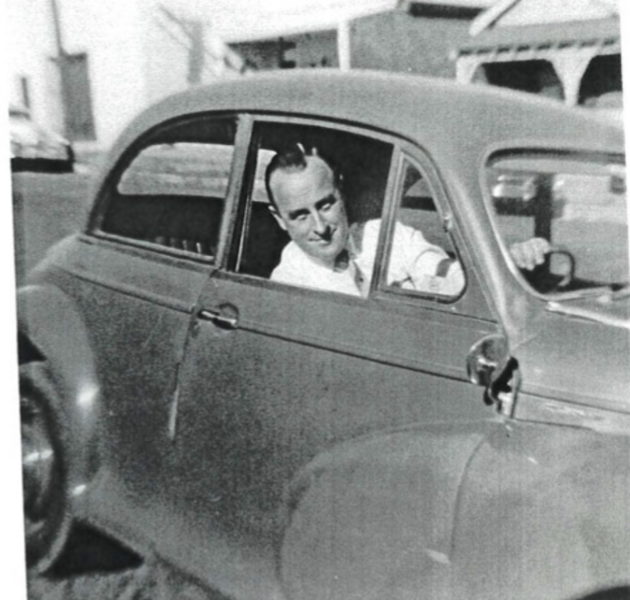
When I was made a sales representative with Sandovers, I was supplied with an early Morris Minor. When that wore out, I was given a slightly later model and in turn was given the latest model of the Deluxe Minor. On changing my employment to Swift Paints (a subsidiary company of Taubmans), I drove a Datsun 1200 van until I was promoted to manager. Sandra learnt to drive in this. When Taubmans decided to get all staff under the one roof, I was declared a representative and supplied with a new Ford Falcon automatic station wagon.
One day while driving to Mandurah, I stopped at the intersection of High Road. As I moved out into High Road, I was smashed into by a Wolseley, a very heavy sedan which was driven by a pregnant woman. Fortunately, nobody was injured and both cars were insured. I checked up on her until after she had had the baby and all was OK.
I was the victim of another accident at Floreat Park where the other driver did not give way to his right and then experienced another accident at Bayswater when a drunk driver ripped open the passenger side of the Falcon. In all these instances, I was not the driver at fault. Over the years working for Taubmans, I was given permission to use the firm’s vehicles to take on holidays, but only within the state.
On my retirement at 59, the manager of Taubmans made a virtual pleading request that I stay on for a few weeks to help them out by preparing and tinting thousands of litres of paint for projects in the north-west of the state. This I did, and he was very grateful.
After that, I made an offer for the delivery van as I didn’t have a car at my disposal any more. It turned out to be a huge asset for an outlay of $600. I repainted it dark brown and it was extremely useful for fishing trips and transporting furniture, etc. However, it only had seating for 2 people and Margy and I decided to buy a used Toyota station wagon. This vehicle was marvellous and lasted for about 12 years and we kept the van a few more years to use for crabbing, fishing, and towing the trailer.
My eldest son John talked me into trading it in and buying an automatic Mitsubishi station wagon which was still running well when Margy and I moved into the aged care centre in Mandurah. With no secure parking facilities for residents (inmates) cars, the family got rid of it. I do miss the freedom and taxis are quite expensive — even with the half-price vouchers.
Margy and I had not had a holiday on our own since our marriage. We often looked at holiday destinations, and eventually settled on a first-class ride on the Indian Pacific train to Adelaide and then a cruise on the paddle steamer Murray Princess. On arrival, my darling wife looked at the Princess and burst into tears — she was just so happy. How could I not help loving her?
We enjoyed the trip immensely and while on the boat participated in a raffle — which we won! The prize was a return trip for free on the Princess including air fares to Adelaide. When Margy and I flew to Adelaide in the jet, I suffered badly with claustrophobia resulting in panic attacks and shortage of breath. It was the same on the return flight and I vowed and declared that I would never fly commercially again. My darling was totally unaffected and excited at her first plane trip ever.
We went dancing in a wool shed, rode on a very fast speedboat, visited several wildlife parks, shopping trips, concerts on board the boat and an hilarious fancy dress evening where I dressed up as a woman with some of Margy’s clothes and a long blond wig. I have the photo to prove it. At one of the wildlife parks, she even posed for a photo with a huge python around her neck! My brave little darling! I have a photo of that too.
We were fortunate on our first trip in that we were befriended by a group of jolly people who shared the same interests as ourselves — out to enjoy every minute. However, on the second trip, the majority of the passengers were wheelchair-bound and strict teetotalers and so not very much fun at all. I might mention that stubbies of beer were $4.00 each!
With my father Jack White, I joined the South Perth branch of the RSL (Returned Services League) on being demobilized from the Air Force and I served as a maintenance man on the building. I then went on to become Secretary for three years and then President for two.
Working at Taubmans, I built up a fairly large clientele of business. My efforts were rewarded with a monthly bonus as I had always enjoyed working hard. The general manager was an inspiration to me. When I wanted to paint the South Perth RSL sub-branch buildings, he remarked that because of my contribution to Taubmans, he would supply the paint free of charge — something like 12 gallons. I think that the supply of paint and the painting I did went part way to me acquiring a Life Membership of the League. I no longer attend meetings though.
I was inducted into Freemasonry by Joe McNeil, a boss at Sandovers where I joined Mercury Lodge No. 237 in Alma Road, Mt Lawley. That particular branch was closed and I joined the Peel Districts Day Lodge No. 359. I enjoy the rank of Right Worshipful Brother and, having completed almost 50 years as a member, am looking forward to receiving my commemorative jewel. I have now been informed that I would shortly be presented with a 40-year jewel which Grand Lodge has authorized.
Through lodge, I befriended Bill Carter, who was a wartime pilot and on two or three occasions he took me up from Jandakot Airport to perform aerobatics in his little plane.
What a thrill that was! It reminded me of the training at Ballarat when the young pilots delighted in flying upside down and showering the poor old radio operator (me) with all sorts of grit and lolly wrappers. Apart from the inconvenience it was still a thrill.
I would say that I was fortunate to be gifted with working with my hands from an early age, especially when appropriate tools were available. I also enjoyed making necessities for the household from virtually scratch. My sweetheart’s father taught me how to apply French polish among other woodworking skills. Though I had no “proper” training, I have had a go at most jobs around the house and with a lot of mechanical things like cars and motors of all descriptions — learnt by watching others. A lot is just common sense!
I consider myself fortunate to have a brother-in-law — William Albert Torrie McFarlane (Bill) — who married my sister Ellen. For a number of years we, along with our wives and children (their son Donny and our children John and Sandra) would drive down south to Dunsborough to camp and fish for our holidays at Christmas.
Throughout the year, Bill and I worked together to build a boat (rowing type) and this was towed on a trailer with Bill’s old Tourer (a large car). My vehicle was an old 1936 Ford 10 sedan which towed an all-up one-ton trailer. Leaving Perth at approximately 12 midnight, we arrived at Dunsborough at about 4:00 a.m. and set up our camp, where we enjoyed a cheap holiday. I also worked with Bill during the year repairing and renovating our old motor cars and motorbikes, again learning most of it from watching him. He was a trained aeroplane mechanic — so cars and bikes to him were easy.
We would acquire a couple of chickens and at one time a turkey to be used for our Christmas dinner. We took them live in a cage on the back of the trailer to our campsite. They would then be “fattened up” for a few days, then Bill and I would kill, pluck and clean them ready to be cooked in the camp ovens. One year the flies were so bad, we had to pluck them under the water in the ocean. Oh, we did have some fun back then!
One day, Bill Mac and I were out fishing at Dunsborough when we hooked a very large octopus. Endeavouring to keep it away from our feet, we managed to poke it into the front locker of our dinghy “Snuffy”, which we had built ourselves. Not wishing to come to grips with the “ocky” again, we left it in the locker for future bait. Unfortunately, it died and putrefied the locker. Many years later, when the boat had deteriorated, that putrid smell still persisted. Somehow we never did use the octopus as bait.
On one of our camping trips to Dunsborough, I was driving the Ford 10 sedan and towing a trailer in front of Bill and Ellen. I dozed off at the wheel, left the road and ended up in a thicket of small trees. Bill and I unhooked the trailer and with his assistance, got the car back on the road with only a few scratches on the car and a bruised ego to me. I then rubbed tobacco into the corner of my eyes to keep awake.
One year when under our canvas tents, we had an unusual downpour of rain while we were in bed. In rushing out to cover our camp fire, I was drenched in very cold water which had gathered on a sagging tent fly (an extra sheet of canvas over the tent to help keep it cool and dry). A freak wind billowed the tent fly up and the rainwater inside was blown up into the air and showered down all over me. My camping relations split their sides laughing at me with a very wet tail!
On a number of occasions, I went fishing down south with my brother-in-law David George, who was married to my eldest sister Ida. Those were well-remembered times and the fishing was excellent. On other occasions I would take the family down to Jardee to go marron fishing in the creek as I had done so many times in my youth.
At Christmas, our trips to Meelup were a fishing success, especially with Sandra and John reefing in monster pike fish which Margy cooked to perfection in the camp oven. We spent the time with George and Eileen McLure and their children John and Gail, who were about the same age as John and Sandra, and we remained close friends for many years. After the children were in their camp stretchers, we adults would stay up talking and playing cards. George and I would polish off a bottle of scotch whisky between us.
I went on a shooting trip to Three Springs and Morawa with five other good blokes including a publican. It was a humorous long weekend shooting kangaroos to feed the farmer’s pigs. Something serious happened, but turned out OK. I was shooting from the back of a truck when I fired a shot at an emu. However, a metal tube on the truck deflected the bullet which disintegrated, and a small piece hit the publican on the inside of his thigh. Did he perform! It was purely a superficial wound, but he made a big thing of it and continued to relate this happening to his pub clients for weeks after we returned. It was a big laugh on me.
At one time I was the co-owner of a trotter (pacer) with the mob from my favourite pub — the Newcastle Club Hotel. We reckoned it was a winner because it had such huge feet. There was Fred Sharpe, who worked with me at Sandovers, George McLure, a sales rep for Wesco Paints, Maurice Reynolds, and two others from firms around the area. These other members of the syndicate were responsible for the horse’s training and “muggins” me was landed with the food, which was chaff, bran, oats, and linseed. No wonder it never ran anywhere though because I reckoned it was over-fed!
I was a member of the East Perth Football Club for about 20 years. One day, when entering the bar, I was accosted by the doorman whom I had known for that 20-year period. We were always cracking funnies between us. I had left my club pass at home and on this occasion, he demanded I show my pass. When I asked who had ordered him to check all club passes, he told me the president, Hec Stremple, had. I was angry and went home to get my club pass. I showed it to the doorman and then went up to the President’s office and, without waiting for any reason to stop me entering, I threw my pass at the President, telling him I had resigned — and I never went back.
I purchased a block of land at Mandurah costing 140 pounds. I put 40 pounds down as a deposit and paid it off at six shillings a month, and really had to work hard to scrape up those payments. It was lot number 270 Nesbit Way, Riverside Gardens. When I first started clearing it, I counted the number of Zamia palms on the block area and invented an ingenious method of removing them (there were 28 of the sods!).
Firstly, you dig a hole around one side of the palm and then use a long-handled crowbar to push the palm into the hole which had been dug out. This would snap it off at the roots. Then the easiest method of pulling them out was to loop a tow rope around the bowl of the palm and tow it out of the hole with the car. It could then be rolled onto a heap of other zamias and later burnt. Brilliant if I do say so myself!
When we first bought the block and began clearing it, it was necessary to build an outside toilet. We called it a “thunderbox” for obvious reasons, although other people referred to this building as a “dunny” or “outhouse”. This consisted of three walls, a floor and a door. It had a pan or large bucket which was covered by several wooden planks with a hole cut out. We would use newspaper cut into strips as toilet paper. The rear wall had a flap cut into it which allowed access to the pan so it could be removed and replaced when necessary.
The pans were collected every week by a chap who also sold eggs, fresh bread, fruit and vegetables. He had a flat-top truck using one half to accommodate the “dunny pans” and the other half to display his produce. He would remove the full pan from the “dunny,” place a lid on it and replace it with an empty one. It was not a very hygienic practice, but then nobody thought much about that sort of thing back then — and he did wash his hands before handling the produce.
One day while using this facility, I felt something gripping the area of my posterior. In one great panic-stricken motion, I crashed out of the toilet taking the doopump by an electrician so calmness returned and remained supreme. It then only needed to flick a switch to get our supply of water from the bore.
It was also a happy accomplishment to have built the shack mainly by myself. Margy and I planned it initially as one large room with a wall dividing the kitchen and living area from the bedroom where we would all sleep. My brother-in-law Len helped me set out the stumps to hold the floor. Most of the materials were gained by bartering. I would work for free for someone who would then supply me with what I required for the house. I worked very hard to get it too, but it suited everyone. One of my fellow workers from Sandovers (Tom) helped me put the corrugated iron roof on.
My son John helped me make the front steps, and the cement pathway and driveway I gradually did myself as time and cement became available. I installed a sink and cupboards in the kitchen and our pantry was a cupboard with a lid which doubled as a seat around the table. I put up a Perspex verandah over the front door and added a carport on the side, planting a grape vine which kept some of the weather out. That was also where washing was hung when it rained.
I made up the steel stand for the bore water tank and then using pulleys and planks raised it into position. Ensuring it was level, I then cemented the legs into the ground, then using the pulleys again, got the tank up on top, actually getting inside the tank to connect the pipes. I was much younger, slimmer and fitter back then.
As accommodation was at times crowded in the weekender, I turned the single man’s hut into a double bunk bedroom and added a “sleep-out” on the back. Visitors were always welcome and used this facility regularly. “Whitey’s” hospitality was well known to visitors.
I installed a toilet, basin and wash trough, and then built a “shower room” outside with a kerosene hot water heater. It was just big enough to have a shower in, but everyone then had to run into the house covered with a towel to get dressed. Often there would be a queue waiting to get in, as we would leave the hot shower running. It was usually just a short shower with me going first as I had to light the heater. Water for the kitchen sink, laundry, toilet and shower came from the bore water tank and we also had a rain water tank for drinking and cooking.
I did all the plumbing myself including digging the holes for the septic system, and the building inspector from the Murray Shire passed everything without knowing that a licensed plumber or builder hadn’t done the work — I had. I did, however, get an electrician in to connect the electricity to the house and for the bore — I won’t touch that!
Margy and I put up the workshop shed and she helped put up the boatshed. She also helped me put up the wire fence along the side and held the string line for the picket fence we had along the front of the house while I put it up. Then it was painted white just like the one we had had in Wright Street for so many years. Eventually, it rotted away and I pulled it down.
When we pulled the weekender down to build our new home, Bradley was kept busy driving the van I bought from Taubmans to and from the Pinjarra rubbish tip and used my Margaret to help him dispose of the wreckage. I sold the good timber from the roof and tank stands and the metal water tanks for a song.
The pump and spear was covered over with sand by the builder, and after the new house was complete, I uncovered it again, cleaned up the electric motor and pump, got the electrician to connect the new wiring from the house, primed the spear and pump and it still worked perfectly. That Stalker pump was almost 50 years old when we sold number 25. The spear was pulling the water up through a marble chip stream bed — no dirty brown marks on the house, just pure clean water.
Our first neighbours at 25 Nesbit Way were Bruce and Joanne Fowler. They had two sons, Bradley and Craig. There were many evenings in the summer months spent trawling with a net for prawns in the Serpentine River. My darling wife was very, very fond of these shellfish and we would all make virtual “gutses” of ourselves.
The neighbours on the other side were Joe and Triss Musty. The house was owned by their daughter and son-in-law Dawn and Richard Eastaugh, but Joe and Triss lived there after their retirement. They also had two sons John and Peter. Triss passed away and the house was sold to Doug and Faye Knight. Doug and I did a lot of crabbing over the seasons and supplied some families in the area with an abundance of big crabs. Unfortunately, Faye passed away and Doug sold out — sad times.
One of the early problems with Mandurah was the number of jumping bull-ants and their nests. I eliminated several of these nests by pouring petrol down the top opening, waiting half an hour, and then tossing a lighted match at the nest, which exploded — killing a good many of the ants.
It was then just the two of us — my Margy and me — side by side. I would potter around the house and garden. I was involved in the lodge, and Margy would come along with some of the other wives and help out with the kitchen duties preparing meals for after the lodge meeting finished.
I made a vegetable patch down the back of the yard and grew carrots, beans, peas, onions, tomatoes, capsicums, potatoes, sweet potatoes, rhubarb, and parsley. We had plenty of veges and often passed some on to our neighbours. I also struck a couple of runners from the grapevine from the old shack and we had many good crops — as long as we kept the parrots away. Eventually, my health and energy declined and I removed everything except the grapevine. Our mulberry tree also served us well over the years.
We would sometimes go for a drive around the area to have a bit of a “stickybeak” at the new houses under construction or to find the quickest route from home to anywhere. If the weather was good, we would sometimes drive to Pinjarra and have a picnic on a rug near the river or have some afternoon or morning tea at the tea rooms near the bridge.
For many years, Margy and I provided mince, sunflower seeds, and wheat to feed the myriad of wild birds that would visit our backyard. There were magpies, crows (WA ravens), ducks, butcher birds, bronzewing and crested pigeons, “28” parrots, king parrots, cockatoos, galahs, kookaburras, currawongs, large flocks of yellow-beaked minahs, and pee-wits (mudlarks). Margy got some so tame that they would come to her to be hand-fed. Some would even allow her to stroke them — quite a feat really!
I copied the whistle of the “28” parrots and it became my call sign whenever I visited anyone. I reckon some of those birds brought their offspring to show us over the years, which would have been many generations. It was always interesting to pick out some which had deformities or some form of quirky difference from their species, and they would get extra mince or special attention.
We would sit out on the back patio and watch the birds for hours. The magpies and galahs especially were always doing something amusing and it helped to pass the time. However, it began to get too expensive and we stopped feeding the birds altogether.
Unfortunately, in later years, flocks of ordinary pigeons (I think they were ex-homing pigeons) made our yard their home and their personal space. They would congregate on the TV aerial and I had to have it replaced as they broke off some of the struts and our reception suffered. They also made a hell of a mess on the roof.
Margy and I celebrated our 60th, 70th, and 80th birthdays with our family and friends and just about every Christmas, Easter or long weekend the house was full to overflowing. Sadly, that will not be the case from now on. There is not much room in my little “cell” for the loud and often raucous parties of the past.
Sandra can’t understand why I don’t like music — but I do. To me, real music is sweet-sounding and soothing to one’s nerves. I enjoy listening to a piano or violin playing softly in the background.
Not like the hideous clamour of “monkey music,” especially guitars and drums which are played at the full extent of the volume control. I personally believe this racket is the cause of premature deafness and criminal activity in the future.
Sandra has a sometimes strange way of doing things for the family. She writes poetry for “milestone” birthdays that family members have and tries to organize special parties at times. That included organizing a “ceremony” for my 80th birthday. She wrote up an official-looking OBE (Over Bloody Eighty) certificate and bought a medallion suitably inscribed, which was presented to me in front of nearly all my family and friends. She did the same thing for Margy, which made her very happy. Margy actually thanked God that she had lived to receive her medallion — she never really asked for much at all!
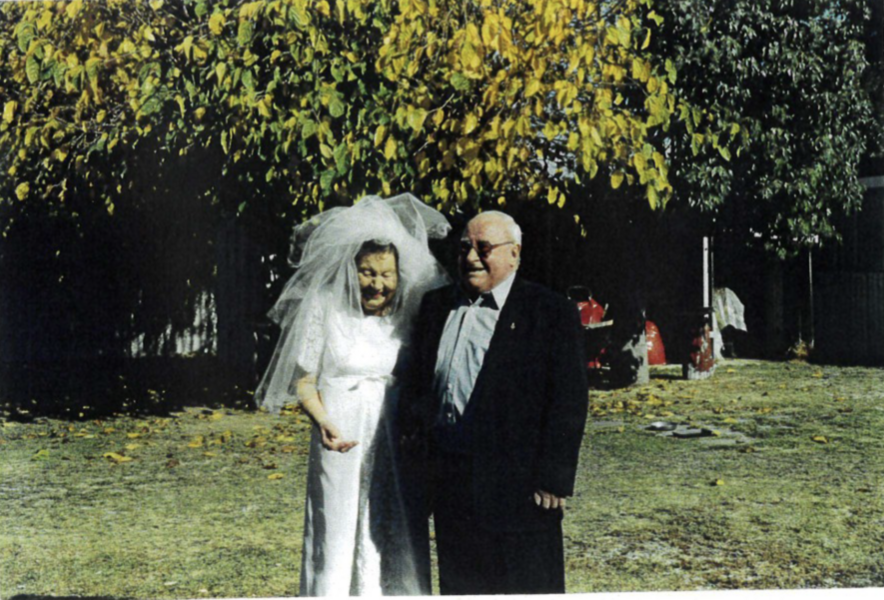
Two years ago, Sandra organized a ceremony for Margy and me to renew our wedding vows on our 60th wedding anniversary. Margy got dressed in Sandra’s wedding dress (and veil) at their house and then was driven down the street to our place. Sandra acted as her Matron of Honour, son John “gave her away,” and son Brad acted as my Best Man.
She also bought a small bouquet for Margy to carry and even had the Wedding March playing as they walked around the corner of the house where I and the rest of the family were waiting. Her husband John Rogers acted as the celebrant and we repeated our former vows and signed an official-looking certificate. I don’t think there was a dry eye anywhere — especially from the two of us!
I enjoy reading a good detective or historic novel or watching cricket, lawn bowls, golf, or documentary shows on television which show underwater diving exploits and lots of fishing. My favourite foods are a real baked dinner with vegetables, and I have a definite leaning to a hot, spicy curry.
I have since been moved to single room number 311 in the Banksia Wing after another inmate had passed on. That is usually the only way rooms become available. Sad but true!
To enable me to pay the bond of $180,000, it was necessary to sell our house. The family took what items they wanted and then had a couple of “garage sales.” What was left was either dumped or given to charity. So many memories of the past 25 years gone.
Unfortunately, due to medical circumstances, I have been unable to attend my lodge. However, the visits and phone calls I get regularly from my brethren are greatly appreciated. The food here is rather bland — but then they do have to cater for the majority I suppose. What I wouldn’t give for a very hotly spiced Indian curry — or a thick soup loaded with meat and barley.
I have also had quite a number of appointments with my doctor since being in here. I am afraid that I have no faith in today’s doctors and specialists. Oh for the good old days when doctors were virtually miracle men who could diagnose and treat almost every ailment with the least amount of trouble and in a very short space of time.
Since I have been alone as an “inmate” of this centre, I have had plenty of weeping — vivid memories — and a decidedly trapped feeling quite akin to being “stir crazy.” If it hadn’t been for my beloved Sandra encouraging me to participate in events put on by the staff here, I would have cracked. Scratchies, plonk and chocolate help retain some sense of sanity. The staff who work here are wonderfully dedicated people and strangely enough treat me as a father or grandfather — and they are all females.
This recollection of the different parts of my life, the people in it and those no longer with us has been organized by my daughter Sandra (or Sandy, as I always call her) and I thank her for helping to guide me through this very difficult period. This “project” has caused me to think about things I thought I had forgotten and some memories have brought me to tears with a lot of chuckles in between. I hope it will bring some tears and smiles to you — my family.
Our whole family has given Margaret and me such a lot of pleasure over the years and has grown steadily. There are so many treasured memories that I will have forever. I have three wonderful children, eight grandchildren and six great-grandchildren and another on the way. Not bad for a “little skinned rabbit” — eh? Oh, and not forgetting all their relevant partners either.
It has been a massive wrench in my life to lose my loving wife. I prayed to God that she would not suffer unduly, but that wasn’t to be — she did suffer — and I was unable to help ease her pain. But she will always be worshipped regardless of the time left to me. I know I shouldn’t feel this way, but a large part of my life has been taken from me and I will pine for my beloved forever. I miss my beautiful bride and partner of 62 years so much. Sadly, this will be the first Christmas without my darling for all of us. However, I know she will be looking down on us and hoping for a good day — Bless her.
I used to draw pictures for the kids and grandkids over the years. The following are a few of my favourite efforts which always seemed to bring a smile to their little faces. While my hands may not be as sure or steady as they used to be, this is as good as I can get now I’m afraid. They might seem a little amateurish, but you can still see what they are — and in case you can’t, I have given captions.
After that, there are a few select photos of different areas and stage of my life. Enjoy!
Submitted 27 October 2025 by Kade Rogers
Click images to start slideshow.