







ARMSTRONG, John Duffield
| Service Number: | 5751 |
|---|---|
| Enlisted: | 27 June 1917 |
| Last Rank: | Private |
| Last Unit: | 4th Pioneer Battalion |
| Born: | Brisbane, Queensland, Australia, 23 September 1880 |
| Home Town: | Nundah, Brisbane, Queensland |
| Schooling: | Not yet discovered |
| Occupation: | Carpenter |
| Died: | Stomach cancer, Nundah, Queensland, Australia, 1 November 1943, aged 63 years |
| Cemetery: |
Lutwyche Cemetery, Brisbane, Qld Monumental Portion 10, |
| Memorials: | Marchant Park Memorial Gates |
World War 1 Service
| 27 Jun 1917: | Enlisted AIF WW1, Private, 5751, 1st Pioneer Battalion | |
|---|---|---|
| 8 May 1918: | Involvement Private, 5751, 1st Pioneer Battalion, --- :embarkation_roll: roll_number: '4' embarkation_place: Sydney embarkation_ship: RMS Osterley embarkation_ship_number: '' public_note: '' | |
| 8 May 1918: | Embarked Private, 5751, 1st Pioneer Battalion, RMS Osterley, Sydney | |
| 11 Dec 1919: | Discharged AIF WW1, Private, 5751, 4th Pioneer Battalion, 1st MD |
Help us honour John Duffield Armstrong's service by contributing information, stories, and images so that they can be preserved for future generations.
Add my storyBiography contributed by Evan Evans
From Australian Remembrance Army
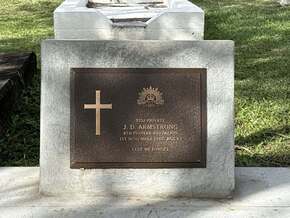
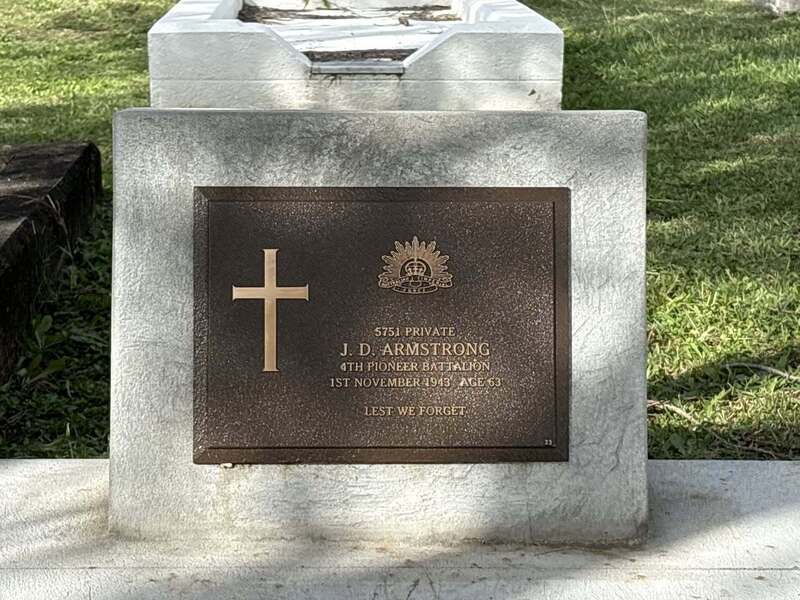
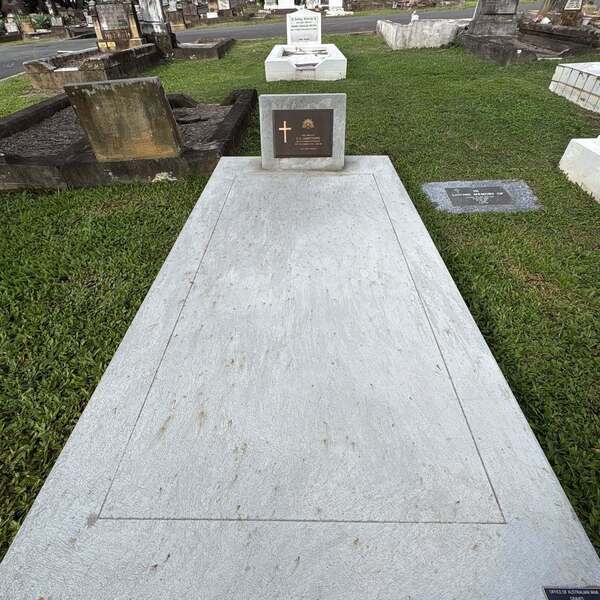
Australian World War One veteran Private John Duffield Armstrong (Service No. 5751), is one of the previously unmarked WWI veterans’ graves in Lutwyche Cemetery that has been accepted as Official Commemorations by the Office of Australian War Graves.
OAWG Official Commemoration link: https://connect.dva.gov.au/.../viewCommemoration.html...
See Australian Remembrance Army Facebook page
John Duffield Armstrong was born on 23 September 1880 in Brisbane, Queensland, to George Armstrong and Martha Ann Armstrong, née Duffield.
On 18 December 1912, John married Sarah Deborah Hughes. Their daughter, Winifred, was born the following year.
John enlisted in the Australian Imperial Force at Brisbane, Queensland, on 27 June 1917. At the time of his enlistment, he was 36 years of age, married, and working as a carpenter. He gave his address as Nundah, Brisbane, and nominated his wife as his next of kin.
On 8 May 1918, John embarked from Sydney, New South Wales, aboard the RMS Osterley for overseas service. He disembarked at Liverpool, England, on 10 July 1918. John proceeded from England to France in January 1919, and in February 1919 he was admitted to hospital in France with influenza. He rejoined his unit the following month.
In March 1919, John was attached to the Australian Graves Detachment, a specialised AIF unit tasked with the difficult work of locating, identifying, exhuming, and reburying fallen Australian soldiers across the Western Front. The detachment operated in 1919 and was later replaced by the Australian Graves Service, which continued the identification and reburial work until 1922, before the permanent care of the cemeteries passed to the Imperial War Graves Commission, now known as the Commonwealth War Graves Commission.
In August 1919, John proceeded from France back to England. He returned to Australia aboard the troopship Port Denison, embarking on 25 September 1919. The ship arrived back in Australia in November 1919, and John disembarked on 17 November 1919. He was discharged from the Australian Imperial Force on 11 December 1919.
Following his return to Australia, John settled again with his family at Nundah, Brisbane, and resumed his occupation as a carpenter.
Private John Duffield Armstrong died of stomach cancer on 1 November 1943, aged 63, and was buried in Monumental Portion 10, Lutwyche Cemetery, Brisbane.
In 2024, eighty-one years after his death, we received notification that our application for an official commemoration had been accepted by the Office of Australian War Graves for War Graves purposes.
His final resting place now bears a plaque commemorating his service to Australia — ensuring his name endures among those remembered for their duty and sacrifice.
His identity and dignity have now been restored.
Lest We Forget
Postscript:
War graves, and their protection, are important because they help future generations understand the human cost and lasting consequences of conflict.
Over the past six years we have submitted the service records and causes of death of hundreds of veterans to the Office of Australian War Graves for assessment for official commemoration. To date, more than 100 of these veterans interred at Lutwyche Cemetery have been accepted as Official Commemorations, and their graves are now being formally marked and will be maintained in perpetuity by the Office of Australian War Graves.
Many Australians are unaware that, unless specific eligibility criteria are met, returned service personnel are not automatically entitled to an official government-issued headstone or plaque at their place of interment. As a result, tens of thousands of Australian veterans lie in unmarked graves across the country.
Eligibility for official commemoration in Australia must satisfy one of the criteria outlined by:
• Commonwealth War Graves Commission (CWGC) – Criteria and qualifying service dates:
https://www.cwgc.org/.../what-are-commonwealth-war-graves/
• Department of Veterans’ Affairs (DVA) / Office of Australian War Graves (OAWG) – Additional war grave eligibility criteria:
https://www.dva.gov.au/.../commemo.../official-commemoration
Click images to start slideshow.