








S12425
THORPE, Vernon Victor
| Service Number: | 8432 |
|---|---|
| Enlisted: | 25 August 1915 |
| Last Rank: | Sergeant |
| Last Unit: | 3rd Australian General Hospital 3AGH (WW1) |
| Born: | Northcote, Victoria, Australia , 26 October 1894 |
| Home Town: | North Adelaide, Adelaide, South Australia |
| Schooling: | Geelong Grammar, Victoria, Australia (1 year) |
| Occupation: | Fireman, axeman, tyre representative |
| Died: | Broncho pneumonia, Australia, 7 November 1973, aged 79 years |
| Cemetery: |
Mannum Cemetery, S.A. |
| Memorials: |
World War 1 Service
| 25 Aug 1915: | Enlisted AIF WW1, Private, 8432, 4th Field Ambulance | |
|---|---|---|
| 12 Jan 1916: | Embarked Private, 8432, 4th Field Ambulance, --- :embarkation_roll: roll_number: '22' embarkation_place: Adelaide embarkation_ship: HMAT Borda embarkation_ship_number: A30 public_note: '' | |
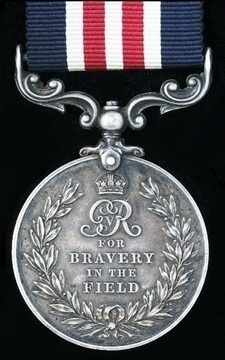
| 23 May 1918: | Honoured Military Medal, While in charge of a bearer squad and under heavy fire south of the village of Zonnebeke in Belgium. Here he rescued two wounded men who were bogged, dressed them and helped them to safety. He also ‘by his courage and coolness kept his bearers carrying through the barrage and brought them through safely on two occasions’. | |
| 11 Nov 1918: | Involvement Sergeant, 8432 | |
| 29 Sep 1919: | Discharged AIF WW1, Sergeant, 3rd Australian General Hospital 3AGH (WW1) |
Help us honour Vernon Victor Thorpe's service by contributing information, stories, and images so that they can be preserved for future generations.
Add my storyBiography contributed by Robert Porter
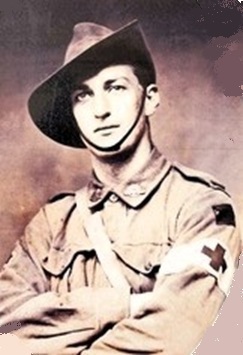
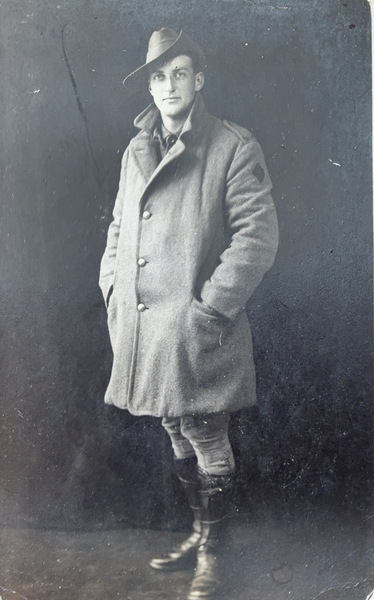
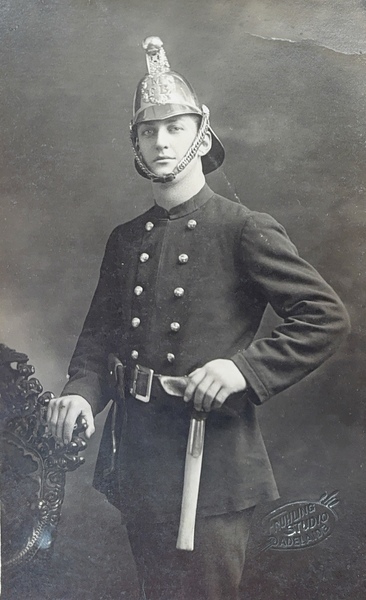
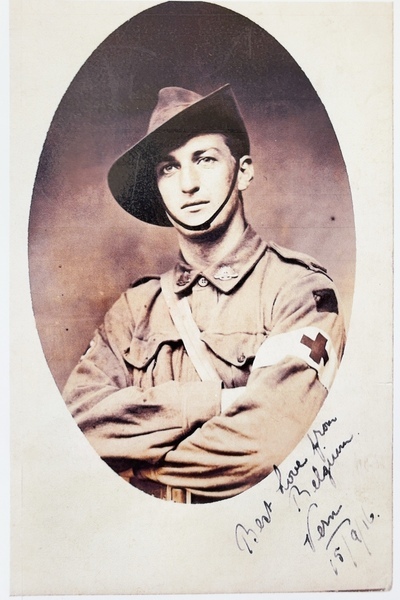
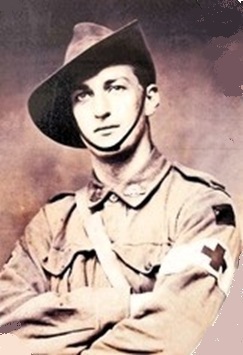
Vernon Victor Thopre was born in Northcote, Victoria on 26 October 1894. He lived a colourful and eventful life. After briefly attending Geelong Grammar, at the age of 12 he started work with S.A Paper Bag & Co, before becoming an axeman with a Government land survey team in South Australia. This work would have been physically demanding, clearing bush and scrub to allow geological markers to be laid. Vernon’s physical strength led him to an interest in body building becoming, awarded a tile for his impressive physical stature. Vernon joined the South Australian Fire Brigade, before enlisting in August 1915 at the age of 20 years, joining the 13/4th Field Ambulance and serving in 7th Australian Field Ambulance. He saw service in France and Belgium and shortly after returning from leave he was returned to the front. In October 917 he was awarded the Military Medal, as a lance-corporal, for bravery. While in charge of a bearer squad and under heavy fire south of the village of Zonnebeke in Belgium, he rescued two wounded men who were bogged, dressing them and carrying them to safety. Further, “by his courage and coolness kept his bearers carrying through the barrage and brought them through safely on two occasions”. The area of his actions was the location of the Battle of Passchendaele, one of three battles in this part of Flanders which, as the Australian Embassy in Belgium describes it, was an area where “thousands of young men from all over the world gave their lives” in battles which were a “byword to symbolise violence in its most brutal and senseless form”. Several picturesque villages were destroyed. Anyone who has seen the haunting pictures by Frank Hurley of the glutinous mud, the landscape of shredded and decapitated trees, where forests once stood, will appreciate the horrors of the battles.
Vernon was discharged on 29 September 1919 at Keswick Barracks, Adelaide. There followed a number of restless years. Vernon rejoined the South Australian Fire Brigade in 1919, resigning a year later. He then travelled, working in Chicago and as a fireman and oiler on a merchant vessel in the United States. He joined a floating maritime museum on the 1840-built cargo vessel, S.S. Success, which had served as a prison hulk on Hobson Bay in Victoria. The vessel toured international ports to display the travails of penal incarceration. Vernon gave lectures on the ship which travelled with an Australian kangaroo. He worked in an American hardware store in Rhode Island. He gained employment on the Cunard line vessel, S.S. Orduna and travelled to Paris where he married a French woman, Marthe Goupille, when he was 30 years of age. She was attractive; him tall, well-built and with rugged good looks. They made a fine-looking couple. Vernon and Marthe returned to South Australia in 1925 where he rejoined the South Australian Fire Brigade and also the SA Paper & Bag Co. In 1927 he gained a position with Dunlop-Perdriau Rubber Company as a tyre sales representative. Perhaps because of his wife’s family in France, and perhaps his ongoing sense of adventure, in 1935 he joined Dunlop Rubber in Bristol in the United Kingdom as a commercial vehicle tyre salesman. They spent the war years in England, Marthe acting as an interpreter for the British Government, Vernon involved in the provision of tyres for the war effort. In 1958, he returned to live in South Australia with Marthe and daughter. He worked at the Mt Osmond Golf Club, but after suffering a stroke, retired in 1962.
Click images to start slideshow.