







GILL, James
| Service Number: | 3740 |
|---|---|
| Enlisted: | 12 August 1915 |
| Last Rank: | Sergeant |
| Last Unit: | 1st Infantry Battalion |
| Born: | East Maitland New South Wales, Australia, 3 February 1896 |
| Home Town: | East Maitland, Maitland Municipality, New South Wales |
| Schooling: | Not yet discovered |
| Occupation: | Book Keeper |
| Died: | Died of wounds, France, 14 August 1918, aged 22 years |
| Cemetery: |
Daours Communal Cemetery Extension, France |
| Memorials: | Australian War Memorial Roll of Honour, East Maitland Methodist Church Military Honour Roll, East Maitland Methodist Sunday School Memorial Stone, East Maitland Municipality of East Maitland Roll of Honour |
World War 1 Service
| 12 Aug 1915: | Enlisted AIF WW1, Private, 3740, 1st Infantry Battalion | |
|---|---|---|
| 11 Dec 1915: | Embarked Private, 3740, 1st Infantry Battalion, --- :embarkation_roll: roll_number: '7' embarkation_place: Sydney embarkation_ship: RMS Mooltan embarkation_ship_number: '' public_note: '' | |
| 14 Aug 1918: | Involvement Sergeant, 3740, 1st Infantry Battalion, --- :awm_ww1_roll_of_honour_import: awm_service_number: 3740 awm_unit: 1 Battalion awm_rank: Sergeant awm_died_date: 1918-08-14 |
Help us honour James Gill's service by contributing information, stories, and images so that they can be preserved for future generations.
Add my storyBiography contributed by Cassie Horsley
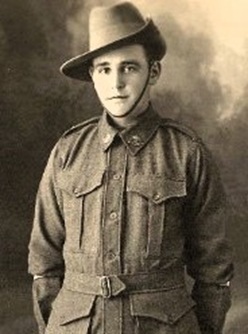
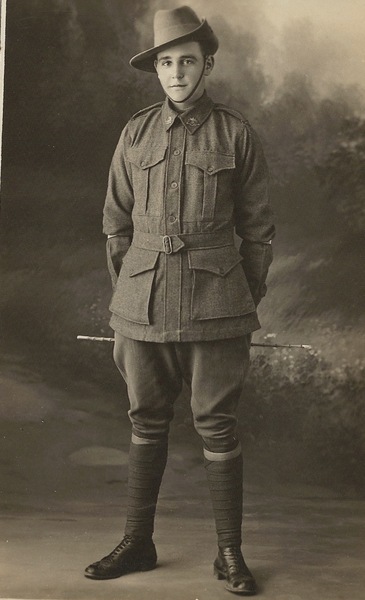
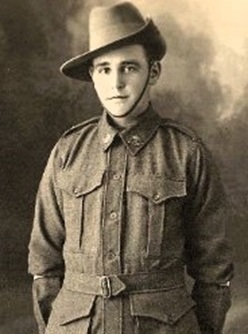
Sergeant James Gill
1st Battalion, Australian Imperial Force
James Owen Gill was born on 3 February 1896 in Maitland, New South Wales, the son of Henry Harvey Gill, a blacksmith, and Sarah Jane Gill (née Davies). Known simply as James throughout his life, he grew up in George Street, East Maitland, in a family deeply rooted in the local Methodist community.
He attended Sunday School, sang in the church choir and developed the steady, reliable character that would later define his military service. Before the war, he worked as a book keeper and clerk, including time associated with the Maitland Daily Mercury.
At nineteen and a half, James enlisted in the Australian Imperial Force on 12 August 1915 at West Maitland. He joined the 12th Reinforcements of the 1st Infantry Battalion and embarked from Sydney aboard RMS Mooltan on 11 December 1915. After training in Egypt, he was taken on strength of the 1st Battalion at Tel‑el‑Kebir in February 1916 and soon after sailed for France, entering the grim reality of the Western Front.
James’s first major ordeal came on 1 November 1916, when he was wounded in action, suffering a gunshot wound to the left thigh. He had recently been promoted to Lance Corporal. Evacuated through the medical system, he was placed aboard the hospital ship Asturias and admitted to Boscombe Military Hospital in England on 10 November. His parents received the official telegram later that month, followed by a notice in the Newcastle Morning Herald. He spent ten months recovering, moving through convalescent hospitals and training depots, before being declared fit for duty.
In October 1917, James returned to France and rejoined the 1st Battalion. His leadership qualities were quickly recognised. He was promoted to Corporal in August 1917 and, after further service on the front line, to Sergeant on 19 July 1918.
James’s final days were clarified in a 1929 letter sent to his father after post‑war investigations. On 10 August 1918, during the Allied advance near Amiens, he was wounded in action for the second time, this time suffering a gunshot wound to the back. He was treated by the 5th Australian Field Ambulance, then transferred to the 12th Casualty Clearing Station, and finally to the 55th Casualty Clearing Station at Daours. Despite four days of medical care, his injuries proved fatal. He died of wounds on 14 August 1918, aged twenty‑two, and was buried the same day in Daours Communal Cemetery Extension, with the service conducted by the Rev. H. Jones.
His conduct during operations earlier in 1918 earned him the Military Medal for bravery in the field. The award was approved by the King and published in the London Gazette on 13 September 1918. His father later received the medal in April 1919, accompanied by a letter praising James’s “conspicuous bravery and devotion to duty.”
Also in early 1919, his mother was issued the Mother’s Badge, a small circular brooch bearing a star for each son who served. These badges were created so that mothers could be publicly recognised for the sacrifice their families had made. For women like Sarah, it was both an honour and a quiet symbol of grief, worn in church, at community events and on Anzac Day as a reminder of the son who would never return home.
Two parcels of James’s belongings were returned to his family. The first contained the items he carried into battle; his wallet, notebook, pipe, photographs, and cards, intimate reminders of the young man behind the uniform. The second parcel held devotional books, a damaged torch and a small book of views from his kit bag, reflecting his faith and the quiet moments between battles.
James Gill is commemorated on multiple honour rolls, including the Australian War Memorial, the East Maitland Methodist Church, the Methodist Sunday School Memorial Stone, and the Municipality of East Maitland Roll of Honour.
Sergeant James Owen Gill’s life was short, but it was marked by courage, duty and a deep connection to his community. From the choir stalls of East Maitland to the battlefields of France, he carried with him the values of service, faith and quiet determination. His story endures through the records he left behind, the medal awarded for his bravery and the memorials that continue to bear his name.
His Voice
3 letters written by James during his service were published in the Maitland Daily Mercury by his family. These letters span from April 1916 to September 1917 and offer a rare, intimate window into James’s experiences, from his first impressions of France to the exhaustion of training in England after his wounding.
These letters reveal a young man who was observant, steady and deeply connected to home. They are the public surviving pieces of his own voice.
Letter 1: Maitland Daily Mercury (NSW : 1894–1939), Wed 31 May 1916, p 4
This is James’s earliest published letter, sent from France. He describes the journey from Egypt, the beauty of the French countryside, and the extraordinary labour of French women keeping farms running while the men were at war.
“Somewhere in France.”
Private James Gill (formerly employed in this office), writing to his mother, Mrs. H. H. Gill, of George-street, East Maitland, from “Somewhere in France,” on April 5, says:—
“We have got into some real hard time. We had rather a long trip from where we were camped in Egypt to Alexandria. We were camped in Egypt and the trip took us all night. You know it was rather on the cold side. It is a very pretty part of Egypt about Alexandria. We embarked there, and had a very good trip across. When we landed in France we had another long ride in the train, passing through some of the prettiest country I have ever seen. It was very like, in places, resembling parts of the Sydney line. Fruit trees and grape vines grow up the sides of the hills. We struck it just about the best time of the year; all the fruit trees are in full bloom. Nearly all the farms are worked by women and old men. I suppose all the young men are doing their bit in the firing line. You would think some of the women could not work, but if they had to work like some of the French women are doing about the place you would see you were mistaken. We passed some nice towns, and a lot of women came out and waved their hands and pretty baskets. It was queer to see the women doing the cleaning in place of the men — one wash the other cook. If some of them at the colliery had to work like some of the French women, I think they could work, but not for long. The girls are up to work just as much as any man; you can see them working in a very smart manner. We are not very far behind the lines. You would see what it is like — all trenches and fences of land marked, but every bit of land fenced or worked. As the time goes on the women are doing all the work, so the men are not particular where those round there work. It is much nicer here than in Egypt.The people are more friendly, and it is much better. The weather is rather cold at night, but it is not too bad in the day. I suppose by the time you get this we will be ‘dishing up’ the Germans.”
Letter 2: Maitland Weekly Mercury, Sat 28 October 1916, p. 11
This letter was written shortly before James was wounded for the first time. It reflects the brutal reality of the front line, the destruction of French villages and the beauty of the farmland during harvest.
Private James Gill, writing to his mother, Mrs. H. H. Gill, of George-street, East Maitland, under date August 25, says:—
“At present we are having a sort of a spell after a rather hard time in the firing line. The night we came out I got a parcel of lollies from you, which were very nice. I suppose you have read in the papers of the splendid work the boys have been doing. To look at the place one would have thought it impossible to take it; but it takes a lot to bluff the Kangaroos. There were two villages about the spot which before the advance were nice little places, but now there is not a brick or tree left standing. It doesn’t take too many of the shells they now use to wreck a town. I saw one of these (they are called Krupps from foundary) land the other day, and it made a hole about 5 feet deep and 30 feet in diameter. So you may guess what 100 or so will do. I have not heard how Ted Porter is getting on. We are having very hot weather at present— rather too warm for some of the long marches we have to do. The other day we had to do a bit of a train trip, and passed through some of the finest farms one could wish to see. It was queer to see all the girls and women mowing down the wheat. There was one field as far as I could see nothing but women just about ready for harvesting, which presented a very fine sight. If they can manage to get it in before the wet weather sets in, we ought to have plenty of flour which is going to tell during the winter.”
Letter 3: Maitland Weekly Mercury, 22 Sept 1917, p. 9
Written after his recovery from his 1916 wound, this is James’s only published letter from England. He writes as a Corporal, recovering strength and undergoing heavy training before returning to France. It is more reflective, showing friendships, fatigue and a longing for home.
“SOLDIER’S LETTERS”
Corporal James Gill of East Maitland writes to his parents; –
“You will see by the address I am still in England, training and I can tell you we are getting plenty of heavy training but in a way I am getting tired of it, as it gets monotonous. I cannot say where we are going to when we move from here. Rumour says we are going back to the same place, but one never knows where he is likely to be sent to. I can tell you I will be rather sorry when we have to leave England (unless it Is to go home) as I have made some very kind friends and I can go and spend as much time as I like with them, wherever I am on leave. So it is not so bad.
I met Tommy Dodds the other day, and he wishes to be remembered to all. He is now in the same battalion as I am.
I received my first letter from Eric Raine the other day. He was then in Brighton Hospital. We were on a three day route march the other day, and, according to the way the people turned out in some of the towns to see us marching through, we must have been the first lot of Australians they had seen. They were waiting along the roads with tubs, handing our drinks of water and others handing out gooseberries. So they don’t treat us too badly.
Click images to start slideshow.