






DRISCOLL, Phillip
| Service Number: | 2367 |
|---|---|
| Enlisted: | 8 June 1915, 4 years Royal Jersey Light Infantry |
| Last Rank: | Lance Corporal |
| Last Unit: | 9th Infantry Battalion |
| Born: | St Saviour, Jersey, Channel Islands, January 1886 |
| Home Town: | Brisbane, Queensland |
| Schooling: | Not yet discovered |
| Occupation: | Gardener |
| Died: | Brisbane, Queensland, Australia, 1 July 1948, cause of death not yet discovered |
| Cemetery: |
Lutwyche Cemetery, Brisbane, Qld Anzac Portion 7, Lutwyche Cemetery, Brisbane. |
| Memorials: |
World War 1 Service
| 8 Jun 1915: | Enlisted AIF WW1, Private, 2367, 9th Infantry Battalion, 4 years Royal Jersey Light Infantry | |
|---|---|---|
| 20 Aug 1915: | Involvement Private, 2367, 9th Infantry Battalion, --- :embarkation_roll: roll_number: '9' embarkation_place: Sydney embarkation_ship: HMAT Shropshire embarkation_ship_number: A9 public_note: '' | |
| 20 Aug 1915: | Embarked Private, 2367, 9th Infantry Battalion, HMAT Shropshire, Sydney | |
| 30 Jul 1919: | Discharged AIF WW1, Lance Corporal, 2367, 9th Infantry Battalion, 1st MD |
Help us honour Phillip Driscoll's service by contributing information, stories, and images so that they can be preserved for future generations.
Add my storyBiography contributed by Evan Evans
From Australian Remembrance Army
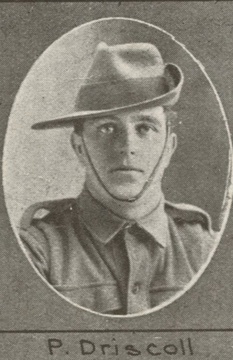
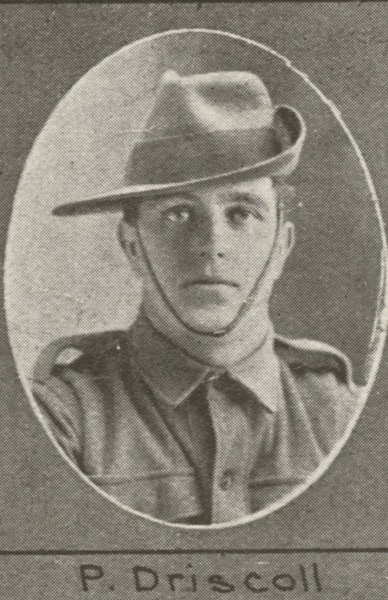
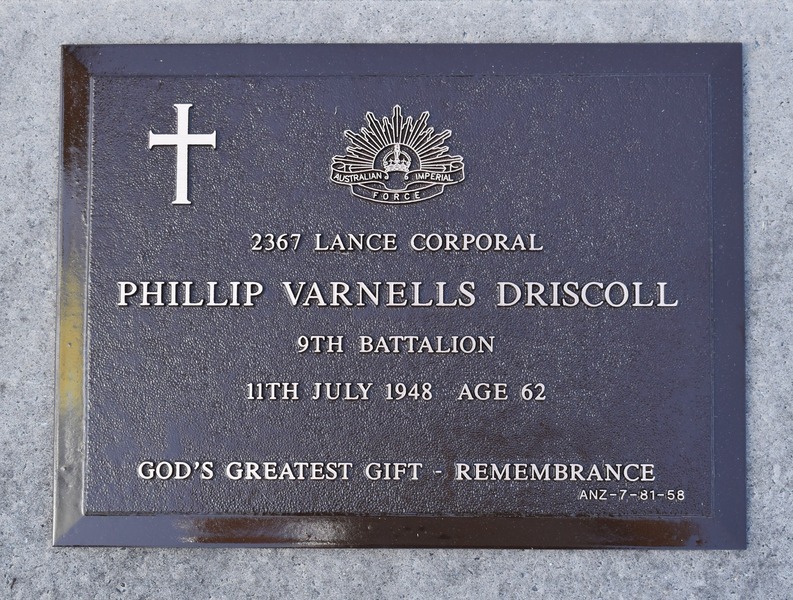
Lance Corporal Phillip Varnells Driscoll (Service No. 2367), an Australian World War One veteran, is among almost 800 previously unmarked WWI veterans’ graves in Lutwyche Cemetery we have now honoured with a plaque recognising their service for Australia.
On 15 April 2023, his plaque was unveiled in Lutwyche Cemetery, along with a further 246 plaques on the previously unmarked graves of Australian World War One veterans:
See Australian Remembrance Army Facebook page
Phillip Varnells Driscoll was born in 1886 in St Saviour, Jersey, Channel Islands, to William Driscoll and Annie Driscoll (née Laffoley). Around 1911, he emigrated to Australia.
Phillip Driscoll enlisted in the Australian Imperial Force at Brisbane on 8 June 1915. He was a single man aged 29 and stated his occupation as gardener. He named his father, William Driscoll of the Channel Islands, as next of kin. Two months later, in August 1915, he embarked from Sydney aboard HMAT Shropshire, bound for overseas service with the 9th Battalion, A.I.F.
After training in Egypt, Driscoll’s unit proceeded to the Western Front. In February 1916, he was hospitalised through illness, but by April 1916 had recovered sufficiently to rejoin his battalion in France, where the men of the 9th Battalion endured the terrible fighting of the Somme campaign. In September 1916, he suffered a gunshot wound to the arm and was evacuated to England for treatment and recuperation. After recovery, he rejoined his battalion in France in January 1917, resuming front-line duty.
His service continued through the later stages of the war, and in October 1918, he was appointed Lance Corporal in recognition of his experience and steady conduct. Following the Armistice, Lance Corporal Driscoll returned home aboard HMAT Suffolk, departing in April 1919 and arriving in Australia in June 1919. He was formally discharged from the A.I.F. on 30 July 1919.
Following his return to Australia, between 1937 and 1941 he was living at Somerset Dam, Esk, Qld, and working as a miner. In 1943, he is recorded as living in the same region and working as a blacksmith’s striker. In subsequent years, he lived in Brisbane.
Lance Corporal Phillip Varnell Driscoll died on 11 July 1948, aged 62, and was buried two days later in Anzac Portion 7, Lutwyche Cemetery, Brisbane. He was a single man who never married and had no known children.
Following his death, the Public Curator’s Office in Brisbane assumed responsibility for his estate, as no known relatives could be located in Australia. Among his personal belongings were three war medals and a service badge—treasured reminders of his service with the 9th Battalion during the First World War. In September 1949, the Public Curator forwarded these items to the District Accounts Office at Victoria Barracks, Brisbane, for disposal.
After decades without recognition his place of burial, his grave now bears a plaque commemorating his service to Australia – ensuring his name endures among those remembered for their duty and sacrifice. His identity and dignity have now been restored.
We have remembered him.
Lest We Forget
Click images to start slideshow.