

HORROCKS, James Owen
| Service Numbers: | 3543, 2543 |
|---|---|
| Enlisted: | 4 March 1915, Perth, Western Australia |
| Last Rank: | Signaller |
| Last Unit: | 16th Infantry Battalion (WW1) |
| Born: | Walhalla, Victoria, Australia, 20 February 1895 |
| Home Town: | Cardup, Serpentine-Jarrahdale, Western Australia |
| Schooling: | Not yet discovered |
| Occupation: | Butcher |
| Died: | Norseman. Western Australia, Australia, 24 June 1947, aged 52 years, cause of death not yet discovered |
| Cemetery: |
Norseman Cemetery, Western Australia |
| Memorials: |
World War 1 Service
| 4 Mar 1915: | Enlisted AIF WW1, Private, 3543, 16th Infantry Brigade (2/AIF), Perth, Western Australia | |
|---|---|---|
| 18 Jun 1915: | Involvement Private, 2543, 16th Infantry Battalion (WW1), --- :embarkation_roll: roll_number: '12' embarkation_place: Fremantle embarkation_ship: HMAT Chilka embarkation_ship_number: A51 public_note: '' | |
| 18 Jun 1915: | Embarked Private, 2543, 16th Infantry Battalion (WW1), HMAT Chilka, Fremantle | |
| 2 Aug 1915: | Wounded AIF WW1, Private, 2543, 16th Infantry Battalion (WW1), ANZAC / Gallipoli, James got Vaccina, forcing him to miss the initial reinforcement draft's arrival at Gallipoli. | |
| 22 Oct 1915: | Wounded AIF WW1, Signaller, 2543, 16th Infantry Battalion (WW1), ANZAC / Gallipoli, James got Influenza, he had to report to the field ambulance in Mudros West | |
| 4 Dec 1915: | Wounded AIF WW1, Signaller, 2543, 16th Infantry Battalion (WW1), ANZAC / Gallipoli, James Collapsed from jaundice and D.A.H. after being buried by shell earlier in the conflicted. He was evacuated He was Transferred to another hospital. | |
| 11 Dec 1915: | Transferred AIF WW1, Signaller, 16 Infantry Battalion AMF, James was transferred to a hospital in Alexandria for jaundice. | |
| 5 Jan 1916: | Transferred AIF WW1, Signaller, Australian Army Postal Corps, James was deemed unfit for duty and sent to the postal corps. | |
| 6 Oct 1916: | Wounded AIF WW1, Signaller, 2543, Australian Army Postal Corps, Admitted to hospital on 6 Oct 1916 in Southall, he was discharged from the 2nd Australian Auxiliary Hospital on 24 Nov 1916. | |
| 16 Dec 1916: | Wounded AIF WW1, Signaller, 2543, Australian Army Postal Corps, James entered the 1st Australian Dermatological Hospital at Bulford with a relapse of the syphilis he had originally contracted in Melbourne before being released on 15 Mar 1917 | |
| 17 Mar 1917: | Transferred AIF WW1, Signaller, 70th Infantry Battalion | |
| 21 Apr 1917: | Transferred AIF WW1, Signaller, 16th Infantry Battalion (WW1), 21 Apr 1917 James was reallocated to the 16th Battalion reinforcements at Perham Downs | |
| 29 Apr 1917: | Embarked AIF WW1, Signaller, 2543, 16th Infantry Battalion (WW1), On 29 Apr 1917 he embarked in Folkestone for France. | |
| 6 May 1917: | Involvement AIF WW1, Signaller, 2543, 16th Infantry Battalion (WW1), joined the 16th Battalion on 6 May 1917 at Ribemont where they were re-organising. | |
| 15 Nov 1917: | Transferred AIF WW1, Signaller, 16th Infantry Battalion (WW1), On 15 Nov 1917 he reported ill to hospital with an undiagnosed infection. Treated by the 22nd General Hospital at Dannes Camiers, he was evacuated to England on 5 Dec 1917 and on arrival was admitted to the Fusehall Military Hospital in Carlisle on 6 Dec 1917. | |
| 28 Mar 1918: | Transferred Signaller, 13th Training Battalion (AIF), 13th Training Battalion before marching in to the 4th Division's Signal School at Codford on 28 Mar 1918. | |
| 29 Aug 1918: | Embarked AIF WW1, Signaller, 2543, 16th Infantry Battalion (WW1), James again proceeded overseas to France through Folkestone on 29 Aug 1918, but not before a little unauthorised leave between midnight 20 Aug and 3:25 pm on 21 Aug 1918. His penalty was the loss of a day's pay and 7 days confined to barracks. | |
| 6 Sep 1918: | Involvement AIF WW1, Signaller, 2543, 16th Infantry Battalion (WW1), In France he rejoined the 16th Battalion from 6 Sep to 29 Dec 1918 | |
| 18 Feb 1919: | Discharged AIF WW1, Signaller, 2543, 16th Infantry Battalion (WW1), James was discharged on 3 Jun 1919 by the 5th Military District. |
Circus being buried, and after
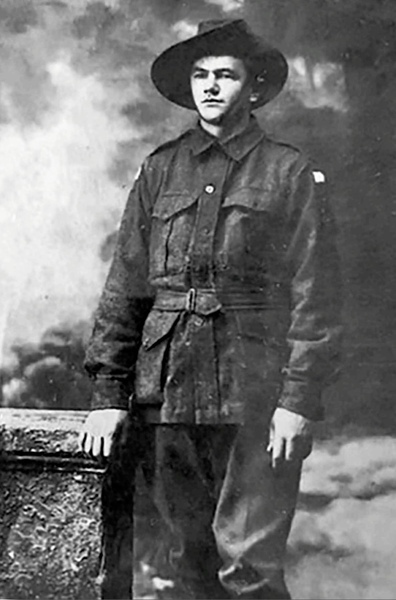
James, or as his friends nicknamed him "Circus"; was apparently quiet a jokester, at least while they were training in Egypt. That fact changed. James was a reinforcement for the 16th, that should have meant his arrival to Anzac cove would be safe right? not even a little. The exact details are unknown; it's from my grandmother and military records I've pieced this together.
Imagine, you and a great friend of yours are in a huge rowboat, sailing with your fellow soldiers to the cove. most likely having conversations with each other. And finally, the moment you've all been waiting for, the moment you've been training for. You step out onto the beach, everyone else does the same. Suddenly an artillery strike blows up your best mate and other fellow soldiers, and the dirt kicked up from this explosion buries you alive, immobilising you.
Eventually you are fished out of the dirt, how long it took is unknown, but no matter the time, James couldn't have wished it to be sooner. He gets out of the dirt, seeing the rumble and death from the strike. Those you've seen as brothers, dead. Then being told to get to work as a signaller jumping trench to trench, maintaining pivotal communication lines for the 16th.
He was recounted as very nervy, obviously being shaken up from seeing his best friend blown up in front of him before being immobilised. James was also suffering a relapse from a disease he got when in Melbourne. Because of this he was sent to a few hospitals, but he could never unsee what he saw. After failing to fix his "weird heart issue" he was just sent back into Gallipoli. Where he learned his mother had passed away back home. James had a lot of nightmares of bleeding headless soldiers; but now his mother dying became a regular topic in his nightmares.
But through all of this, he persevered. He made it to the end of the Gallipoli campaign, then he was told to go to the Western Front. Which he also survived. James came back home a different man. But he married and had two children, one of which was Raymond Alexander Horrocks (named after his brother), although James and his brother had a falling out, so Raymond was renamed Peter. But soon after, James's wife died.
Submitted 5 May 2026 by Jai Eriksen



Click images to start slideshow.