







WATTS, Stanley Edgar
| Service Number: | 114 |
|---|---|
| Enlisted: | 9 September 1914 |
| Last Rank: | Lieutenant |
| Last Unit: | Australian Flying Corps (AFC) |
| Born: | Brisbane, Queensland, Australia, 2 August 1892 |
| Home Town: | Sydney, City of Sydney, New South Wales |
| Schooling: | Not yet discovered |
| Occupation: | Electrical engineer |
| Died: | Brisbane General Hospital, Brisbane, Queensalnd, 18 June 1954, aged 61 years, cause of death not yet discovered |
| Cemetery: |
Lutwyche Cemetery, Brisbane, Qld Anzac Portion 8 at Lutwyche Cemetery, Brisbane. |
| Memorials: |
World War 1 Service
| 9 Sep 1914: | Enlisted AIF WW1, Private, 114, 13th Infantry Battalion | |
|---|---|---|
| 22 Dec 1914: | Involvement Private, 114, 13th Infantry Battalion, --- :embarkation_roll: roll_number: '11' embarkation_place: Melbourne embarkation_ship: HMAT Ulysses embarkation_ship_number: A38 public_note: '' | |
| 22 Dec 1914: | Embarked Private, 114, 13th Infantry Battalion, HMAT Ulysses, Melbourne | |
| 24 Feb 1919: | Discharged AIF WW1, Lieutenant, Australian Flying Corps (AFC) |
Help us honour Stanley Edgar Watts's service by contributing information, stories, and images so that they can be preserved for future generations.
Add my storyBiography contributed by Evan Evans
From Australian Remembrance Army
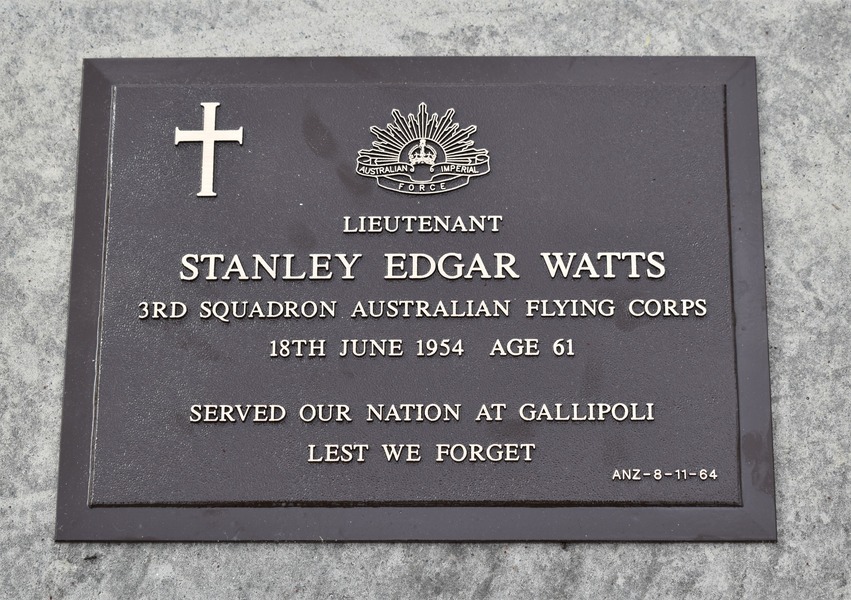
Lieutenant Stanley Edgar Watts, an Australian World War One veteran who served our nation at Gallipoli, is among almost 800 previously unmarked graves in Lutwyche Cemetery we have now honoured with a plaque recognising their service for Australia.
On 23 September 2023, his plaque was unveiled in Lutwyche Cemetery, along with a further 300 plaques on the previously unmarked graves of Australian World War One veterans.
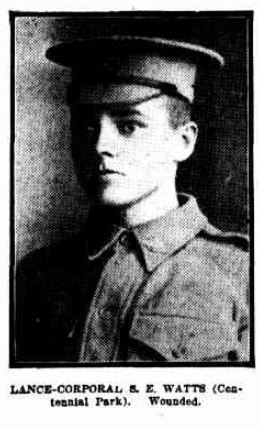
Stanley Edgar Watts was born on 2 August 1892 in Brisbane, Queensland, to George Edgar Watts and Clarissa Elizabeth Watts (née Chadwick). He enlisted in the Australian Imperial Force on 14 September 1914 at Rosebery Park, New South Wales, aged 22, giving his occupation as electrical engineer and naming his father, George E. Watts, as his next of kin.
He was appointed to the 1st Field Company Engineers as a Second Lieutenant and embarked from Sydney aboard HMAT Afric (A19) on 18 October 1914. After training in Egypt, he landed on Gallipoli with the 1st Field Company Engineers, where he was engaged in constructing defensive works and water systems under continuous fire.
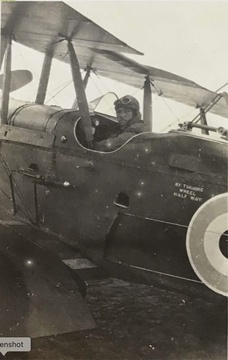
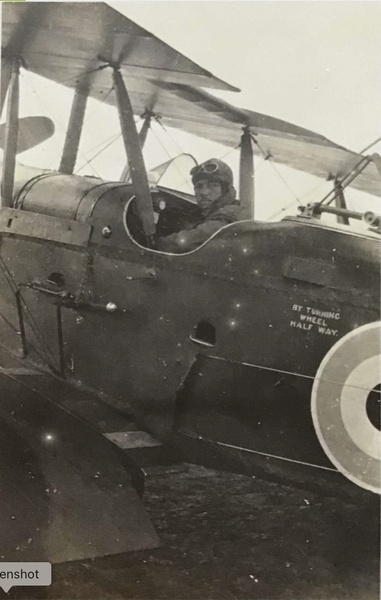
On 16 May 1915, he sprained his back while serving at Gallipoli and was evacuated to Egypt for treatment. After recovery, he rejoined his unit and later transferred to France following the reorganisation of the AIF in early 1916. His promotions reflected his leadership and technical ability: he rose to Lieutenant (Equipment Officer, Class II) and later served in the Australian Flying Corps (AFC), where he was seconded for duty as an observer and instructor.
After lengthy service abroad, he returned to Australia in February 1919, and his appointment with the AIF was terminated.
Stanley’s younger brother, Corporal Victor Edwin Watts (Service No. 7453), served with the 2nd Division Signal Company, Australian Engineers, and was killed in action on 29 September 1917 at Ypres, Belgium, the day after his 21st birthday. He is buried in the Menin Road South Military Cemetery, Ypres.
Following his return to civilian life, Stanley married Doris Mabel Waltham Rush in 1920. He resumed work as an electrical engineer and lived in Brisbane, later residing at the Caboolture War Veterans’ Home.
Lieutenant Stanley Edgar Watts died on 18 June 1954, aged 61, and was interred in Anzac Portion 8 at Lutwyche Cemetery, Brisbane. His wife, Doris, died in Brighton, Victoria, on 28 February 1966. They had no children.
An obituary published in the North Coast and Stanley District News (Caboolture) on 24 June 1954 recorded:
“INTO THE SILENCE. — On 18th inst., at Brisbane General Hospital, Stanley E. Watts, 13th Battalion, and later in the Flying Corps. He entered the Home as a resident last October, suffering greatly and uncomplainingly with severe bronchial trouble, and his end must have been a welcome release. The funeral took place at the Lutwyche Cemetery on Tuesday afternoon, and the usual remembrance service, conducted by Mr Winter, was held under the mango tree at the same time.”
After decades without recognition at his place of burial, his grave now bears a plaque commemorating his service to Australia — ensuring his name endures among those remembered for their duty and sacrifice.
Lest We Forget.
We received grant funding for this grave plaque from the Australian Government under the Marking (First World War) Private Graves Grants Program.
Click images to start slideshow.