








ISLE, William Henry
| Service Number: | 2909 |
|---|---|
| Enlisted: | 3 October 1916 |
| Last Rank: | Private |
| Last Unit: | 47th Infantry Battalion |
| Born: | Temple Hirst, Yorkshire, England, 1888 |
| Home Town: | Toogoolawah, Somerset, Queensland |
| Schooling: | Free Grammar School, Doncaster, England |
| Occupation: | Farmer |
| Died: | Died of wounds, France, 7 July 1917 |
| Cemetery: |
Bailleul Communal Cemetery Extension, Nord Plot III, Row D, Grave No. 222. |
| Memorials: | Australian War Memorial Roll of Honour, Esk War Memorial |
World War 1 Service
| 3 Oct 1916: | Enlisted AIF WW1, Private, 2909, 47th Infantry Battalion | |
|---|---|---|
| 27 Oct 1916: | Involvement Private, 2909, 47th Infantry Battalion, --- :embarkation_roll: roll_number: '19' embarkation_place: Brisbane embarkation_ship: HMAT Marathon embarkation_ship_number: A74 public_note: '' | |
| 27 Oct 1916: | Embarked Private, 2909, 47th Infantry Battalion, HMAT Marathon, Brisbane |
Help us honour William Henry Isle's service by contributing information, stories, and images so that they can be preserved for future generations.
Add my storyBiography contributed by Ian Lang
#2909 ISLE William Henry 47th Battalion
William Isle was born in Temple Hirst, Yorkshire to Charles and Harriet Isle. His family moved to Doncaster where William attended the Free Grammar School. At the age of 26, William emigrated to Australia and found work as a farm labourer with a Mr Menzies of Toogoolawah. William enlisted in Brisbane on 5th October 1916. He stated his age as 29 years and named his father in England as his next of kin. William reported to Enoggera where he was quickly taken on as a reinforcement for the 47th Battalion. William had barely enough time to collect his uniform and kit before the 7thReinforcements boarded the “Marathon” in Brisbane. The haste with which William was despatched is indicative of the desperate need for reinforcements in the AIF. The battles of the Somme campaign during July and August 1916 in which the AIF was involved resulted in 23,000 casualties; killed, wounded or missing.
The embarkation roll for the 7th reinforcements shows William Isle had allocated 3/- of his daily pay of 5/- to be retained in a bank account. The reinforcements landed in Plymouth on 9th January 1917 and then made their way to the 12th Brigade Training Battalion at Codford in Wiltshire where William would finally receive some intensive training. He may also have had the opportunity to go and see his parents.
William arrived at the Infantry Depot at Etaples in France on 29th March and was taken on strength by the 47thBattalion on 7th April. The 47th, part of the 12th Brigade of the 4th Division AIF, had just come out of the 1st Battle of Bullecourt where the battalions of the 12th Brigade had been put into an attack without any artillery protection. Needless to say, the attack failed while adding to the casualty lists. After Bullecourt, there was a short period of rest before taking a train north to the Ypres salient in Belgium in time to take part in the Battle of Messines.
The preparations for the Battle of Messines were meticulous. Large scale models of the terrain to be covered were constructed and all troops who were to take part, which included William and the rest of the 47th Battalion, were walked through the models to familiarize themselves with their objectives. The general in charge at Messines had three and a half million artillery shells at his disposal which would be fired in the days leading up to the attack. In addition, British and Australian tunnellers had been undermining the Messines Ridge for almost 18 months and had placed underground charges in tunnels directly underneath the German defences. On 4th June 1917, as he was preparing to go into battle for the first time, William made out his will bequeathing all of his estate to his mother, Harriet.
On the night of 6th June 1917, the men of the 47th Battalion moved up to the start tapes which had been laid by the intelligence officers in preparation for the signal to commence the advance. At 3:10 am on the 7th June, 19 of the underground mines beneath the Messines Ridge were fired simultaneously. It was the largest manmade explosion in history up to that time and the noise was heard in London.
Two Australian Divisions were included in the order of battle for the attack at Messines. The 3rd Division had responsibility for the northern sector of the front while the 4th Division was tasked with attacking the second line of German trenches, the Oosstaverne Line, behind the village of Messines itself. During the advance, the 12th Brigade encountered difficulties due to the torn up ground caused by the mine explosions. The 47th Battalion eventually reached its objective where the men were instructed to dig in on the Oosstaverne Line.
A breakdown in communications caused the 47th’s position to be strafed by their own artillery on two occasions before the battalion was relieved on 11th June. The 47th went into a rest camp near Poperinghe where William contracted a bout of diarrhoea. He reported to the 12th Casualty Clearing Station where he was severely injured during a night air raid by German Gotha Bombers. William died of his wounds on 7th July 1917 and was buried in the Bailleul Communal Cemetery. William’s parents were granted a pension of 5/- a fortnight each.
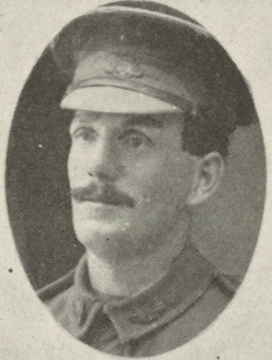
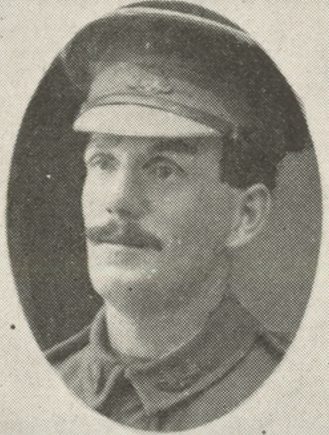

Click images to start slideshow.