







MYERS, William
| Service Number: | 3840 |
|---|---|
| Enlisted: | 20 September 1915 |
| Last Rank: | Private |
| Last Unit: | 9th Infantry Battalion |
| Born: | Kildorrery, County Cork, Ireland, 20 March 1870 |
| Home Town: | Cloncurry, Cloncurry, Queensland |
| Schooling: | Not yet discovered |
| Occupation: | Miner |
| Died: | bronchopneumonia and chronic bronchitis , Brisbane, Queensland, Australia, 16 June 1951, aged 81 years |
| Cemetery: |
Lutwyche Cemetery, Brisbane, Qld |
| Memorials: |
World War 1 Service
| 20 Sep 1915: | Enlisted AIF WW1, Private, 3840, 9th Infantry Battalion | |
|---|---|---|
| 30 Dec 1915: | Involvement Private, 3840, 9th Infantry Battalion, --- :embarkation_roll: roll_number: '9' embarkation_place: Brisbane embarkation_ship: HMAT Itonus embarkation_ship_number: A50 public_note: '' | |
| 30 Dec 1915: | Embarked Private, 3840, 9th Infantry Battalion, HMAT Itonus, Brisbane | |
| 19 Jun 1917: | Discharged AIF WW1, Private, 3840, 9th Infantry Battalion, 1st MD, medically discharged (sickness) |
Help us honour William Myers's service by contributing information, stories, and images so that they can be preserved for future generations.
Add my storyBiography contributed by Evan Evans
From Australian Remembrance Army
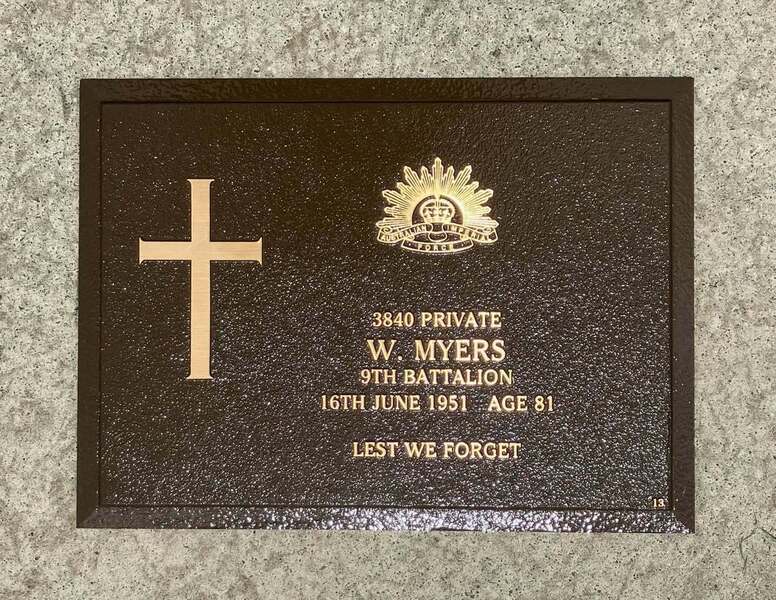
Private William Myers (Service No. 3840), an Australian World War One veteran, is among over 100 previously unmarked WWI veterans’ graves in Lutwyche Cemetery that have been accepted as Official Commemorations by the Office of Australian War Graves.
See Australian Remembrance Army Facebook page
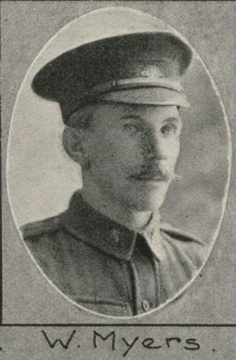
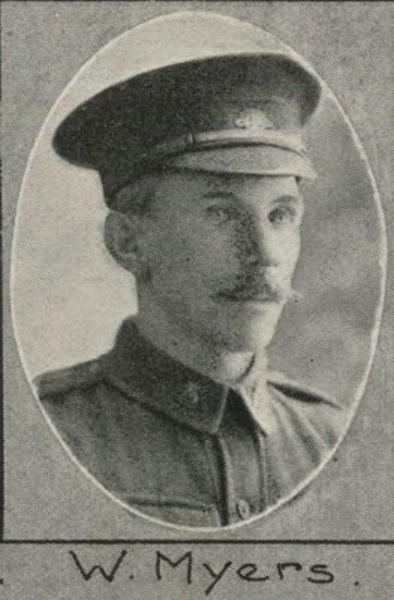
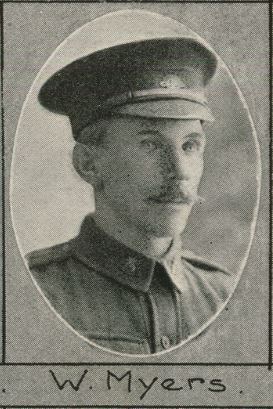
William Myers was born on 20 March 1870 in Kildorrery, County Cork, Ireland, and later migrated to Queensland, where he worked as a miner. When he enlisted in the Australian Imperial Force at Townsville on 20 September 1915, he declared his age as 41 years and 9 months, although his birth date indicates he was in fact 45 years old at the time. He was posted to the 9th Battalion and proceeded to active service on the Western Front on 30 December 1915 aboard HMAT Itonus from Brisbane.
In July 1916, while serving in the trenches in France, he was wounded in action when a fragment of shrapnel struck his left shoulder. The projectile was surgically removed, but the injury left him with permanent limitation of movement in the joint. During his subsequent hospitalisation in England, Myers developed acute nephritis, a serious kidney condition that medical authorities attributed to exposure during active service. He was noted to have marked albuminuria and intermittent swelling, and the condition was regarded as chronic.
Due to the combined effects of his shoulder wound and nephritis, he was medically discharged on 19 June 1917 as permanently unfit for further service. He lived in Queensland as a war pensioner, with medical reviews confirming the persistence of his service-related nephritis.
Private William Myers died in Brisbane on 16 June 1951 from bronchopneumonia and chronic bronchitis at the age of 81. Although his death was not accepted as war-caused under the legislation then in force, his grave was accepted in 2024 for Official Commemoration by the Office of Australian War Graves, formally recognising the enduring consequences of his wartime service and illness.
William Myers was a single man who never married and had no known children.
After decades without official commemoration at his place of burial, his grave now bears a plaque commemorating his service to Australia — ensuring his name endures among those remembered for their duty and sacrifice. His identity and dignity have now been restored.
Lest We Forget
Note from Australian Remembrance Army on the work and criteria towards recognizing veterans without a grave markers.
Many Australians are unaware that, unless specific eligibility criteria are met, returned service personnel are not automatically entitled to an official government-issued headstone or plaque at their place of interment. As a result, tens of thousands of Australian veterans lie in unmarked graves across the country.
War graves, and their protection, are important because they teach future generations about the consequences of conflict.
Eligibility for official commemoration in Australia must satisfy one of the criteria outlined by:
• Commonwealth War Graves Commission (CWGC) – Criteria and qualifying service dates:
https://www.cwgc.org/.../what-are-commonwealth-war-graves/
• Department of Veterans’ Affairs (DVA) / Office of Australian War Graves (OAWG) – Additional war grave eligibility criteria:
https://www.dva.gov.au/.../commemo.../official-commemoration
As part of our research, we submitted the service records and causes of death of several hundred veterans to the Office of Australian War Graves for assessment. To date, more than 100 of these Australian veterans interred at Lutwyche Cemetery have been approved for official commemoration. This means their graves have now been formally marked by the Office of Australian War Graves and will be maintained in perpetuity.
Click images to start slideshow.