







LACEY, Sidney Joseph Martin
| Other Name: | Lacey, Sydney Joseph Martin |
|---|---|
| Service Number: | 2198 |
| Enlisted: | 18 November 1915, Sydney enlisted at Casula on the 18th of November, 1915 |
| Last Rank: | Private |
| Last Unit: | 6th Light Horse Regiment |
| Born: | Lithgow, New South Wales, Australia , 8 May 1889 |
| Home Town: | Woonona, Wollongong, New South Wales |
| Schooling: | Lithgow public school, New South Wales, Australia |
| Occupation: | Miner |
| Died: | Natural causes, Kiama, New South Wales, Australia, 21 October 1968, aged 79 years |
| Cemetery: |
Bulli Cemetery, NSW Portion Ang, row Buried with his Wife, Selina |
| Memorials: | Bulli Great War Memorial, Bulli Roll of Honour, Bulli-Woonona War Memorial |
World War 1 Service
| 18 Nov 1915: | Enlisted AIF WW1, Private, 2198, 6th Light Horse Regiment, Sydney enlisted at Casula on the 18th of November, 1915 | |
|---|---|---|
| 22 Mar 1916: | Involvement Private, 2198, 6th Light Horse Regiment, --- :embarkation_roll: roll_number: '2' embarkation_place: Sydney embarkation_ship: HMAT Pera embarkation_ship_number: A4 public_note: '' | |
| 22 Mar 1916: | Embarked Private, 2198, 6th Light Horse Regiment, HMAT Pera, Sydney | |
| 22 Apr 1916: | Involvement AIF WW1, Private, 2198, 6th Light Horse Regiment, Egypt and Palestine - Light Horse and AFC Operations, Discharged in 1917 due to illness, returned to Australia on the 22nd of January, 1917 | |
| 22 Jan 1917: | Discharged AIF WW1, Private, 2198, 6th Light Horse Regiment |
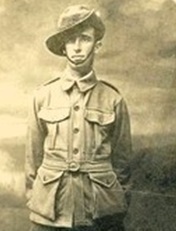
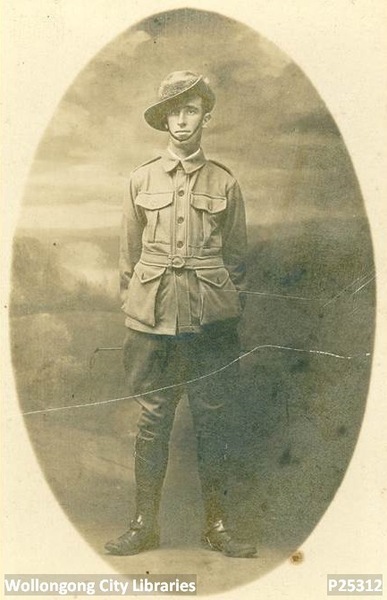
Sydney Joseph Martin Lacey
Sydney Joseph Martin Lacey
He was born in 1889 in Lithgow, NSW. He left school at the age of around 13 to work in the coal mines in the Lithgow area, these mines supplied materials for the steelworks located there. This sounds strange to us now but was quite common for the time as families were poor and people left school to earn money to support the family. The family moved to the Illawarra to work in the mines in the northern suburbs around Bulli and Woonona. He enlisted on the 18th November 1915 at Casula, NSW and completed his training at the Holesworthy Military camp. He was assigned to the 6th Australian Light Horse Regiment.
The Australian Light Horse were a unique formation of mounted infantry that played a significant role in the defense of Australia and in the Allied campaigns during World War I. They were known for their mobility and ability to operate effectively in the challenging landscapes of the Middle East. The Light Horse regiments were part of the Australian Imperial Force and were involved in various operations, including the Gallipoli and Sinai and Palestine Campaigns. The Light Horse regiments were known for their distinctive uniforms, such as the Australian slouch hat and leather bandolier, and were equipped with strong, great-hearted horses known as 'Walers'. The Light Horse regiments were a testament to the bravery and skill of the Australian soldiers and their horses during the war. Sydney served at the battle of Romani, which was a crucial turning point for the Middle Eastern front during the first world war. Sydney was in the 6th Australian Light Horse Regiment, 2nd Light Horse Brigade. At the Battle of Romani, the Light Horse played a crucial role in defending the Suez Canal by holding forward positions, performing reconnaissance, and participating in the counter attacks that forced the Ottomans to retreat.
The Battle of Romani, fought between 3 and 5 August 1916, finally put a stop to the Turkish threat to the Suez Canal and marked the beginning of the British forces' drive out of Egypt and into Palestine. The British defenses were sited amidst a series of towering sand dunes, 35 kms east of the canal, which the Turks tried to outflank to the south early on 4 August. Initially, only the 1st Light Horse Brigade was in position to meet the Turkish attack. Heavily outnumbered it was forced to fall back but as the day progressed both mounted and infantry reinforcements steadily arrived, allowing the position to be stabilized around a massive dune known as Mount Royston, after the charismatic light horse officer Lieutenant Colonel "Galloping Jack" Royston. The position was held throughout the night and before dawn the next morning the 1st and 2nd Light Horse Brigades advanced on foot with the bayonet. Turkish resistance collapsed at this point, and large numbers of prisoners were taken.
At 6.30 am fresh troops of the 3rd Light Brigade were turned loose in pursuit of the retreating Turks.
● 1st Light Horse Brigade (NSW, QLD, SA, TAS) (1st 2nd and 3rd Regiments): Involved in initial defensive actions on 4 August.
● 2nd Light Horse Brigade (QLD, NSW, SA) (5th 6th and 7th Regiments): Reinforced the line and attacked on 5 August.
● 3rd Light Horse Brigade (VIC, SA, WA) (8th 9th and 10th Regiments): Involved in the pursuit of the retreating enemy.
Sydney developed hepatitis while serving in the middle east and spent time in hospital and repatriated to Australia and was discharged from the army in 1917.
After returning to Australia he met and married a widow whose husband was killed in the war, her name was Selina Edith Pringle and she had a baby daughter Kathleen. They settled in the Marrickville area of Sydney and Sydney eventually ended up working for many years on the Tramway, at that time the city had an electric Tram network. Sydney and Selina went on to have 5 children of their own, Mona, William, Sidney, Eleanor and Patricia. Like most families of that time, they lived a “simple” life by today's standards and lived in Sydney through the Second World War. Sydney’s wife Selina was actively involved in politics which was something that wasn’t usual for the period, but he was very supportive of her. They didn’t have extravagant holidays, but they enjoyed an annual Christmas holiday of camping at Windang on the shore of Lake Illawarra, Sydney was a very keen fisherman and enjoyed prawning.
When Sydney retired he and Selina decided to relocate and buy a house and live in Windang, the place of their annual summer holiday. When he retired his workmates at the Tramways built him a model house that they named “Romany” and appears to be able to be used as a moneybox, by dropping the coin down the chimney. It is painted in the colors that were used to paint the Sydney Trams.
Sydney and Selina purchased a house in Waratah St, Windang not far from the lake where he indulged in his passion of fishing. Selina passed away unexpectedly in December 1956. Interestingly, all the children except for Kathleen eventually moved to the area.
Sydney passed away on the 21st October 1968, and obviously well before I had the opportunity to meet and speak with him. I have relied on information from my family to trace his life path. The recurring theme of Sydney Lacey is that he was a man typical of his generation, quiet, very respectful and courteous. He would never utter a swearword with women around and didn’t speak of his wartime experiences. He came from a generation that as a young man found himself fighting in a war on the other side of the world and then came back and simply got on with his life.
Submitted 4 May 2026 by Lachlan Hesse
Click images to start slideshow.