







FRANCIS, William James
| Service Number: | 35609 |
|---|---|
| Enlisted: | Not yet discovered |
| Last Rank: | Gunner |
| Last Unit: | Field Artillery Brigades |
| Born: | Moree, New South Wales, Australia , 21 September 1891 |
| Home Town: | Moree, Moree Plains, New South Wales |
| Schooling: | Not yet discovered |
| Occupation: | Station Manager |
| Memorials: | Moree Memorial Hall Boer War & WW1 Honour Roll, Moree Superior Public School WW1 Roll of Honour |
World War 1 Service
| 2 Aug 1917: | Involvement Gunner, 35609, Field Artillery Brigades, --- :embarkation_roll: roll_number: '4' embarkation_place: Sydney embarkation_ship: HMAT Miltiades embarkation_ship_number: A28 public_note: '' | |
|---|---|---|
| 2 Aug 1917: | Embarked Gunner, 35609, Field Artillery Brigades, HMAT Miltiades, Sydney |
Help us honour William James Francis's service by contributing information, stories, and images so that they can be preserved for future generations.
Add my storyBiography contributed by William Francis
35609 Gunner William James Francis
(Derrived from the National Archive Australia)
03 Feb 16 Enlisted in the Light Horse Rnf, Regt no 1952
23 Sep 16 Discharged Medically unfit
Attestation file says that he was discharged for a hernia and his unit was 12 Lt Horse 233 days
15 Jan 1917 Enlisted 17th Rnf, 5th Artillery Bde
15 Jan 17 Attested
17-19 Feb 17 RASC Recruit
20 Feb 17 Gunner Driver 17th Rnf, 5 FAB
02 Aug 17 T01 Embarked SS HMAT A28 Miltiades
2 Oct 17 Disembark Glasgow
3 Oct 17 Marched in Reserve Brigade Australian Artillery (RBAA) Larkhill
30 Nov 17 Depart England Australian General Base Depot (AGBD) Rouelles, France
3 Dec 17 March in to 1 Div Arty Rouelles
07 Dec 17 Taken on strength CO 1 Div Arty in the Field
14 Jun 18 Admitted Sick 20 Hospital
18 Jun 18 Admitted 4 Hospital
26 Jul 18 Discharged after 45 days Harve
29 Jul 18 Retuned from Hospital to Australian General Base Depot ,AGBD, Harve
31 Jul 18 18 Moved to unit
04 Aug 18 Returned to Unit Racquinhem 17km from Tilques.
14-20 Aug 18 Admitted to Hospital sick placed under observation
31 Aug 18 Returned to 1 FAB
4 Oct 18 Wounded in Action (Mustard Gassed)
5 Oct 18 Reported wounded Le Treport
5 Oct 18 15 Australian Field Artillery Reports Mustard Gassed
12 Oct 18 Moved to Le Harve
14 Oct 18 Moved to AGBD
26 Nov 18 Evacuated to England
26 Nov 18 Arrived in Southampton
10 Dec 18 Returned to Australia
14 Feb 19 Arrived in Australia on HMAT Somali
14 Mar 19 Discharge as Medically unfit
788 Days
Total days served Great War 1 021 Days
61 days at sea to UK
66 days at sea to Australia
58 days in Larhill
361 days in France
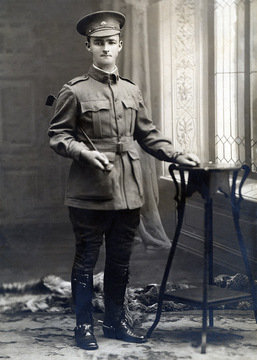
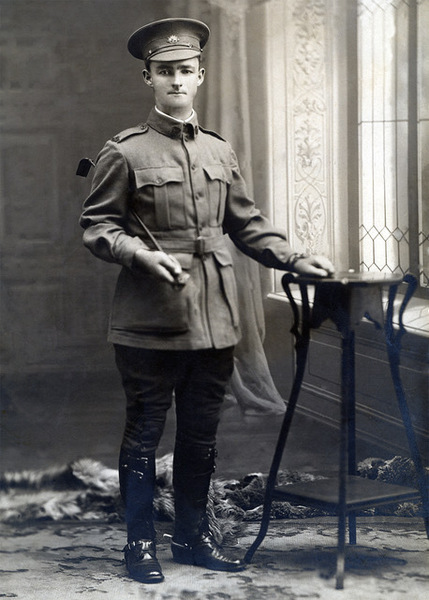
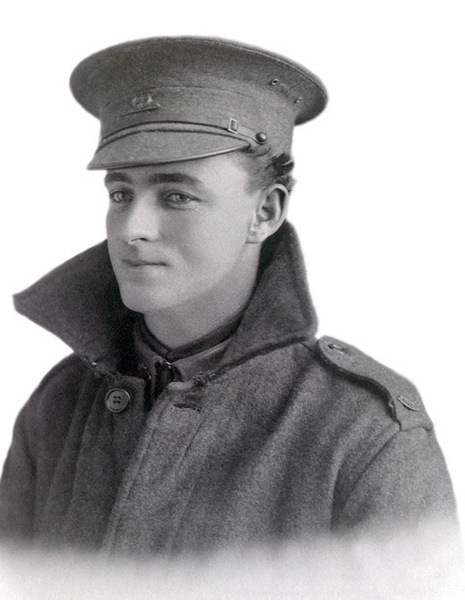
Bill was my paternal grandfather and I also share his name. Bill served for 1 021 days during the Great War; 361 days in France. He served for 719 days in the Voluntary Defence Corps during the Second World War. Such experiences defined a generation and are indelible in the record of the Nation’s character. Thanks to the National Archive, the Australian War Memorial and various troves of images, we can sketch out a picture that can be overlaid with your own meaning and imagination.
Bill enlisted on three occasions; in 1916 he was enlisted as a Light Horse Reinforcement then was Medically Discharged due to a Hernia. In 1917, he enlisted into the Artillery as a Driver and was subsequently Medically Discharged as a result of wounding in France. In 1941, Bill again enlisted, this time into the Voluntary Defence Corps until he discharged at his own request. (Source: NAA).
In a sense, we know more now about what was happen globally than anyone at that time could have comprehended. What we don’t know is what he experienced. This is both a blessing and a curse.
1917
In 1917, Australia Imperial Forces (AIF) sustained 55 000 casualties. 38 000 casualties were sustained at Passchendaele. The majority of the balance was incurred in the two battles of Bullecourt and Messines. This resulted in a manpower crisis. At the same time, the Surgeon General was successful in his insistence that only fit soldiers could be employed for logistical support roles in France. These high medical standards account for Bill’s discharge for Hernia in 1916. By the end of 1917, there were no remaining reserves of trained soldiers.
In Australia, there was a General Strike, which brought widespread industrial disruption and saw 22 unions deregistered. Politically, Australia held its second, unsuccessful conscription referendum in December, further dividing the nation. The year also saw a major Federal election, resulting in a decisive win for Billy Hughes' Nationalist party.
In Russia, the Revolution and election of 31 October 1917, was won partly on the ending of the entente and participation in the War. Russia negotiated an Armistice with Germany and the Russian Army evaporated overnight. This paid a dividend to Germany because the 17 Divisions fighting on the Eastern Front (Russia) were now able to reinforce the forces in the Western Front (Belgium and France). Even though peace talks were discussed, Germany was now preparing for their ‘now or never’ move in 1918 after the winter rain ceased and the ground hardened.
The numbers of the AIF were not being reinforced as they were previously as the nation became ‘War weary.’ This meant that, the far from being able to grow, the AIF retained the same number of Infantry battalions with fewer soldiers. There were some changes in the mechanisms of war. The Infantry were now equipped with the Vickers Machine Gun, which was a game changer. During December of 1917 and into January 1918, the five Australian Divisions were held in Reserve, recuperating in the vicinity of Messines, Belgium. The Artillery were actively searching for and harassing German Artillery.
1918
In 1918, trench warfare was replaced by open warfare in 1918. In March 1918, all Australians came under the command of one Australian Officer, General John Monash. Australian officers, during the years preceding, developed the corporate knowledge of how to fight war at this scale. Those that didn’t developed were removed from command. In 1918, the battle field looked different. Now there were outposts and strong points up front. Other trenches were occupied between those outposts and the main defensive lines. This created large expanses or terrain that was covered by patrolling and observation. This gave that AIF the ability to manoeuvre silently, utilising terrain, darkness and fatigue to their advantage. In the early months of 1918, there was an understanding that the German Master Stroke was inevitable. In spite of this, the Australian’s morale was ‘up’. (Derrived from CEW Bean, ANZAC to Amien)
Why the Artillery?
The AIF was re-structured after the Gallipoli Campaign. The need was for more Infantry, more Artillery and no growth in the Light Horse. To achieve this, Infantry Battalions were split in half to form a new battalion with reinforcements. The guns of the Artillery were drawn by horses. The drivers of such Gun Tractors were skilled horsemen. Some such drivers were drawn Light Horse Regiments. New recruits were diverted from the Light horse to the Artillery, where the need had emerged. It makes sense that Bill was enlisted as a Light Horse Reinforcement and was later enlisted as an Artillery Driver.
Larkhill
In 1916, General Monash had initiated training of the 3rd Division, AIF, on Salisbury Plain, prior to deployment on the Western Front. This training included familiarisation with replica trenches, both British and German. The Artillery Reinforcements also received training at the Artillery School. The Anzacs left their mark on the terrain with various badges cut into the chalk downs. The Australian soldiers are also credited with discarding their apple cores out of the train windows, on the line from Salisbury to Larkhill. The result is a line of apple trees that follow the old rail line. The apples also were a tasty treat for drivers to feed their horses.
The Anzacs had their own terrain here with a YMCA constructed for their down time. Here, they could have a cup of tea and refreshments as well as collecting hot water for shaving. Closer to the training ground on Salisbury Plain was the Bustard Inn. A Bustard is a large bird, native to the region and the symbol of Salisbury. The Bustard Inn was a favourite with Gunners and it still stands today.
There are diggers buried in the villages around Salisbury. They had succumbed to influenza in the pandemic after the Great War.
Instructors of Gunnery and Sergeant Majors Instructors of Gunnery.
Early during the Great War, the Royal Artillery formalised the appointment of Gunnery Instructors to ensure that Gunnery was applied consistently. The Officers, typically Captain Instructors Gunnery (IG), wear a red band around their peak caps. This was meant to identify them as the point of reference for Gunnery procedure. The solider equivalent are Seargent Majors instructor Gunnery (SMIG). The white band was so they can be seen in the tumult of fire and smoke.
Pictured are SMIGs manning various Gun Number roles on an 18 Pounder whist training Australian Artillery at Larkhill.
101st Howitzer Battery
(Derrived from the War Diary of 1st Aust Div Arty)
The Battery was raised at Tel-el-Kebir, Egypt, on 8th March 1916 from members of the 1st Field Artillery Brigade who had served at Gallipoli. The Battery then became part of the 21st Howitzer Brigade. The Battery first saw action in France on 15th May 1916 at a small village called Laventie and remained in the line until 2nd July 1916. After relief they became part of the 1st Field Artillery Brigade which then consisted of the 1st, 2nd and 3rd Field Battery's. 101st Howitzer Battery then saw continuous action until 3rd October 1918 at such places as Pozieres, Ypres, Flers, Lagincourr. Velu Wood, Passchendaele, Messines, Villers-Brettoneaux and Villeret.
On 3rd October 1918, 101 Bty provided support to the 2nd Division, AIF, attack on the Ramincourt-Weincourt-Beaurevoir line. The Beaurevoir Line was the last of a series of German defensive lines known collectively by the Allies as the Hindenburg Line. It was approximately eight kilometres to the rear of the main Hindenburg Line and consisted of thick barbed wire entanglements and well-sited machine and anti-tank gun bunkers. The bulk of the trenches, however, were only partly dug. The original attack on the Hindenburg Line launched on 29 September had been intended to smash right through the Beaurevior Line as well, but had not succeeded in this objective. Along with the 46th British Division, the 2nd Australian Division was ordered to breakthrough the Beaurevoir Line on 3 October 1918.
The Australians were to seize the village of Beaurevoir, and the British Montbrehain. The Australian attack was a success, but was stopped short of the village due to insecure flanks. The British captured Montbrehain, but were unable to retain it. After an ill-fated attempt to capture Beaurevoir on 4 October, the 6th Australian Brigade was launched against Montbrehain the next morning. The village was secure by the end of the day, but came at the expense 430 casualties - a cost regarded as excessively high for such a limited objective. The action at Montbrehain was the last battle fought by Australian infantry during the war. At 07.25 on 3 October 1918, the 101st Howitzer Battery was heavily shelled with High Explosive and Mustard Gas. Bill was a casualty. He was evacuated immediately and admitted to hospital on 5 October 1918.
In the last nine months of action, 101st Howitzer Battery fired a substantial percentage of the 1st Field Artillery Brigades 250,000 rounds.
Bill wore his Services Rendered 'Wounding' badge and Return from Active Service in the AIF badge with pride. He declared that he never wanted to travel by sea again!
Click images to start slideshow.