







TIDBURY, William Henry
| Service Number: | 2031 |
|---|---|
| Enlisted: | 13 January 1915 |
| Last Rank: | Private |
| Last Unit: | 49th Infantry Battalion |
| Born: | Burton upon Trent, Staffordshire, England, May 1884 |
| Home Town: | Ravenswood, Queensland |
| Schooling: | Not yet discovered |
| Occupation: | Labourer |
| Died: | Brisbane General Hospital, Brisbane, Queensland, 12 January 1950, cause of death not yet discovered |
| Cemetery: |
Lutwyche Cemetery, Brisbane, Qld Anzac Portion 8, Lutwyche Cemetery, Brisbane. |
| Memorials: |
World War 1 Service
| 13 Jan 1915: | Enlisted AIF WW1, Private, 2031, 9th Infantry Battalion | |
|---|---|---|
| 16 Apr 1915: | Involvement Private, 2031, 9th Infantry Battalion, --- :embarkation_roll: roll_number: '9' embarkation_place: Brisbane embarkation_ship: HMAT Kyarra embarkation_ship_number: A55 public_note: '' | |
| 16 Apr 1915: | Embarked Private, 2031, 9th Infantry Battalion, HMAT Kyarra, Brisbane | |
| 22 May 1918: | Discharged AIF WW1, Private, 2031, 49th Infantry Battalion, 1st MD, medically discharged, wounding |
Help us honour William Henry Tidbury's service by contributing information, stories, and images so that they can be preserved for future generations.
Add my storyBiography contributed by Evan Evans
From Australian Remembrance Army
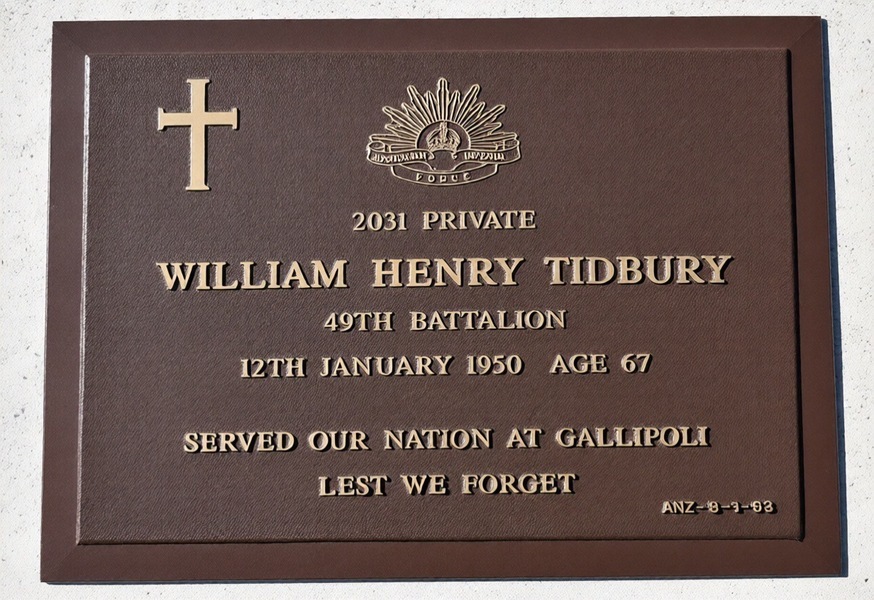
Private William Henry Tidbury (Service No. 2031), an Australian World War One veteran, is among almost 800 previously unmarked WWI veterans’ graves in Lutwyche Cemetery we have now marked with plaques in recognition of their service for Australia.
We unveiled his plaque in Lutwyche Cemetery on 23 September 2023, along with a further 300 plaques on the previously unmarked graves of Australian World War One veterans:
See Australian Remembrance Army Facebook page
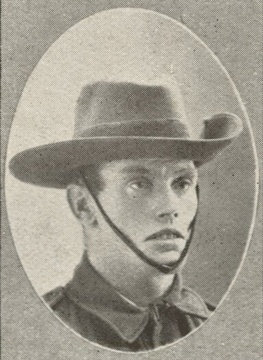
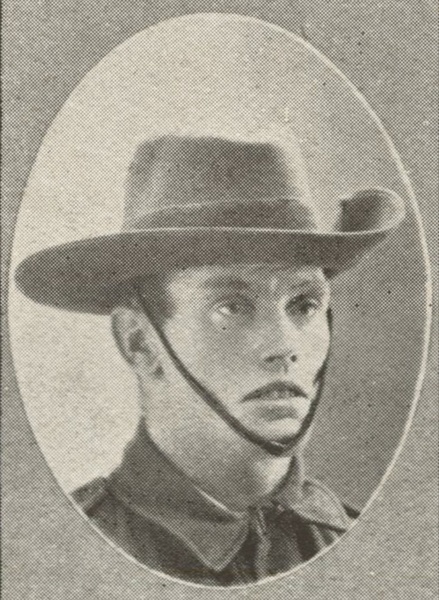
William Henry Tidbury was born in 1883 in Burton upon Trent, Staffordshire, England, to William Tidbury and Ruth Tidbury (née Shail). He enlisted in the Australian Imperial Force in Cairns, Qld, on 13 January 1915, stating his occupation as labourer and nominating his mother as next of kin. On 16 April 1915, he embarked for overseas service with the 9th Battalion aboard HMAT Kyarrra from Brisbane.
In December 1915, he was admitted to hospital at Lemnos suffering from jaundice. After fourteen days’ treatment, he was transferred to the Sarpi Convalescent Depot and rejoined his unit later that month at Lemnos, subsequently serving at Gaba Tepe on the Gallipoli Peninsula.
In February 1916, Private Tidbury was transferred from the 9th Battalion to the newly formed 49th Battalion. Soon afterwards, he was posted to the 13th Light Trench Mortar Battery, reflecting the increasing demand for specialist support units on the Western Front. During his service in France and England, he experienced repeated periods of illness and hospitalisation. In December 1916, he was evacuated to England and admitted to hospital at Edgbaston, where he underwent an appendicectomy. He spent several months recovering in auxiliary hospitals and convalescent depots before returning to duty.
In 1917, Private Tidbury was posted to the 69th Battalion. During this period, he sustained a gunshot wound to the buttock and head and was again hospitalised, including treatment at Fulham Military Hospital in London. Following further recovery and training, he returned to France later in 1917.
Ongoing medical issues resulting from his wounds led to his eventual return to Australia. In February 1918, he embarked for home aboard H.T. Llanstephan Castle and was discharged from the Australian Imperial Force on 22 May 1918. Following his return to Australia, he is recorded as living in North Queensland and continued working as a labourer. William Henry Tidbury never married and had no known children.
Private William Henry Tidbury died on 12 January 1950, aged 67, and was buried in Anzac Portion 8, Lutwyche Cemetery, Brisbane.
His obituary, published in the Townsville Daily Bulletin a week later, stated that,
"he died at the Brisbane General Hospital after a short illness. Born in England, he migrated to Australia with his family aboard RMS Quetta and later settled at Ravenswood. Except for the period of his service with the 1st A.I.F., he resided in North Queensland and was particularly well known in the Mackay and Lower Burdekin districts. He was survived by two sisters, Mrs E. M. Jennings of Townsville and Mrs E. J. Andrew of Rita Island, Ayr."
After decades without recognition at his place of burial, his grave now bears a plaque commemorating his service to Australia — ensuring his name endures among those remembered for their duty and sacrifice. His identity and dignity have now been restored.
We have remembered him.
Lest We Forget.

Click images to start slideshow.