








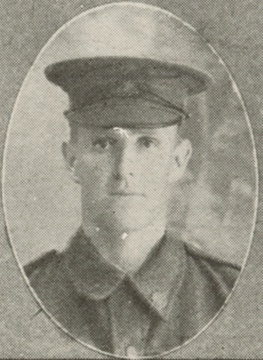
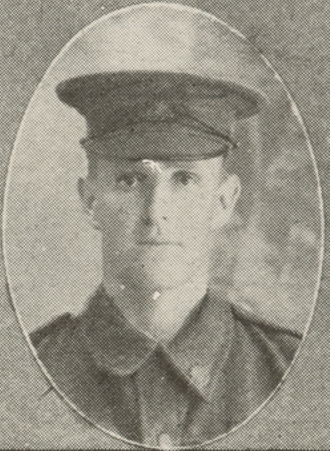
LEVINGE, Gerald Henry
| Service Numbers: | 3370, 3370A |
|---|---|
| Enlisted: | 26 October 1916 |
| Last Rank: | Private |
| Last Unit: | 47th Infantry Battalion |
| Born: | Ryde, Isle of Wight, England, 6 October 1889 |
| Home Town: | Warwick, Southern Downs, Queensland |
| Schooling: | Felsted School, Essex, England |
| Occupation: | Farmer |
| Died: | Killed in action, France, 5 April 1918, aged 28 years |
| Cemetery: |
No known grave - "Known Unto God" Villers-Bretonneux Memorial, Villers-Bretonneux, Picardie, France |
| Memorials: | Australian War Memorial Roll of Honour, Villers-Bretonneux Memorial, Warwick War Memorial Gates |
World War 1 Service
| 26 Oct 1916: | Enlisted AIF WW1, Private, 3370, 47th Infantry Battalion | |
|---|---|---|
| 24 Jan 1917: | Involvement Private, 3370, 47th Infantry Battalion, --- :embarkation_roll: roll_number: '19' embarkation_place: Sydney embarkation_ship: HMAT Ayrshire embarkation_ship_number: A33 public_note: '' | |
| 24 Jan 1917: | Embarked Private, 3370, 47th Infantry Battalion, HMAT Ayrshire, Sydney | |
| 5 Apr 1918: | Involvement Private, 3370A, 47th Infantry Battalion, --- :awm_ww1_roll_of_honour_import: awm_service_number: 3370A awm_unit: 47th Australian Infantry Battalion awm_rank: Private awm_died_date: 1918-04-05 |
Help us honour Gerald Henry Levinge's service by contributing information, stories, and images so that they can be preserved for future generations.
Add my storyBiography contributed by Stephen Brooks
Gerald Henry Levinge was the son of the late Sir William Henry Levinge, 9th Baronet and of Lady Emily Levinge, of Blunsdon, Wilts, England. He was born at Ryde, Isle-of-Wight.
Gerald was 6ft 4½ins tall and was working as a grazier in Queensland when he enlisted on 26 October 1916. His father had passed away in England in 1900 and Gerald arrived in Queensland a few years later, when he was about 14 years of age. He had an uncle farming at Miles in Queensland.
Gerald had four other brothers who served in WW1, one with the AIF.
Gerald joined the 47th Battalion during April 1917 and saw twelve months of heavy fighting before, on 5 April 1918, he was in a support trench with 'C' Company up the slope from the railway embankment at Dernancourt and directly in the path of the main German attack. The 47th's front line was virtually annihilated and the support lines overwhelmed.
Gerald was reported wounded and missing. Extensive searches were made by the Red Cross on behalf of his family to find out what had happened to him.
'Was wounded at Dernancourt near Albert. Very badly in the spine on the 5th of April. He begged me to shoot him as he was suffering so much. There was no means of moving him and he was left and I don't know what became of him. Medium colour, 25 or 26, over 6ft. His people are in England, but I don't know where for certain, Isle of Wight I think.'
'He was a tall chap. I knew him well. He was a Reinforcement. I saw him shot by machine gun straight through the body about 9am. He was left lying in the trench when we were taken. I tried to put him under cover, but they were blowing in the trench and there were only about 5 of us left. I asked him could he move but he seemed to be paralysed. Was in pain.'
His mother noted on his roll of honour form, “He had four other brothers serving, one of whom was in the AIF and was wounded on the Somme in 1916. The eldest one was killed in the 1st Battle of Ypres in 1914, and the other was severely wounded in the Battle of Loos 1916, losing his leg. The other being mentioned in despatches in 1917 and slightly wounded in the Ypres salient in 1918.”
His brother, 4766 Private Charles Horace Levinge 17th Battalion AIF, enlisted in Sydney and was shot in the leg during late 1916 and returned to Australia in 1917.
His eldest brother, Lieutenant Sir Richard William Levinge, 10th Bart, 1st Life Guards, was killed in action, aged 36, on 24 October 1914 and buried in Belgium.
Another brother, Major Thomas Vere Levinge, 13th Northumberland Fusiliers was wounded and lost his left leg in 1916.
Another brother, Captain Reginald Augustus Levinge Royal Artillery was mentioned in despatches.
Click images to start slideshow.