







KENNEY, Dudley Austin
| Service Numbers: | 900, 903 |
|---|---|
| Enlisted: | 3 December 1914, 2 years West Kent Yeomanry |
| Last Rank: | Private |
| Last Unit: | 1st Light Horse Regiment |
| Born: | Acton, Middlesex, England, September 1889 |
| Home Town: | Manly, Manly Vale, New South Wales |
| Schooling: | Not yet discovered |
| Occupation: | Dealer |
| Died: | Brisbane Hospital, Brisbane, Queensland, Australia, 30 May 1946, cause of death not yet discovered |
| Cemetery: |
Lutwyche Cemetery, Brisbane, Qld previously New Farm, Brisbane. Interred Anzac Portion 7 |
| Memorials: |
World War 1 Service
| 3 Dec 1914: | Enlisted AIF WW1, Private, 900, 6th Light Horse Regiment, 2 years West Kent Yeomanry | |
|---|---|---|
| 17 Mar 1915: | Involvement Private, 900, 6th Light Horse Regiment, --- :embarkation_roll: roll_number: '2' embarkation_place: Sydney embarkation_ship: HMAT Shropshire embarkation_ship_number: A9 public_note: '' | |
| 17 Mar 1915: | Embarked Private, 900, 6th Light Horse Regiment, HMAT Shropshire, Sydney | |
| 10 Aug 1916: | Discharged AIF WW1, Private, 903, 1st Light Horse Regiment, Medically unfit |
Help us honour Dudley Austin Kenney's service by contributing information, stories, and images so that they can be preserved for future generations.
Add my storyBiography contributed by Evan Evans
From Australian Remembrance Army
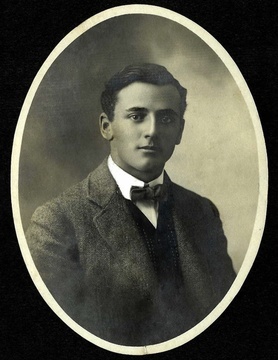
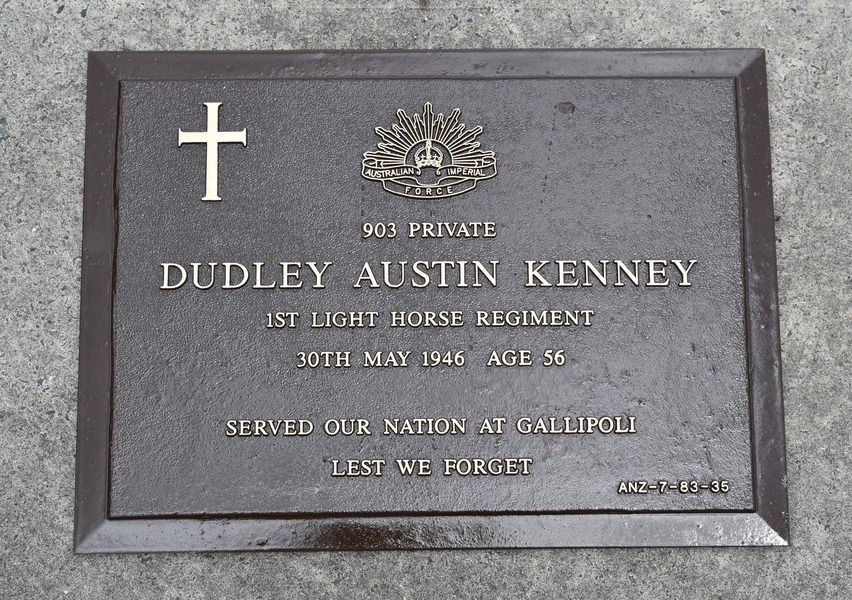
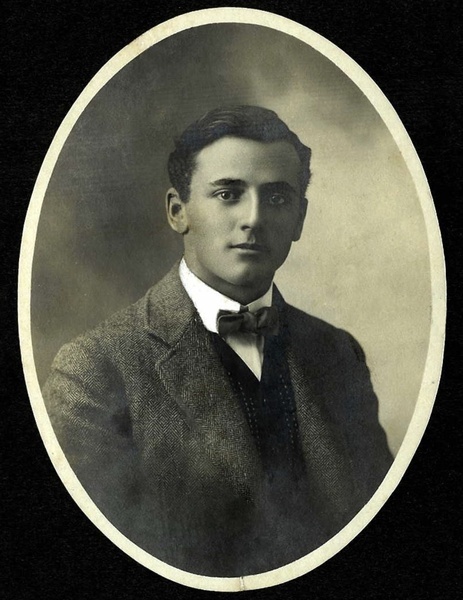
Private Dudley Austin Kenney (Service No. 903), an Australian World War One veteran who served our nation at Gallipoli, is among almost 800 previously unmarked WWI veterans’ graves in Lutwyche Cemetery we have now marked with a plaque recognising their service for Australia.
We unveiled his plaque in Lutwyche Cemetery on 15 April 2023, along with a further 246 plaques on the previously unmarked graves of Australian World War One veterans:
See Australian Remembrance Army Facebook page
Dudley Austin Kenney was born in September 1890 in Acton, Middlesex, England, to Henry Kenney and Sarah Ann Kenney (née Austin). At the age of nineteen he travelled to Canada, arriving at St John, New Brunswick, in March 1910. He later returned to England and departed from Southampton in October 1911, arriving in Sydney, New South Wales, on 16 November 1911. By 1913 he was living in Ringtail Creek, Queensland, working as a dairy farmer.
On 9 December 1914 Kenney enlisted in the Australian Imperial Force. His attestation recorded him as 25 years 6 months old, unmarried, and employed as a dairyman, with previous service in the West Kents Yeomanry.
His overseas service included embarkation for Gallipoli on 22 August 1915, followed by several hospital admissions in October and November 1915 for influenza and enteric fever. He was admitted to the 15th General Hospital in Alexandria on 13 November 1915 and then to the Convalescent Depot at Port Said on 13 December 1915. He embarked for Australia from Suez on H.T. Ulysses on 3 January 1916. His official discharge from the AIF occurred in the 2nd Military District on 10 August 1916, recorded as medically unfit.
Dudley Kenney married Nina Ivy Maude Bartlett in December 1914 in Chatswood, Sydney. Their first daughter, Nina Austin Kenney, was born and died in 1915. Their second daughter, Theadora Bartlett Kenney, was born in November 1916 in Manly. Kenney and Nina later divorced, with proceedings beginning in 1922 and the divorce finalised in 1924. After the divorce he entered a new relationship with Daisy May Wheeler in Queensland. Daisy appeared under the surname Kenney on the 1925 electoral roll, and they had one daughter together.
In 1925 he and Daisy were living at Newstead, Brisbane, where Kenney was employed as a labourer. Electoral rolls record him living in Brisbane throughout the 1930s, including Merthyr in 1931 and 1934 and Arthur Street, New Farm, in 1936 and 1937. By 1943 he was still residing at New Farm, Brisbane, working as a wharf labourer.
Dudley Austin Kenney died on 30 May 1946 at Brisbane Hospital and was buried in Anzac Portion 7, Lutwyche Cemetery, Brisbane.
After decades without recognition at his place of burial, his grave now bears a plaque commemorating his service to Australia — ensuring his name endures among those remembered for their duty and sacrifice. His identity has now been restored.
We have remembered him.
Lest We Forget.
Click images to start slideshow.