








GALLAGHER, Edmund Patrick
| Service Number: | 5696 |
|---|---|
| Enlisted: | 7 January 1916 |
| Last Rank: | Private |
| Last Unit: | 13th Infantry Battalion |
| Born: | Wollongong, New South Wales, Australia , 12 April 1897 |
| Home Town: | Wollongong, Wollongong, New South Wales |
| Schooling: | Not yet discovered |
| Occupation: | Wheeler |
| Died: | Killed in action, Gueudecourt, France, 4 February 1917, aged 19 years |
| Cemetery: |
Bancourt British Cemetery V G 18 |
| Memorials: | Australian War Memorial Roll of Honour, Wollongong Keiraville District Honour Roll |
World War 1 Service
| 7 Jan 1916: | Enlisted AIF WW1, Private, 5696, 13th Infantry Battalion | |
|---|---|---|
| 3 May 1916: | Involvement Private, 5696, 13th Infantry Battalion, --- :embarkation_roll: roll_number: '11' embarkation_place: Sydney embarkation_ship: HMAT Clan McGillivray embarkation_ship_number: A46 public_note: '' | |
| 3 May 1916: | Embarked Private, 5696, 13th Infantry Battalion, HMAT Clan McGillivray, Sydney |
Help us honour Edmund Patrick Gallagher's service by contributing information, stories, and images so that they can be preserved for future generations.
Add my storyBiography contributed by Stephen Brooks
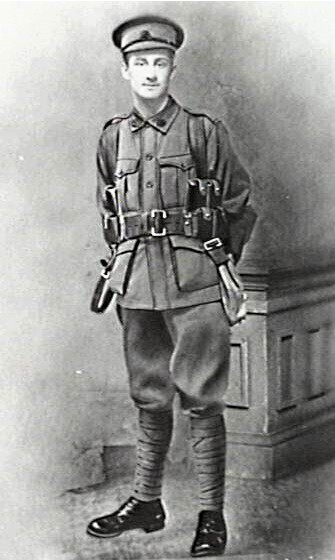
Edmund was born in 1897 at Wollongong, New South Wales. He was the son of Patrick Michael Gallagher and Mary Ann Hughes.
He enlisted on 6 January 1916 in the 13th Australian Infantry Battalion.
At the time of enlistment, he was 5'11" tall, weighing 161 lbs, of dark complexion with black hair and brown eyes. His parents were living in Keiraville, Wollongong, New South Wales, Australia at the time.
He joined the 13th Battalion during October 1916. Edmund Gallagher was killed in action on the night of 4 February 1917, when the 13th Battalion captured Stormy Trench. The taking of the trench went into legend in the AIF as the night Captain Harry Murray won the Victoria Cross.
Gallagher was reported to have been hit near the heart by a small shell fragment, while occupying the German trench, and although the stretcher bearers were carrying him out, he died before they could get far. It is noted in his file that at the time he was buried at Pioneer Junction, just east of Gueudecourt. After the war his remains were shifted to Bancourt British Cemetery.


Click images to start slideshow.