








CHINNER, Wilfred Prior
| Service Numbers: | 3469, 3469B |
|---|---|
| Enlisted: | 15 July 1915, Keswick, South Australia |
| Last Rank: | Sergeant |
| Last Unit: | 10th Infantry Battalion |
| Born: | Brighton, South Australia, 26 July 1896 |
| Home Town: | Brighton, Holdfast Bay, South Australia |
| Schooling: | Adelaide High School, South Australia |
| Occupation: | Clerk |
| Died: | Killed in Action, France, 10 August 1918, aged 22 years |
| Cemetery: |
Heath Cemetery, Picardie, France |
| Memorials: | Adelaide High School Great War Honour Board, Adelaide High School The Fallen, Adelaide Savings Bank of South Australia Honour Roll WW1, Australian War Memorial Roll of Honour, Brighton Arch of Remembrance, Brighton WW1 Roll of Honour, The South Australian National War Memorial |
World War 1 Service
| 15 Jul 1915: | Enlisted AIF WW1, Keswick, South Australia | |
|---|---|---|
| 12 Jan 1916: |
Embarked
AIF WW1, Private, 3469, 27th Infantry Battalion, --- :embarkation_roll: roll_number: '15' embarkation_place: Adelaide embarkation_ship: HMAT Borda embarkation_ship_number: A30 public_note: '' |
|
| 12 Jan 1916: | Embarked AIF WW1, Private, 3469, 27th Infantry Battalion, HMAT Borda, Adelaide | |
| 10 Aug 1918: |
Involvement
AIF WW1, Sergeant, 3469B, 10th Infantry Battalion, "The Last Hundred Days", --- :awm_ww1_roll_of_honour_import: awm_service_number: 3469B awm_unit: 10 Battalion awm_rank: Sergeant awm_died_date: 1918-08-10 |
|
| Date unknown: | Involvement 3469, 10th Infantry Battalion |
Help us honour Wilfred Prior Chinner's service by contributing information, stories, and images so that they can be preserved for future generations.
Add my storyBiography
Wilfred Prior CHINNER was born on 26th July, 1896 in South Australia
His parents were Arthur Robert CHINNER and Grace Harriet PRIOR
Biography contributed by Reynella East College
Born on 26th of July, 1896, in Brighton to parents Grace Harriet Prior and Arthur Robert Chinner.(1) Wilfred Prior Chinner came from a well established and respected family in Brighton. His father was elected as Auditor for the Brighton Council, looking after the city’s finances.(2) Wilfred was educated at Brighton School, and then Adelaide High School respectively. He was very studious, excelling in both Numeracy and English.(3) He was active in the Brighton Methodist Church and Sunday school, described as an ‘ardent church worker’.(4) Before his enlistment, he worked as a clerk at the State Savings Bank. Where his manager considered him utterly reliable.(5) He also had two years of cadet training, which prepared him for his military service, though at the time of enlistment he was unmarried,(6) leaving behind only his parents and community to bear the weight of his sacrifice.
On the 28th of July, mere days after his nineteenth birthday, Wilfred enlisted in the A.I.F as a private in the 27th Infantry battalion, 8th Reinforcement at Keswick, South Australia.(7) After his training in Australia, he embarked from Adelaide aboard HMAT Borda on 12th of January 1916, bound for Egypt. Following further training at Zeitoun, he transferred to the 10th Infantry Battalion on the 27th of February(8) – the unit that would define his war service.
In March 1916, the 10th Battalion sailed for Marseille and the Western Front;(9) this marked the beginning of Wilfred’s own war. Within months of reaching the Western Front, he’d been promoted back up to corporal. However, following his achievement came a cost – on the 1st of August, four months after Wilfred's arrival in France, he was critically injured, sustaining a gunshot wound to the hip.
The severity of his injury was highlighted by the lengthy medical odyssey that followed. On the 23rd of August, he was admitted to the 1st Canadian General Hospital at Etaples, from there, he’d been evacuated to England, his injury too severe to receive treatment near the front lines. From the months of August to November of 1916, he moved between hospitals including Edmonton to the 3rd Auxiliary Hospital as military doctors worked on restoring his ability to walk, let alone serve. For many soldiers, this would have indicated the end of service and a return to civilian life.
After months of enduring painful recovery, on the 8th of November, 1916, he’d been discharged from 3rd Auxiliary hospital and then ordered to report to Perham, a convalescent depot, where he would have gradually regained his strength to return to duty. Following his discharge, he marched to the 3rd Training Battalion in England. By early February of 1917, he’d been appointed to the cadre.(10)
Yet on 30th of July 1917, he chose to leave the relative safety of training to return to the Western Front, accepting demotion to corporal once again. He left England and embarked for France via Darrington and Stamford, marking the end of his instructional duties and his return to active combat service. Upon arrival in Le Havre just one day later, he was processed through the 1st ANZAC Depot. Within days, on the 5th of August, he proceeded from the depot to locate his unit and by the 11th of August, Wilfred had officially rejoined the 10th Infantry Battalion once again.(11)
Within two months of rejoining the 10th Battalion, Wilfred found himself right in the brutal fighting at Polygon Wood.Weeks of heavy, continuous rain and the intense and prolonged artillery bombardments destroyed the region’s drainage systems, creating a battlefield of vicious mud.12 During the initial fighting, Wilfred quickly distinguished himself through reconnaissance work, during the night his unit had advanced, he’d been sent out on patrol to locate the German positions and survey the terrain. He'd also captured a German gun.
As the German bombardment intensified, Wilfred was twice buried by exploding shells and briefly knocked unconscious, only to be dug out by his officers. Though wounded, he returned to action within days, rejoining the 10th Battalion from a French hospital. On the night that his company was due to be relieved, he was ordered in daylight to run a message and then bring the relieving company forward to the front. At 6 p.m., Wilfred linked up with the relieving troops and began leading them through the crowded, muddy track toward the battalion headquarters in a pitch black drizzle, Chinner faced disaster when the white tape route suddenly broke. The men halted as he moved forward alone in the darkness, desperately searching for the lost path. Using a flare to orient himself, he briefly mistook a pillbox for their destination before recognising it as an aid post. With battalion headquarters still 400 yards away through the churning mud, he pushed forward with his men.
Without warning, a devastating German barrage came down around them, stopping wouldn’t be an option–shell holes were pouring with rainwater. Through quick thinking and determination, Chinner made his company crouch down low while he crept ahead alone, ensuring that they hadn’t over shot their outposts. Keeping his direction amidst the chaos, he located the company headquarters and completed the relief.
Against all odds, he brought every man safely, arriving just at 11: 58 pm – the only company not to suffer casualties that night. He notes that other companies were lost or cut up. After guiding them all back to safety, Wilfred had spent his night in a pillbox. At dawn, he’d made his way back to the horselines.
The morning after this heroic action, Wilfred was warned for the Blighty, exhausted and likely wounded from his night of leadership under fire. Nearly six weeks later, the significance of his actions was formally recognised when his commanding officer wrote “Again he, under extremely heavy machine gun fire, went out and directed the relieving Battalion to our line with an absolute disregard for his personal safety.”(13) This official recognition captured not just the danger of that night, but Wilfred’s unwavering devotion to his men and duty. This courage formed the basis for his award of the Military Medal.
On 21st October 1917, Wilfred marched into the 3rd Training Battalion after service in France, a brief respite for retraining before his return to the front(14). By March 1918, he was again ordered overseas, leaving Sutton Veny via Stamford to rejoin the harsh realities of the Western Front. On the 27th of March 1918, Wilfred marched in from England to Le Havre, rejoining the fight on the Western Front. On March 27th, he moved out to rejoin his unit, the 10th Infantry battalion. By the 31st of March, his return was formally recorded as from the AIF Headquarters in London. Recognition of Chinner’s exceptional leadership extended beyond the Military Medal, his promotion to Sergeant on the 17th of August reflected the army’s confidence in his abilities.
His final days placed him in the midst of one of the war’s decisive turning points. On August 8th, 1918, the Battle of Amiens began, an offensive so overwhelming that it was named “The black day of the German army.” The 10th battalion had played its part in this triumph, advancing through this heavy resistance as the Allies drove deep into enemy territory. Yet victory came at a price. Sergeant Wilfred Prior Chinner was killed in action on the 10th of August 1918(15), at the age of twenty-two at Creppe Wood(16). His death came just three months before the Armistice would finally silence the guns. The young man who enlisted at nineteen, survived multiple wounds and repeatedly chose to return to combat, would never see the peace his courage had helped secure.
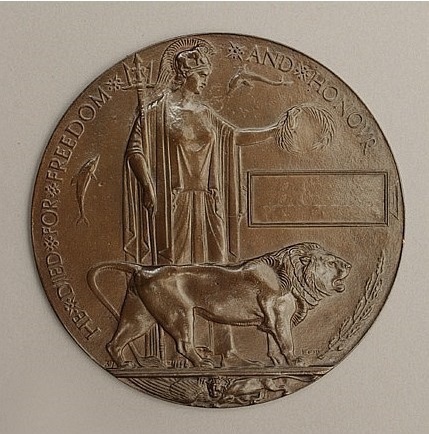
Following his death, his family in Brighton received his Military Medal, Victory Medal, British War Medal, and his Memorial Plaque. His personal effects were sent to his mother and included a wallet, photographs and a certificate. Sergeant Wilfred Prior Chinner was laid to rest at Heath Cemetery, Picardie, France (Plot VII, Row I, Grave No. II)17, among other soldiers who gave their lives in the First World War. Though far from his hometown, Brighton, his grave remains a lasting tribute to his bravery and devotion.
1 “Late Sgt. W.P. Chinner, MM” The Observer, Adelaide, Saturday, 14 September 1918,
https://trove.nla.gov.au/newspaper/article/164162526 [accessed 19 August 2025].
2 “Brighton”, The Express and Telegraph, Tuesday 3 December 1901,
https://trove.nla.gov.au/newspaper/article/210534180?searchTerm=Arthur%20Robert%20Chinner
[accessed 19 August 2025].
3 FamilySearch, Wilfrid Prior Chinner (1896-1918) https://ancestors.familysearch.org/en/2F99-RRV/wilfridprior-
chinner-1896-1918 [accessed 19 August 2025].
4 Virtual War Memorial, Wilfred Prior Chinner, https://vwma.org.au/explore/people/318972, [accessed 19
August 2025].
5 “Our Sainted Dead”,The Australian Christian Commonwealth, 18 October1918,
https://trove.nla.gov.au/newspaper/article/214067766 [accessed 19 August 2025].
6National Archives of Australia, Service Record of Wilfred Prior Chinner, Series B2455, Item 1/1/71,
https://recordsearch.naa.gov.au/SearchNRetrieve/Interface/ViewImage.aspx?B=3243805&S=1&R=0,
[accessed 19 August 2025].
7 The AIF project, Wilfred Prior Chinner, https://aif.adfa.edu.au/showPerson?pid=51904 [accessed 19
August 2025].
8 National Archives of Australia, Service Record of Wilfred Prior Chinner, Series B2455, Item 1/4/71, https://recordsearch.naa.gov.au/SearchNRetrieve/Interface/ViewImage.aspx?B=3243805&S=1&R=0, [accessed 19 August 2025].
9 Australian War Memorial, 10th Battalion AIF: Unit History, https://www.awm.gov.au/collection/U51450 [accessed 19 August 2025]
10 National Archives of Australia, Service Record of Wilfred Prior Chinner, Series B2455, Item 1/5/71, https://recordsearch.naa.gov.au/SearchNRetrieve/Interface/ViewImage.aspx?B=3243805&S=1&R=0, [accessed 19 August 2025].
11 National Archives of Australia, Service of Wilfred Prior Chinner, Item 1/5/71.[accessed 19 August 2025].
12Australian War Memorial, “Battle of Polygon Wood” https://www.awm.gov.au/collection/E84337 [accessed 19 August 2025]
13 Australian War Memorial, ‘Sergeant Chinner, Wilfred Prior’ (AIF) AVM28, https://www.awm.gov.au/collection/R1593188 [accessed 19 August 2025]
14 National Archives of Australia, Service Record of Wilfred Prior Chinner, Series B2455, Item 1/53/71. [accessed 19 August 2025]
15 Australian Red Cross Society, ‘Chinner, Prior Wilfred ‘ SA Red Cross Information Bureau https://images.slsa.sa.gov.au/sarcib/SRG76_1_7888.pdf [accessed 19 August 2025].
16 Commonwealth War Graves Commission, ‘Sergeant Wilfrid Prior Chinner’ CWGC https://www.cwgc.org/find-records/find-war-dead/casualty-details/559210/wilfrid-prior-chinner/ [accessed 19 August 2025]
Bibliography:
PRIMARY SOURCES
National Archives of Australia, Service Record of Wilfred Prior Chinner, Series B2455, Item 1/1/71, https://recordsearch.naa.gov.au/SearchNRetrieve/Interface/ViewImage.aspx?B=3243805&S=1&R=0 [accessed 19 August 2025]. National Archives of Australia, Service Record of Wilfred Prior Chinner, Series B2455, Item 1/4/71, https://recordsearch.naa.gov.au/SearchNRetrieve/Interface/ViewImage.aspx?B=3243805&S=1&R=0 [accessed 19 August 2025]. National Archives of Australia, Service Record of Wilfred Prior Chinner, Series B2455, Item 1/5/71, https://recordsearch.naa.gov.au/SearchNRetrieve/Interface/ViewImage.aspx?B=3243805&S=1&R=0 [accessed 19 August 2025]. Trove, “Late Sgt. W.P. Chinner, MM,” The Observer (Adelaide), 14 September 1918, https://trove.nla.gov.au/newspaper/article/164162526 [accessed 19 August 2025]. Trove, “Our Sainted Dead,” The Australian Christian Commonwealth, 18 October 1918, https://trove.nla.gov.au/newspaper/article/214067766 [accessed 19 August 2025]. Trove, “How Sergeant W.P. Chinner Won His M.M.,” The Australian Christian Commonwealth, 11 April 1919, p. 27, https://trove.nla.gov.au/newspaper/article/214560427 [accessed 19 August 2025]. Trove, “Brighton for Auditor,” The Express and Telegraph, 3 December 1901, https://trove.nla.gov.au/newspaper/article/210534180 [accessed 19 August 2025]. Australian Red Cross Society, “Chinner, Prior Wilfred,” SA Red Cross Information Bureau, https://images.slsa.sa.gov.au/sarcib/SRG76_1_7888.pdf [accessed 19 August 2025].
SECONDARY SOURCES
Australian War Memorial, 10th Battalion AIF: Unit History, https://www.awm.gov.au/collection/U51450 [accessed 19 August 2025].
Australian War Memorial, “Sergeant Chinner, Wilfred Prior (AIF),” https://www.awm.gov.au/collection/R1593188 [accessed 19 August 2025].
Commonwealth War Graves Commission, “Sergeant Wilfred Prior Chinner,” https://www.cwgc.org/find-records/find-war-dead/casualty-details/559210/wilfrid-prior-chinner
/[accessed 19 August 2025].
AIF Project, “Wilfred Prior Chinner,” University of NSW Canberra, https://aif.adfa.edu.au/showPerson?pid=51904 [accessed 19 August 2025].
FamilySearch, “Wilfrid Prior Chinner (1896–1918),” https://ancestors.familysearch.org/en/2F99-RRV/wilfrid-prior-chinner-1896-1918 [accessed 19 August 2025].
Virtual War Memorial Australia, “Wilfred Prior Chinner,” https://vwma.org.au/explore/people/130975 [accessed 19 August 2025
Holdfast Bay Council, Bay to Battlefield Booklet, https://www.holdfast.sa.gov.au/assets/general-downloads/Discover/Bay-to-Battlefield-Booklet_A5P-74034_WEB.pdf [accessed 19 August 2025]



Click images to start slideshow.