







NAPIER, John
| Service Number: | 4110 |
|---|---|
| Enlisted: | 15 August 1915 |
| Last Rank: | Sergeant |
| Last Unit: | 4th Infantry Battalion |
| Born: | Grenfell, New South Wales, Australia, 1 February 1885 |
| Home Town: | Bimbi, Weddin, New South Wales |
| Schooling: | Not yet discovered |
| Occupation: | Farmer |
| Died: | Sydney, New South Wales, Australia, 16 February 1972, aged 87 years, cause of death not yet discovered |
| Cemetery: |
Rookwood Cemeteries & Crematorium, New South Wales |
| Memorials: | Grenfell Great War Memorial, Quandialla War Memorial |
World War 1 Service
| 15 Aug 1915: | Enlisted AIF WW1, Private, 4110, 4th Infantry Battalion | |
|---|---|---|
| 30 Dec 1915: | Involvement Private, 4110, 4th Infantry Battalion, --- :embarkation_roll: roll_number: '8' embarkation_place: Sydney embarkation_ship: HMAT Medic embarkation_ship_number: A7 public_note: '' | |
| 30 Dec 1915: | Embarked Private, 4110, 4th Infantry Battalion, HMAT Medic, Sydney | |
| 24 Apr 1918: | Promoted AIF WW1, Sergeant, 4th Infantry Battalion |
Help us honour John Napier's service by contributing information, stories, and images so that they can be preserved for future generations.
Add my storyBiography contributed by Stephen Brooks
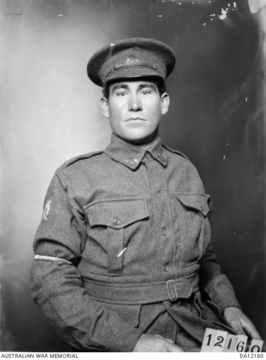
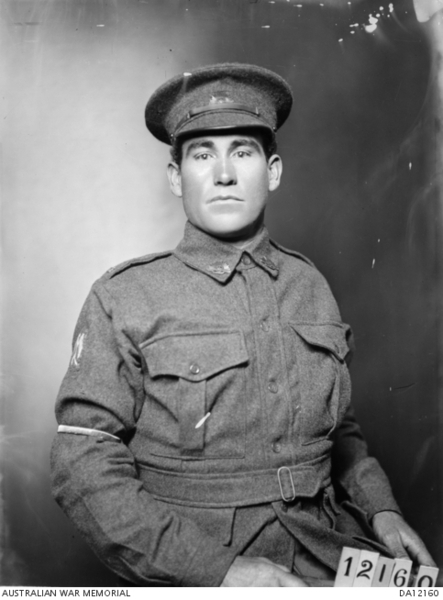
John Napier was a farmer from Bimbi, New South Wales. Known as ‘Jack’ to his family and friends, he was the son of John and Martha Napier.
His brother, 4109 Pte. Charles Herbert Napier enlisted with Jack and they were given consecutive regimental numbers in the 4th Battalion. Charles was later awarded a Distinguished Conduct Medal for conspicuous gallantry in 1918 when bombing enemy dugouts and personally capturing at least eight Germans.
Jack Napier trained as a signaller before embarking for overseas service. He was promoted to Corporal in 1916 and was awarded a Military Medal in Belgium during 1917. “During the operations east of Ypres at Broodseinde Ridge on 4th October, 1917, Cpl. Napier while in charge of a carrying party under severe shelling and heavy machine gun fire displayed great courage. Although wounded he would not leave his men until he had completed his task when he was ordered to report to the R.A.P. He set an excellent example to those under him.”
Later suffering from dysentery he was evacuated to England and was still recovering when the Armistice was declared. He returned to Australia on 31 March 1919.
Click images to start slideshow.