








S2890
DOWD, Bede Francis
| Service Number: | 1443 |
|---|---|
| Enlisted: | 19 July 1915, Keswick, South Australia |
| Last Rank: | Private |
| Last Unit: | 3rd Light Horse Regiment |
| Born: | Yednalue, South Australia, 1 February 1893 |
| Home Town: | Canowie Belt, Northern Areas, South Australia |
| Schooling: | Not yet discovered |
| Occupation: | Farmer/Clerk |
| Died: | Killkenny, South Australia, 10 February 1952, aged 59 years, cause of death not yet discovered |
| Cemetery: |
Cheltenham Cemetery, South Australia |
| Memorials: | Burra District WW1 Honor Roll, Jamestown Canowie Belt Honour Roll, Jamestown Soldier's Memorial Park Arch, Peterborough St Anacletus Catholic Church Honour Board WW1 |
World War 1 Service
| 19 Jul 1915: | Enlisted AIF WW1, Private, 1443, 3rd Light Horse Regiment, Keswick, South Australia | |
|---|---|---|
| 27 Oct 1915: | Embarked AIF WW1, Private, 1443, 3rd Light Horse Regiment, :embarkation_roll: roll_number: '1' embarkation_place: Adelaide embarkation_ship: HMAT Benalla embarkation_ship_number: A24 public_note: '' | |
| 1 Mar 1916: | Embarked AIF WW1, Private, 1443, 3rd Light Horse Regiment | |
| 16 Nov 1917: | Wounded AIF WW1, Private, 1443, 3rd Light Horse Regiment, Egypt and Palestine - Light Horse and AFC Operations, Listed variously as 'BW" and 'GSW' (general shrapnel wound - but actually a crush injury after his horse rolled on him and trapped him | |
| 12 Sep 1918: | Discharged AIF WW1, 1443, 3rd Light Horse Regiment |
Bombed by "friendly" planes
Bede Francis Dowd was initially sent to near Cairo and was relocated to his 3LHR at Romani on 14 June 1916 after a brief hospital spell with iritis. This meant he missed being with his regiment when they were seriously attacked by Turkish planes on 1 June.
Over the next 14 months he was active in every enemy contact by his regiment during which time they suffered almost 50% casualties (killed or wounded). Casualties occurred at Romani, Magdhaba, Rafah, Kharbit Erk, Tel El Saba (Beersheba), Khuweilfeh and finally (for Bede) at Jemmameh on 8 November 1917.
The 3LHR had moved through the brigade line sweeping north late that afternoon to set up an outpost line for the night on an undefended ridge about 1km ahead. "Friendly planes"(Royal Flying Corp and Australian Flying Corps had the same planes and same markings) presumably mistook them for fleeing Turkish cavalry and attacked them with machine guns and bombs.
Bede suffered a mild shrapnel wound and was admitted to the field ambulance that day. All the troopers, except very recent reinforcements, were in a run-down state as a result of poor diet (bully beef and hardtack), rough living conditions and recent exertions. Antibiotics were not available in WW1. Consequently, a mild wound resulted in Bede having his left arm amputated about 5 days later either at Kantara or Cairo. It is highly unlikely that Bede was ever trapped under his horse for any length of time, if at all. The story may have been told to us grandchildren as a cover for what really happened.
Submitted 16 January 2026 by David Dowd
Biography
Bede Francis Dowd was the son of David William Dowd and Charlotte Augusta Dowd (nee Seal). David William arrived in Australia on the Escort as in infant with his family from County Cavan Ireland. Charlotte was the daughter of George Seal, a former convict from Sussex in the UK.
Bede was injured in or around Egypt and was pinned under his horse for sometime presumed dead. He had his arm amputed and returned to South Australia, where he married Ellen O' Connell and had six children: David Thomas, Margaret, Philomena (Faylie), Robert, Bede and Mary.
Bede worked as a hospital admissions clerk in Adelaide after the war. He was a devout Catholic, with two sisters who had joined the Sisters of Saint Joseph and one son, Robert, who became a Carmelite Priest. By all accounts he was a very polite and principled man and assisted less fortunate relatives during the depression by allowing some to live with his family. His neice Claire lived with the family. He rarely talked about the war except to tell his son that he did not want him to ever have to see the horrors of war.


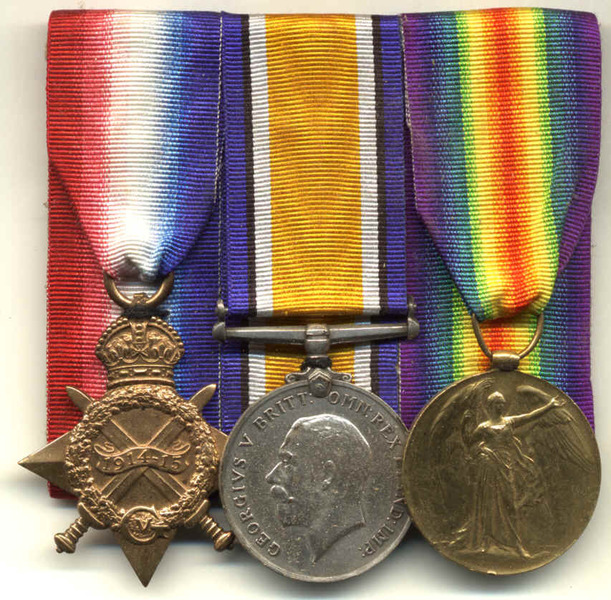
Click images to start slideshow.