








RUSHWORTH, Francis Vawser
| Service Number: | 154676 |
|---|---|
| Enlisted: | 23 April 1945 |
| Last Rank: | Leading Aircraftman |
| Last Unit: | Not yet discovered |
| Born: | Adelaide, South Australia, 20 January 1927 |
| Home Town: | Not yet discovered |
| Schooling: | Adelaide High School, South Australia |
| Occupation: | General office work and junior clerical duties |
| Died: | Illness, Adelaide, South Australia, Adelaide, South Australia, Australia, 25 September 1946, aged 19 years |
| Cemetery: |
Centennial Park Cemetery, South Australia Plot X. Row D. Grave 2, Centennial Park Cemetery, Adelaide, South Australia, Australia |
| Memorials: | Adelaide High School The Fallen, Adelaide South Australian Railways WW1 & WW2 Honour Boards, Adelaide WW2 Wall of Remembrance, Australian War Memorial Roll of Honour |
World War 2 Service
| 23 Apr 1945: | Involvement 154676 | |
|---|---|---|
| 23 Apr 1945: | Enlisted Adelaide | |
| 23 Apr 1945: | Enlisted Royal Australian Air Force, Leading Aircraftman, 154676 | |
| Date unknown: | Involvement |
Help us honour Francis Vawser Rushworth's service by contributing information, stories, and images so that they can be preserved for future generations.
Add my storyBiography contributed by David Barlow
Son of Thomas Henry and Virginia Clara Ethel Rushworth of North Richmond (Adelaide, SA)
Biography contributed by Trevor Pyatt
Leading Aircraftman Francis Vawser Rushworth (1927–1946)
Royal Australian Air Force – Service Number 154676
Francis Vawser Rushworth was born on 20 January 1927 in Adelaide, South Australia, the son of Thomas Henry Rushworth and Virginia Clara Ethel Rushworth (née Bird). He grew up in North Adelaide, and was educated locally to the Intermediate level, later studying accountancy. Before entering military service, Francis was employed as a Junior Clerk with the South Australian Railways, where he developed strong clerical and administrative skills. He was known among colleagues for his diligence, pleasant personality, and sense of responsibility.
Early Life and Civilian Employment
In his RAAF application for enlistment, submitted on 10 November 1944, Francis described his occupation as general office work and junior clerical duties performed for both the Eudunda Farmers Co-operative and the South Australian Railways. His education and work background reflected a disciplined and methodical character—qualities that would later be noted during his RAAF training. At the time of his application, he was living at the family home at 40 Brooker Terrace, North Richmond.
Character References and Parental Consent
As Francis was under 21 years of age, his enlistment required the formal consent of his father. On 10 November 1944, Thomas Henry Rushworth signed the parental declaration authorising his son’s enlistment “for service at home or overseas.”
His application was also accompanied by two exceptional character references. The first, from Pastor F. Hollams of the Church of Christ, Unley, affirmed that he had known Francis for over five years and always found him to be “honest, sober and reliable.” Pastor Hollams wrote that Francis was a member of the Church of Christ at Bowden/Adelaide in good standing and that he recommended him “without hesitation.” The second reference came from Mr. J. H. H. Wood, J.P., who stated that he had worked with Francis in the same office for two years and that he was held “in excellent esteem by his fellow officers.” Both letters, dated 10 November 1944, were signed and accepted as evidence of the applicant’s fine moral character.
Recruitment and Testing
Francis applied to join the Royal Australian Air Force as a trainee in the administrative or equipment branch, noted as “T.R.A. or E.” He attended No. 5 Recruiting Centre, R.A.A.F. Adelaide, at 18 King William Street, where he completed aptitude and medical testing on 17 November 1944. His physical description recorded him as 5 feet 7¾ inches tall, weighing 116 pounds, with a fair complexion, hazel eyes, and medium-coloured hair. His chest measurement was 31 inches normal, expanding to 35 inches. The examining officer described him as “average” in appearance and of “satisfactory” bearing. His hearing and eyesight were rated good, and he was declared fit for Air Force service subject to X-ray clearance.
His aptitude results were strong. He was assessed as unsuitable for air crew but suitable for technical and clerical training, successfully completing the “Ground Staff Aptitude Test” with a total score of 66. On the result of aptitude tests, dated 14 November 1944, he was declared “Successful as Trainee A or E.”
Francis’s initial medical classification was “Fit, Class I,” later confirmed by X-ray on 26 March 1945. His religion was recorded as Church of Christ, and his service identity card was issued under number S5.M27.37198.
Enlistment Approval and National Service Clearance
On 10 January 1945, the Recruiting Centre forwarded Form A.5 to the National Service Officer, Thebarton, seeking release from his civilian employment so he could join the RAAF. The document, signed by Flight Lieutenant R. A. MacLeod for the Squadron Leader commanding No. 5 Recruiting Centre, certified that Francis had passed all trade and medical tests and would be enlisted upon written approval. That approval was granted and stamped “Approved – National Service Officer, Hindmarsh, 5 March 1945.”
Further correspondence in February and April 1945 shows the coordination between the recruiting authorities and Francis regarding medical review and intake scheduling. On 17 April 1945, the RAAF advised that his temporary leg injury had healed sufficiently for inclusion in the next intake, and he was ordered to report on 23 April 1945 for enlistment as Aircraftman, Class I.
Enlistment and Initial Training
Francis formally enlisted in the Royal Australian Air Force at Adelaide on 23 April 1945, aged 18 years and three months. His next of kin was his father, Thomas Henry Rushworth, of North Richmond. After his induction, he was posted to No. 2 Recruit Depot at RAAF Richmond, New South Wales, where he began basic training and instruction in Air Force procedure, discipline, and administration.
He later attended the No. 4 School of Technical Training (S.T.T.), Adelaide, between 5 July and 16 August 1945, undertaking Clerks Course No. 53. His final results were exemplary—88% in practical work, 79% in theory, with an aggregate of 83.5%, earning the distinction “Proficient (with Distinction).” His instructors described him as an intelligent and conscientious trainee with a high level of clerical aptitude.
Service and Conduct
Following his training, Francis was re-mustered as a Clerk and assigned to administrative duties within the RAAF’s South Australian district commands. He served loyally through the final months of World War II and into the post-war demobilisation period. His service record bears no disciplinary entries; every inspection and conduct report lists his character as “Very Good.”
Colleagues and officers noted his reliability and cheerful manner. Despite his youth, he carried out his duties with quiet efficiency and a sense of pride in his uniform.
Illness and Death in Service
In mid-1946, while stationed in South Australia and awaiting discharge, Francis fell seriously ill and was admitted to 105 Australian Military Hospital, Colonel Light Gardens. On 26 July 1946, his condition was reported as “seriously ill – sarcoma,” and on 4 September it was changed to “dangerously ill.” Despite medical care, his health rapidly declined, and he passed away from illness on 25 September 1946, aged just nineteen. His death occurred before the completion of his formal discharge procedure, and he was therefore recorded as “Died on Active Service (Illness).”
Burial and Commemoration
Leading Aircraftman Francis Vawser Rushworth was laid to rest with full military honours at Centennial Park Cemetery, Pasadena, South Australia, in Plot X, Row D, Grave 2. His Commonwealth War Graves Commission headstone bears the RAAF crest, the cross, and the inscription:
“The Lord is My Shepherd.”
He is commemorated on the Australian War Memorial Roll of Honour, the Adelaide WWII Wall of Remembrance, and the RAAF Roll of Honour for South Australian Personnel. His name also appears on the South Australian Railways Honour Board among employees who served in the Second World War.
Legacy
Although his life and service were brief, Leading Aircraftman Francis Vawser Rushworth exemplified the quiet devotion of a generation that came of age during wartime. From his first application in 1944 to his death less than two years later, his record reflects intelligence, moral integrity, and a spirit of service. The careful handwriting of his references and the tone of official correspondence show how deeply he was respected. He remains one of the many young Australians whose promise was never fully realised but whose dedication contributed to the nation’s wartime effort and post-war reconstruction.
Sources
National Archives of Australia, Service File A9301, Item 154676 – RUSHWORTH, Francis Vawser.
(Includes Forms P/P.48, P/P.78/35, A.5, aptitude test results, correspondence, and medical documents from No. 5 Recruiting Centre, Adelaide.)
Australian War Memorial Roll of Honour, Panel 120 – Leading Aircraftman F. V. Rushworth.
Centennial Park Cemetery Register, Pasadena, South Australia – Plot X, Row D, Grave 2.
Royal Australian Air Force Records, No. 4 School of Technical Training, Adelaide – Clerks Course No. 53, 1945.
Church of Christ (Unley) archives, pastoral reference by Rev. F. Hollams, 10 November 1944.
Private papers and correspondence, including character reference by J. H. H. Wood, J.P., 10 November 1944.
Daily Casualty Report No. 213/46, Air Board, 30 September 1946 – Death from illness (sarcoma).
Biography by Trevor Pyatt 25/10/2025


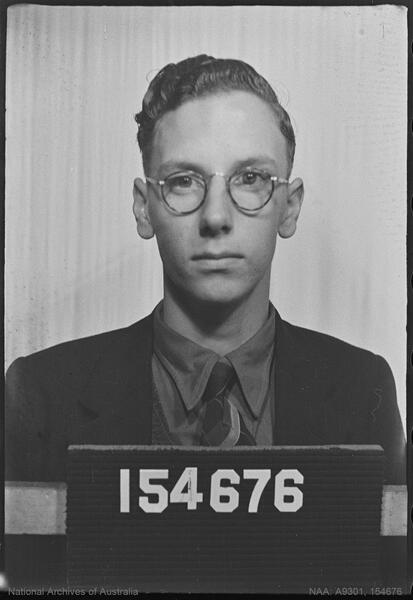
Click images to start slideshow.