








S5932
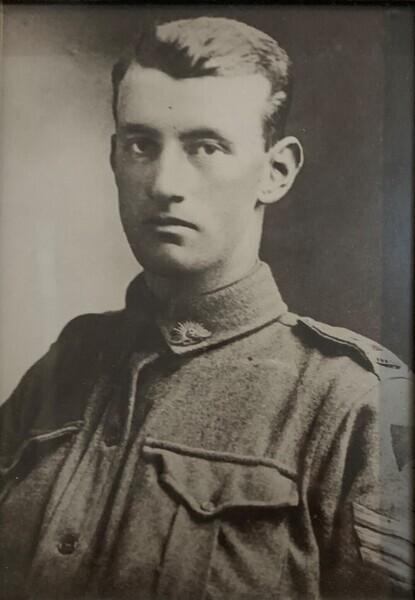
MACGILLIVRAY, John Robert
| Service Number: | 313 |
|---|---|
| Enlisted: | 22 October 1914 |
| Last Rank: | Trooper |
| Last Unit: | 9th Light Horse Regiment |
| Born: | Lake Mundi, Victoria, Australia, April 1894 |
| Home Town: | Mount Gambier, Mount Gambier, South Australia |
| Schooling: | Mount Gambier High School, South Australia |
| Occupation: | Bank Clerk |
| Died: | Glenelg, South Australia, Australia, 14 June 1956, cause of death not yet discovered |
| Cemetery: |
Centennial Park Cemetery, South Australia General A/Path 18/194A |
| Memorials: | Mount Gambier High School Great War Roll of Honor, Mount Gambier RSL Pictorial Honour Board, Mount Gambier St Andrew's Presbyterian Church Roll of Honor, Sydney (ANZ) English, Scottish and Australian Bank Great War Roll of Honour |
World War 1 Service
| 22 Oct 1914: | Enlisted AIF WW1, Private, 9th Light Horse Regiment | |
|---|---|---|
| 11 Feb 1915: | Involvement Private, 313, 9th Light Horse Regiment, --- :embarkation_roll: roll_number: '2' embarkation_place: Melbourne embarkation_ship: HMAT Karroo embarkation_ship_number: A10 public_note: '' | |
| 11 Feb 1915: | Embarked Private, 313, 9th Light Horse Regiment, HMAT Karroo, Melbourne | |
| 27 Aug 1915: | Involvement 313, The August Offensive - Lone Pine, Suvla Bay, Sari Bair, The Nek and Hill 60 - Gallipoli, The 9th light horse bregade were lucky to be the reserve for the attack on the neck August 7th but suffered 50% casulties attacking hill 60 on August 27th | |
| 22 Nov 1916: | Discharged AIF WW1, Trooper, 313, 9th Light Horse Regiment |
Help us honour John Robert MacGillivray's service by contributing information, stories, and images so that they can be preserved for future generations.
Add my storyBiography contributed by Graeme Roulstone
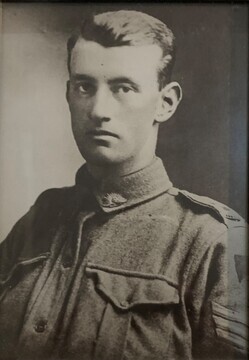
313 John Robert MacGILLIVRAY was born at Lake Mundi, Victoria, in April 1894 and attended Sutton Town Public School before being enrolled at Mount Gambier High School on 21 January 1907 by his mother, Sophie Campbell MacGillivray of Penola Road, Mount Gambier. He left school on 31 December 1908. He enlisted in Adelaide on 22 October 1914 (21, bank clerk, single, Presbyterian) naming his mother, Sophie Campbell MacGillivray of Wehl Street, Mount Gambier, as his next of kin. He embarked from Melbourne on the ‘Karroo’ on 11 February 1915 and joined the 9th Light Horse on Gallipoli on 16 May 1915, was evacuated to the Hospital Ship “Delta” on 16 October 1915 suffering from enteric and hospitalised at Alexandria on 20 October. Military authorities eventually decided to return him to Australia and he embarked from Suez on the ‘Wandilla’ on 13 December 1915, disembarked on 12 January 1916, discharged to Light Horse Base
Company on 29 March 1916 and was finally discharged ‘medically unfit’ on 30 November 1916.
Published in Ours: the origins and early years of Mount Gambier High School and Old Scholars who served in the Great European War by Graeme Roulstone
Biography contributed by Stephen Brooks
Father
419 Regimental Sergeant Major James McIntosh McGillivray 5th South Australia Contingent KIA Boer War South Africa 21 July 1901 age 50.
Brother
312 Trooper James Alexander McGillivray 9th Light Horse Regiment, killed in action 28th August 1915 age 26.
John McGillivray, only 20 years of age, had the sad duty of writing to his mother Sophie and informing her of the death of his brother. John survived the August battles on Gallipoli but was evacuated with enteric fever in late October 1915. Transferred to Egypt, it was decided to send him home to Australia, where he arrived in January 1916. John McGillivray was discharged from the AIF at his own request in November 1916, which is a very rare occurrence, perhaps illness forced his decision or it may have been felt by himself or the AIF that his family had given enough.
Biography contributed by Alex Robinson
John Robert MacGillivray
[1894-1956]
John Robert MacGillivray is my great-great-grandfather on my father’s mother’s side. Much of the following information has come from the Emery/MacGillivray Family Tree referenced in this biography as (EMFT 2017), a family history written in 2017 by John Hill about my Nana’s family. Although John was born just across the border in Victoria, his life was in South Australia, and it was in Adelaide that he enlisted.
Early Life
John was born in April 1894 in Lake Mundi Victoria only 80 kilometres northeast of Mount Gambier South Australia. John was one of 9, his parents were Sophia Campbell MacGillivray and James McIntosh MacGillivray. James died in 1901 in the Boer war, John was at the time 7 years old. With a widowed mother and 8 siblings his childhood would not have been easy (EMFT 2017). John began his schooling at Suttontown Public School, located on the edge of Mount Gambier. At lunch time games such as elastics and marbles would have been popular. Uniform was strict and was inspected at assemblies (Borderwatch, 2019). His final years of his schooling were completed at Mount Gambier High school before becoming a Bank Clerk, a job he would return to after the war.
War Service
John enlisted for the AIF in Adelaide on the 22nd of October 1914 (EMFT 2017), he was accepted and enlisted in the 9th light horse regiment (9th LHR) he had to pass a riding test to be accepted. Due to the time-period and the fact he lived in a country area, he was probably a capable horse rider. The 9th LHR was part of the 3rd light horse brigade, John was a private with the service number 313. He listed his mother Sophia Campbell MacGillivray as his next of kin, he was at the time single, and his religion was Presbyterian. He then went to Melbourne where he trained with his regiment between October 1914 and February 1915. When John enlisted, he incorrectly spelt his surname as McGillivray which he tried to have corrected to MacGillivray on the 14th of December 1914. Unfortunately, most documents still have the incorrect spelling today.
On the 11th of February 1915 John embarked from Melbourne on board the HMAT Karroo for Gallipoli (EMFT 2017). The ship would have been cramped and there would have been a high risk of disease due to poor living conditions (ANZAC Portal). They arrived at Alexandria, Egypt on the 15th of March 1915 and completed further training in Egypt before heading to Gallipoli.
John arrived at Gallipoli on the 21st of May 1915, it was decided that horses were not suitable for the Gallipoli campaign, so the 9th LHR was deployed without its horses. Not long after their arrival the 9th LHR relieved the men of the Auckland Mounted Rifles on Walker’s Ridge, the 9th LHR spent the next few months in and out of this line.
August Offensive
The 9th LHR were lucky to be reserves for the battle of the Nek on the 7th of August 1915 as it was a disaster for the Allies with the Anzac’s suffering 372 casualties (ANZAC Portal. They spent the 7th to the 11th of August on Walker’s Ridge providing support fire to help pin down the Turkish troops and support the New Zealand and Australian’s operating to their left.
On the 26th of August 1915 the 9th LHR received orders from base headquarters to move out to Damjelik Hills and report to General Cox. After they reported to General Cox, they were sent to assist General Russell in an attack on hill 60 on the 27th of August 1915. It ended up turning into 3 days of intense fighting. On the 28th of August 1915 near or at hill 60 John’s older brother James Alexander MacGillivray service number 312 was killed in action (EMFT 2017), over the three days the 9th LHR suffered 50% casualties. On the 29th of August most of the 9th LHR were relieved from the trenches, as soon as John got the chance, he sent a letter home to his mother telling her the tragic news of his brother James’s death (EMFT 2017).
After the August offensive the 9th LHR had a more defensive role, mainly trying to defend the ground that they already had from the Turkish troops. The 9th LHR spent most of September on the Rhododendron ridge.
John became very sick with enteric fever; enteric fever is caused by bacteria which would have been common as the food and water was not very clean and especially if human waste is not disposed of properly. Enteric fever can be life threatening if not treated properly, symptoms include high fever, headaches, stomach pains, and sometimes constipation or diarrhoea. Consequently, on the 16th of October 1915 John was admitted to Hospital Ship ‘Delta’.
On the 20th of October 1915, John was moved from the hospital ship to a hospital in Alexandria to try and treat his enteric fever. A month later, on the 25th of November John was moved again, this time to the Enteric Convalescent Camp in Port Said for further rest.
On the 13th of December 1915 John embarked from Suez aboard the Wandilla for Australia, finally heading home. John arrived in Melbourne on the 14th of January 1916, it had been eleven months since John left Melbourne, but in that time, many life-changing experiences were had.
On the 26th of January 1916 John was allowed to go home to Mount Gambier to see his family. There was a big welcome party held at the town hall, Mayor Renfrey wished to give John one of the best welcomes possible for a returned soldier and John regained his full health (EMFT 2017).
On the 29th of March 1916 John seemed to be fit again for service, he had been unwell for five months and was sent to base company in Adelaide.
On the 27th of November 1916 John was discharged from the AIF. It is unclear if he was discharged by his own request or because he was medically unfit for service.
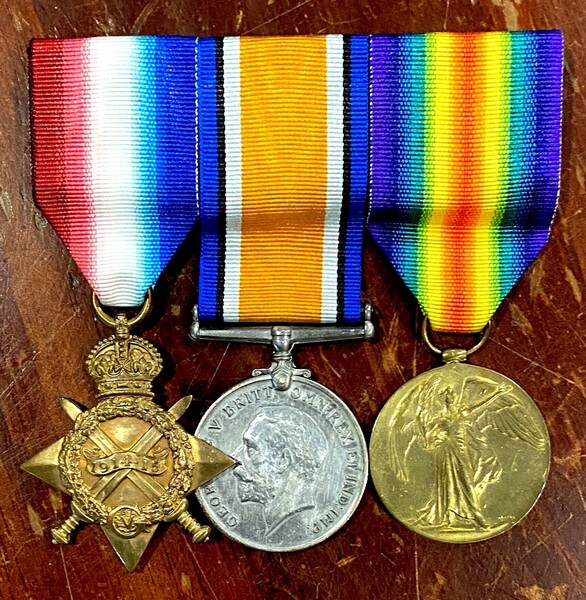
For his two years and 37 days service including 337 days service abroad, John was awarded three medals the 1914-15 Star, the British War Medal, and the Victory Medal.
Life After the War
On the 21st of July 1920 at the time manager of the E.S. & A Bank Booleroo Centre, John married the love of his life Winifred Evelyn South. The only people to attend were the family of John and Winifred. They were married at Moocoota, Mount Gambier, the home of Winifred’s Uncle (EMFT 2017).
On the 18th of May 1921 John and Winifred’s first child was born, Beth Paterson MacGillivray (EMFT 2017).Their second child, Robert Sinclair MacGillivray was born in 1922 and died one year later (EMFT 2017).
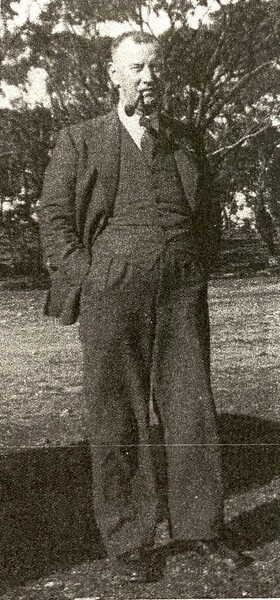
In 1924 John was appointed by the E.S.&A Bank to manage its branch in Clare. John and his family packed up and left Boolaroo Centre. John and his wife threw themselves into community activities. John liked his sport, he played a bit of tennis and was heavily involved in the Clare golf club; at one time he was the Secretary and Treasurer. John and his wife would often appear in the local newspapers (EMFT 2017).
In 1927 John and Winifred’s third child was born, Ian Alexander MacGillivray. Like his father when the call to arms came Ian was among those Australians who signed up to fight for their country in World War 11(EMFT 2017).
In 1941 John decided to move to Adelaide to manage the Pulteney Branch of the bank. There was a good farewell party for John as he had worked for the Clare branch of the E.S.& A bank for 17 years (EMFT 2017). On the 21st of December 1949 John’s daughter Beth married Randolph Robert Emery (EMFT 2017).
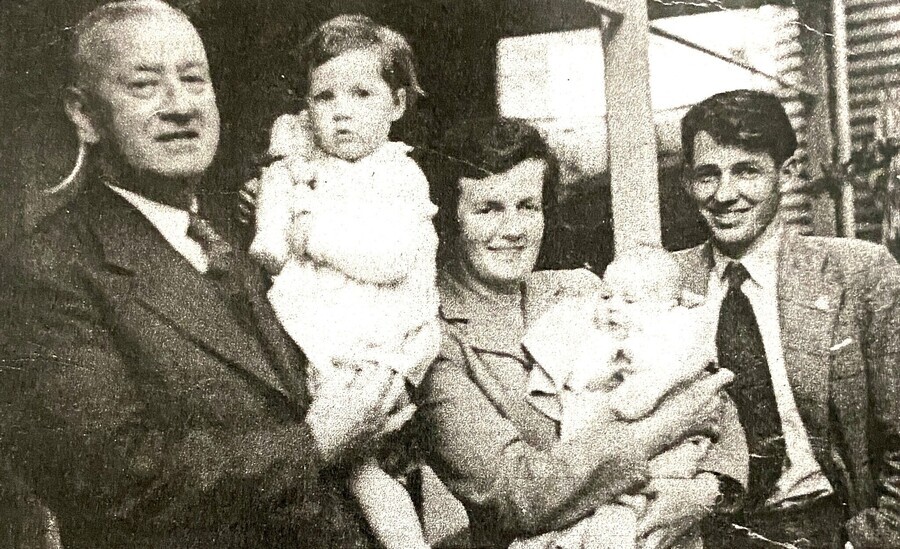
Beth and Randolph had 3 children, Ann Catherine Emery 1950, Elizabeth Jane Emery 1952, and Richard John 1960 (EMFT 2017). On the 14th of June 1956 John died in Adelaide at the age of 62 (EMFT 2017).

Click images to start slideshow.