







BOWEN, William Joseph
| Service Number: | SX14003 |
|---|---|
| Enlisted: | 9 August 1941, Wayville, SA |
| Last Rank: | Warrant Officer Class 2 |
| Last Unit: | 2nd/9th Armoured Regiment |
| Born: | Freemantle, Western, Australia, Australia, 31 December 1910 |
| Home Town: | Crystal Brook, Port Pirie City and Dists, South Australia |
| Schooling: | Not yet discovered |
| Occupation: | Clerk |
| Died: | Daws Park Repatriation Hospital, Springbank, South Australia, Australia, 6 January 1997, aged 86 years, cause of death not yet discovered |
| Cemetery: |
Centennial Park Cemetery, South Australia |
| Memorials: | Crystal Brook District WW2 Roll of Honour, South Australian Garden of Remembrance |
World War 2 Service
| 9 Aug 1941: | Involvement Warrant Officer Class 2, SX14003 | |
|---|---|---|
| 9 Aug 1941: | Enlisted Wayville, SA | |
| 9 Aug 1941: | Enlisted Australian Military Forces (WW2) , Warrant Officer Class 2, SX14003, 2nd/9th Armoured Regiment | |
| 30 Nov 1945: | Discharged | |
| 30 Nov 1945: | Discharged Australian Military Forces (WW2) , Warrant Officer Class 2, SX14003, 2nd/9th Armoured Regiment | |
| Date unknown: | Involvement |
Help us honour William Joseph Bowen's service by contributing information, stories, and images so that they can be preserved for future generations.
Add my storyBiography contributed by Playford International College
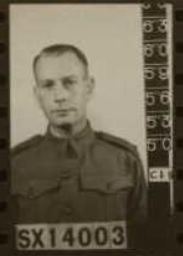
William Joseph Bowen was born on the 31st of December, 1910, in Fremantle, Western Australia. According to his enlistment records, he stood approximately 5 feet 10 inches tall and had a medium complexion, brown hair, and blue eyes. His religion was listed as Church of England, and he was married to Olive Bowen. At the time of his enlistment, his hometown was Crystal Brook, located within the Port Pirie City and Districts region in South Australia.
William Bowen enlisted in the Australian Army on 9th August, 1941, at Wayville, South Australia. At the time of his enlistment, he was 30 years and 9 months old and working as a Pay and Stores Clerk. This civilian occupation may have influenced his assigned military role, as he was enlisted with the rank of Corporal and served as a Group 3 Technical Storeman. His role was logistical in nature, an essential position for supporting active operations through the maintenance and distribution of military supplies.
Bowen's military records indicate that he experienced several promotions throughout his career, demonstrating a degree of responsibility and leadership recognized by his superiors. In 1942, he was promoted from Corporal to Sergeant. Later in his service, he attained the rank of Warrant Officer Class 2, a senior non-commissioned officer rank that signifies a high level of trust and experience. The progression in his rank over the course of four years reflects a military career marked by professional development and reliable service.
The locations of Bowen’s service during the war were primarily along the East Coast of Australia. His postings included Wayville in South Australia, Puckapunyal in Victoria, and Rutherford in New South Wales. These locations were significant military training and logistics hubs during the war. For instance, Puckapunyal was known for its role as a major training ground, particularly for armored units, while Rutherford also housed military facilities.
In addition to his service within Australia, Bowen participated in active operations during the Battle of Morotai in Indonesia. This battle, which began in September 1944, was part of the broader Pacific campaign. Morotai, located in the Dutch East Indies (now Indonesia), was strategically important due to its location and potential as a base for Allied operations in the region. Australian forces, alongside American troops, played a key role in securing the island. The battle concluded in August 1945, coinciding with the final days of World War II, following Japan's surrender.
William Bowen’s participation in the Battle of Morotai suggests that, in addition to his logistics and storeman duties, he was also deployed in an active combat zone. However, there is no information in his records to suggest the nature or extent of his involvement in direct combat. His role may have remained consistent with his logistical background, supporting the front-line troops through supply chain and materiel management.
Following the end of World War II, Bowen was discharged on the 30th of November, 1945. His discharge was categorized as a medical discharge, indicating that he may have experienced health issues significant enough to warrant separation from military service. However, specific medical details are not included in the available information. His discharge came after the official end of hostilities, marking the conclusion of his four-year military career.
Bowen died 6 January 1997 and is buried at Centennial Park Cemetery.
Bibliography/Sources:
Source: https://nominal-rolls.dva.gov.au/veteran?id=677354&c=WW2#R (Australian Government Department of Veterans’ Affairs)
Source: https://recordsearch.naa.gov.au/SearchNRetrieve/Interface/ViewImage.aspx?B=6411604 (NAA, National Archives of Australia)
Click images to start slideshow.