







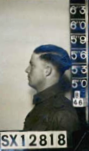
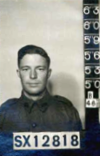
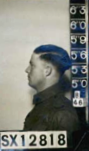
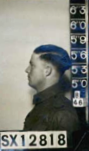
MURCH, Stanley William
| Service Number: | SX12818 |
|---|---|
| Enlisted: | 17 May 1941, Wayville, SA |
| Last Rank: | Private |
| Last Unit: | 2nd/48th Infantry Battalion |
| Born: | Gawler, South Australia, 1 January 1916 |
| Home Town: | Bordertown, Tatiara, South Australia |
| Schooling: | Not yet discovered |
| Occupation: | Farm Labourer |
| Memorials: | Mundalla Soldiers Memorial Honour Roll |
World War 2 Service
| 17 May 1941: | Involvement Private, SX12818 | |
|---|---|---|
| 17 May 1941: | Enlisted Wayville, SA | |
| 17 May 1941: | Enlisted Australian Military Forces (WW2) , Private, SX12818, 2nd/48th Infantry Battalion | |
| 5 Mar 1946: | Discharged Australian Military Forces (WW2) , Private, 2nd/48th Infantry Battalion | |
| 5 Mar 1946: | Discharged Australian Military Forces (WW2) , Private, SX12818, 2nd/48th Infantry Battalion |
A Fulfilling Life.
Stan, born in Gawler, on the 1st January 1916 was the third son of Steve and Ethel Maud Murch. He grew up in Bordertown in the South-East of SA, one of eight siblings. These included older brothers Albert (Alby) and Harry then Stan, Colin Lloyd, George and Max and sisters Hazel and Noela.
Their father, Stephen worked as a dayman to the Tatiara Council until June ’42 when he became manager of a grazing property on the Frances Gap Road. Stephen also spent many years droving for stock firms in the district and earned the distinction of being the best drover in the South-East as well as having a reputation for training sheep dogs.
At a gathering on Wirrega Oval for the Annual Picnic Sports, eight-year-old Stan gave the first indication of his sporting prowess, coming second in the under 10 long drop football kick and first in a dead heat in the sprints with Joe Brennan. The two paired up for the end of year Wonga Vale School Picnic with a win in the three-legged, trial and egg and spoon races. Typically, fruit and lollies completed the day. Stan completed the year with a win for his raffia work in the Tatiara Agricultural and Horticulture Show. By 1930, Stan was blitzing school sporting competitions. He won a Gold medal as the Boys’ Champion, having also won the long jump and flag race. He was also part of the Boy Scout’s Tatiara movement, being awarded both his cook’s and second-class badges in the Bordertown Institute in ’31.
It was inevitable that Stan also turned his skills to football. He played for Bordertown with Geoff Weise (and the two later both enlisted together). They were frequently both mentioned in the best player lists.
As a 19-year-old farm labourer, Stan, affectionately known as ‘Nobby’ sustained a broken collarbone transferring sheep at "Stoneleigh", Buckingham. He was thrown from his horse when his sheep dog unexpectedly attacking the heels of his horse.
During Easter ’38, Stan’s oldest brother, Albert married Molly Hillier in the Bordertown Congregational Church. Stan was chosen to fill the role of best man.
Aged 25, Stan and Geoff Weise enlisted together at Wayville on the 17th May, ’41. Stan was allocated the number SX12818 and Geoff SX12819. Initially Stan was placed in the 2/43rd reinforcements but was able to join the 2/48th in September with Geoff.
Three of Stan’s brothers also enlisted. Colin Lloyd on the 18th January ’43 in the field, Western Australia as SX32033 in the Mechanical Equip Co 1. He was eventually discharged on the 4th December ’45. George David enlisted in May ’43 in Northern Territory as SX29640 and was discharged on 3rd December ’45. Albert Ernest 1908 enlisted 22 June ’42 S5923 having served in the 3rd Lighthorse Regiment as 86386.
For Stan and his friend Geoff, a farewell was organised for the young men in the Mundulla Institute, which was beautifully decorated with flowers, ferns and red berries. Songs, musical solos and duets were part of the entertainment. ‘Wish Me Luck’ was sung, followed by tributes from the boys’ church leaders and the fervent hope that the armistice would soon be signed. The speaker added that ‘if Hitler knew Stan and Geoff were coming, he would delay no longer, but sign on the dotted line immediately.’ The Comforts Fund, Red Cross and sporting clubs all followed, praising both young men expressing the sentiment that it would be extremely difficult to find two boys more admired. Stan was described as one of Mundulla’s most stubborn backs. Both were wished a speedy and safe return and a presentation made, accompanied with the wish to meet again soon. Mr Jack Ryan spoke on behalf of district sporting bodies, saying it would be extremely difficult to find two more well-known and admired boys. Of all the boys who had left the district to serve abroad, these two were preeminent as a pair. the evening closed with "For they are jolly good fellows," and three hearty cheers. The usual generous supper was served by the ladies, and dancing was enjoyed.
Stan arrived in the Middle East in October ’41. While serving overseas, the local soldiers wrote home, explaining how they enjoyed reading back-copies of the local ‘Border Chronicle’. In November ’41 Stan also mentioned that they had "received a power of stuff from the Comforts Fund" for which they were particularly grateful. The following month Pte Stan wrote "You can't realise how much excitement a parcel causes over here. The night I received mine, two of my tent-mates received one also, so we had a party. You ought to have seen us, blown up like poddy calves. No one wanted any breakfast."
By June ’42 Stan developed an extremely high fever, Pyrexia of Unknown Origin, followed by malaria, spending almost a month in hospital. He wrote home again in August ’42 from Palestine sharing that he was well. In a letter received the same day, in June 22, Stan said that they were all O.K. in his unit apart from George Gapper, who was in hospital' suffering from the effects of sandfly fever. The temperature had reached as high as 118 degrees, he said, and they had all seen enough of hills, being camped in mountainous country. The "Wogs' "apricots and plums were ripe (and had been suffering at the hands of the Australians) and a kind of cucumber, which they ate skin and all.
Finally, their battalion was able to return home at the start of February ’43, via Melbourne. Stan and Geoff Wiese were amongst the eleven locals who returned home on leave in March, the same time Stan’s brother Tpr Col. Murch has transferred to the AIF and was serving at a battle station ‘somewhere in Australia’. In a packed Bordertown Hall a musical feast was presented to the men in a proud day for the town. A year’s membership in the RSL was also made to each, and a membership badge presented to the new generation of Diggers.
At the time, efforts for fundraising were creative and included a Photo Exhibition Competition with Stan being in a Bordertown Group that October. This coincided with Stan, having completed training in the tropical conditions of Queensland in preparation for facing a very different enemy in the heat and humidity of New Guinea. He arrived in Milne Bay in August but soon developed Impetigo and facial dermatitis, then a return of the high temperature he had experienced in the Middle East.
Stan returned to Brisbane in February ’44, before his final foray to Tarakan in May ’45. A welcome return to South Australia was timed for Christmas ’45. An extra celebration marked the new year with Stan marrying Grace Matilda Carn of Quorn. Their wedding was celebrated in the Colonel Light Gardens Methodist Church on the 19th January ’46 before Stan was finally discharged on the 5th March. The following month a huge Welcome Home was staged in the crowded Mundulla Hall for fourteen of the local men. So many local organisations were represented from churches to sporting clubs and Red Cross. Singing and performances were followed by supper and dancing into the early hours.
Ironically, the following year Stan was involved in a painful accident, which nearly cost him the sigh of his right eye. His modern rifle did what is generally known as a ‘blow back’. The puzzling question was why it should have happened in the hands of an experienced rifle man, especially for Stan, having been through three vicious campaigns in the war without a scratch and recognised as an experienced rifleman. Fortunately, the skills of the local Dr Krantz prevented Stan’s sight from being permanently impaired. The newspaper carried a warning that anybody handling that type of rifle should make sure that the bolt was securely locked before attempting to fire it. The puzzling question remained about why that particular rifle bolt became loose.
Grace and Stan welcomed Robert Stanley at the Tatiara Hospital in February ’47 then later, Philip.
84-year-old Grace pre-deceased Stan on the 29th August 1992, six months prior to 77-year-old Stan’s death on the 10th March 1993. He was buried in the Millicent Cemetery.
Researched and written by Kaye Lee daughter of Bryan Holmes, SX8133, 2/48th Battalion.
Submitted 6 June 2026 by Kaye Lee

Click images to start slideshow.