







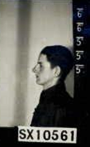
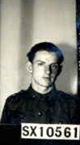
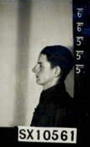
CRACKNELL, Ronald Harold
| Service Number: | SX10561 |
|---|---|
| Enlisted: | 4 December 1940 |
| Last Rank: | Private |
| Last Unit: | 2nd/48th Infantry Battalion |
| Born: | Lorquon, Victoria, Australia, 26 October 1921 |
| Home Town: | Penola, Wattle Range, South Australia |
| Schooling: | Not yet discovered |
| Occupation: | Labourer |
| Died: | 26 August 1985, aged 63 years, cause of death not yet discovered, place of death not yet discovered |
| Cemetery: |
Emerald (Avonsleigh) Cemetery, Victoria Plot Section G Grave 199. |
| Memorials: |
World War 2 Service
| 4 Dec 1940: | Involvement Private, SX10561 | |
|---|---|---|
| 4 Dec 1940: | Enlisted Wayville, SA | |
| 4 Dec 1940: | Enlisted Australian Military Forces (WW2) , Private, SX10561, 2nd/48th Infantry Battalion | |
| 19 Dec 1944: | Discharged | |
| 19 Dec 1944: | Discharged Australian Military Forces (WW2) , Private, SX10561, 2nd/48th Infantry Battalion |
A Teenager at Tobruk.
Ronald, known as Ron, was born on the 26th October, 1921in Lorquon in Victoria, an agricultural town to the east of Nhill. His birth was just three months after his mother’s Ada Madge Chenoweth’s 18th birthday, so he was originally named Ronald Harold Chenoweth. Ron’s father, Harold Cracknell was one of 13 children born in Ballarat. With minimal protection against disease and almost no inoculation, two-year-old Harold James Cracknell was one of two children to die of diphtheria in Ararat in June ’16 and was buried in the Ararat Cemetery. .
Ronald’s mother, Ada and his father, 23-year-old Harold Cracknell married in 1922 with Ron then taking his father’s surname, Cracknell. That year, Ron’s sister, Ada Joy arrived and two years later in ’24, a third child, Trevor William was born.
Ron worked as a labourer and,aged 17 married Margaret Joan Page, (Joan) in Victoria in ’39 with the two living in Penola where their child was born.
However, with the outbreak of WWII, Ron enlisted the following year on the 4th December, 1940, having just turned 19. He indicated on his enlistment papers that that he was 20 years old. He was assigned to the newly formed 2/48th Battalion reinforcements and began his training at Wayville before being part of an advance party to continue training at Terowie in the mid-north.
By March ’41 during pre-embarkation leave, Ron returned to Penola where he, SX9062 John Renfrey and SX10798 Allan Sanderson were farewelled. They were entertained by their football friends as each had been a talented footballer. Ron embarked for the Middle East, arriving in May. At this time his battalion was part of the fierce fighting to hold Tobruk. It was also the birth of the unofficial title of the Rats of Tobruk. This description was initially designed to destroy morale and encourage the men to surrender. They did the opposite, digging in to their rat and fly-infested dusty dugouts and claimed the insult as a badge of honour. Ron was part of both the Siege of Tobruk and El Alamein whilst still a teenager.
Ron’s initial days were spent in the Staging Camp at Amiriya. However, by the end of the year Ron’s behaviour continued to challenge army expectations with a series of absenteeism, forfeiture of pay and being confined to barracks – but escaping. He added to this by being drunk. Soon, absenteeism from Parade culminated in 20 days of detention and a similar number of days’ pay. It made little difference to Ron’s conduct. By May ’42 he had ‘lost’ his clothing and equipment, with his pay suspended until the costs were reimbursed. Time spent in the Field Punishment Centre for 28 days was followed by Ron acquiring a self-inflicted infection. By August ’42 a Court of Inquiry was held following Ron’s illegal absence at Shamama Halt, having returned from the front line. It carried the serious charge of desertion. Ron surrendered to Captain Stone on the 28th August. Fortunately for Ron, the latter charge was downgraded to being Absent Without Leave, resulting in 21 days of detention.
Ron’s tumultuous service was briefly in abeyance when his 2/48th Battalion returned to Australia via Melbourne in February ’43. Ron was amongst a large group of twelve infantry soldiers who returned to Penola on leave at the end of March ’43. Following this brief leave, the 2/48th travelled to the Atherton Tablelands for training in humid conditions in preparation for a very different enemy in tropical New Guinea. Rumours abounded with the soldiers and with a young wife, stories drifted through to Ron. Despite applying for compassionate leave to return home, this was denied so Ron chose to unofficially travel to Penola where Joan was working at nearby Mount Gambier, South Australia. Semi-reassured Ron then travelled to Wayville where he surrendered in June ’43. Still unsure of his home situation, Ron was returned to Russell Street, Melbourne under close arrest. Ironically, he was medically examined at Royal Park but was ‘all right in every way’ apart from having acquired a social infection which he believed was contracted from his wife. Ron contemplated divorce, then by June he was being held in the Queensland Guard Compound. The magnitude of his fine was 222 days pay and 95 days detention.
By the end of September ’43, Ron had again escaped from custody with a warrant issued for his arrest, until he was captured in November at Shepparton, Victoria in February ’44 wearing civilian clothing.
He faced a Court Martial with a summary of his charge sheet clearly indicated a young man affected by his war. It included:
• Six times Being Absent without Leave
• Four times failing to Appear at Parade
• Twice absconding from confinement
• Neglecting to obey a general order
• Drunkenness
• Disorder to the prejudice of good order and military discipline
• Losing by neglect his uniform and equipment
Time was spent at Geelong and Royal Park before Ron was finally discharged on the 19th December ’44.
Ron met Lila May Butcher with the two then marrying in ’46 in Victoria. His life continued to be tumultuous as he struggled with alcoholism. In October ’53 he was caught embezzling a total of £45 15/. collected for the Victorian Civil Ambulance Service. Ron admitted that when he ran out of money, he made more collections. The following year, Ron’s generosity resulted in him giving a homeless and unemployed man a job and to share Ron’s room at the Prince of Wales Residential in Victoria. The perpetrator had been rough living, sleeping in the rain and was suffering from malnutrition. In what was described as a ‘mean theft’ the perpetrator had stolen Ron’s clothes and packed a suitcase with shirts, jumpers, blankets and towels valued at £6.
Ron’s tumultuous life ended at 63 with his death on the 26th August ’85 in North Melbourne. He was buried in the Emerald Cemetery at Avonsleigh in Victoria. His remains are in Plot Section G Grave 199.
Researched and written by Kaye Lee, daughter of Bryan Holmes SX8133, 2/48th Battalion
Submitted 15 May 2026 by Kaye Lee
Click images to start slideshow.