







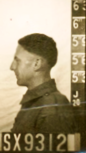
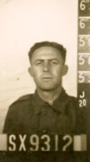
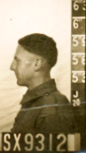
MCCOURT, John Kealy
| Service Number: | SX9312 |
|---|---|
| Enlisted: | 20 July 1940, Adelaide, SA |
| Last Rank: | Lieutenant |
| Last Unit: | 2nd/48th Infantry Battalion |
| Born: | Millicent, South Australia, 3 June 1910 |
| Home Town: | Robe, Robe, South Australia |
| Schooling: | Convent of Mercy School, Millicent, South Australia |
| Occupation: | Motor Driver |
| Died: | 25 August 1988, aged 78 years, cause of death not yet discovered, place of death not yet discovered |
| Cemetery: |
Centennial Park Cemetery, South Australia |
| Memorials: |
World War 2 Service
| 20 Jul 1940: | Involvement Lieutenant, SX9312 | |
|---|---|---|
| 20 Jul 1940: | Enlisted Adelaide, SA | |
| 20 Jul 1940: | Enlisted Australian Military Forces (WW2) , Lieutenant, SX9312 | |
| 20 Jul 1940: | Enlisted Australian Military Forces (WW2) , 2nd/48th Infantry Battalion | |
| 2 Dec 1946: | Discharged | |
| 2 Dec 1946: | Discharged Australian Military Forces (WW2) , Lieutenant, SX9312 |
Self Sufficient and a Leader
John, born in Millicent on the 3rd June 1910, was the only living child born to Arthur and Mary Kealy McCourt. John grew up in Robe in the South-East of S.A. Mary’s family were Irish and Arthur’s family was of Scottish descent, with John carrying both parents’ family names. Just days after John’s 9th birthday, Mary died and was buried in the Catholic Section of the Millicent Cemetery.
Arthur blamed his Scottish heritage for his ‘colourful’ behaviour on New Year’s Day ’22. Being a time for celebration with an afternoon of sporting endeavours, Arthur had a ‘disagreement’ with another attendee in front of the liquor booth. Arthur, described as a ‘true Scotsman’, claimed to have been stirred by the skirl of the bagpipes. Several men had competed in a sheaf tossing contest, but an argument had ensued concerning their prowess. Following an insult that Arthur could not throw sheaves "for mutton" a fight ensued. This later ended in Court and with Arthur pleading guilty for beginning the encounter. Growing up, life was certainly different for John.
Known as Jack, he attended the Convent of Mercy School at Millicent, regularly being awarded an annual prize for Christian Doctrine in 1919, ’20 and ’21. His father, Arthur headed to Leonora, a gold mining town near Kalgoorlie in Western Australia while Jack was in his early teens. Post school, Jack worked as a motor driver until the outbreak of WWII. Aged 30, he enlisted at Kingston in the South-East on the 20th June ’40. A sad entry on his enlistment papers for ‘next-of-kin’ details was that he nominated his father, Arthur but a note indicated Jack had not heard from him since Jack was 15 years old. No other relative was nominated. (For Arthur, by ’34 the local Goldmining Company set out to acquire mining tenements, including Arthur’s, offering £200.)
Jack was allocated the number SX9312 and placed in the newly formed 2/48th Battalion. He trained at Woodside before having pre-embarkation leave, returning to Furner where the locals gathered in the school room to entertain and farewell him. While he was being escorted to his seat, those present sang "For he's a jolly good fellow." Jack was spoken of highly by several locals before being presented with a well-filled wallet of notes on behalf of the' people of-the Furner district. He soon then boarding the Stratheden on the 7th November, arriving in the Middle East on the 17th December. By June the following year, living conditions caused Jack to be treated for mouth ulcers and a severe mouth and throat infection, called Vincent’s Angina which resulted in a month’s stay in hospital. Jack was to become one of the highly respected Rats of Tobruk, an unofficial, highly valued title originally designed to destroy morale of the troops. It had the opposite effect and was quickly seized on as a badge of honour.
Jack joined the Movement Centre in November, receiving his first and only offence for his lack of good order and military discipline. Fortunately, no fine eventuated, and within a month Jack had a rapid promotional rise to Corporal then to Sergeant. By July ’42 he was able to return to Australia via Sydney and brief leave. In an indication of the pride locals had in their young fighting men, Jack’s maternal Uncle, Tom Kealy introduced his nephew, Jack McCourt as one of the "Rats of Tobruk". Jack shared that he had enjoyed a pleasant surprise with 76 other men in a convoy at Tintinara on their way to Adelaide. A Mrs. Ryan (whose son was in the Middle East) gave each man a cup of tea and a piece of cake, and would not take a penny for It. The story made the August ’42 issue of the Advertiser.
Those home on leave often shared that they had met up with other locals while serving overseas. Henry Kennedy SX7784 of the 2/48th Battalion listed Jack as one of the men he had seen in a neighbouring camp.
Jack was soon transferred to the Staging Camp at Terowie in the mid-north of South Australia for eight months, then headed even further north to the Northern Territory. By December ’43 Jack was appointed to the Commissioned Rank as Acting Lieutenant. Within months, by March ’44 he was serving at Woodside in the Adelaide Hills with the rank of Lieutenant, having successfully undertaken a short course in Officer Cadet Training Unit. By May Jack was posted to Regimental Duties prior to a return to Queensland and thence to Lae. Unfortunately, in August ’46 hay fever and an auto-immune condition (alopecia) which caused hair loss, developed. Perhaps these were an indication of the five and a half years of service. Just prior to Jack’s eventual discharge on the 2nd December ’46, he contracted pneumonia,.
Aged 79, Jack died on the 25th August ’88 and was buried in the Centennial Park Cemetery.
Researched and written by Kaye Lee, daughter of Bryan Holmes SX8133, 2/48th Battalion.
Submitted 23 April 2026 by Kaye Lee
Click images to start slideshow.