

WESTLEY, William Claude
| Service Number: | SX8010 |
|---|---|
| Enlisted: | 5 July 1940, Wayville, SA |
| Last Rank: | Private |
| Last Unit: | 2nd/48th Infantry Battalion |
| Born: | Wallaroo, South Australia, Australia, 19 November 1912 |
| Home Town: | Berri, Berri and Barmera, South Australia |
| Schooling: | Berri School, South Australia |
| Occupation: | Motor Driver |
| Died: | 10 August 1967, aged 54 years, cause of death not yet discovered, place of death not yet discovered |
| Cemetery: |
Berri Cemetery, S.A. |
| Memorials: | Berri Oval "Diver" Derrick VC Memorial Grandstand & Roll of Honour |
World War 2 Service
| 5 Jul 1940: | Involvement Private, SX8010 | |
|---|---|---|
| 5 Jul 1940: | Enlisted Wayville, SA | |
| 5 Jul 1940: | Enlisted Australian Military Forces (WW2) , Private, SX8010 | |
| 5 Jul 1940: | Enlisted Australian Military Forces (WW2) , Private, SX8010, 2nd/48th Infantry Battalion | |
| 21 Aug 1942: | Discharged Australian Military Forces (WW2) , Private, SX8010 | |
| 21 Aug 1942: | Discharged | |
| Date unknown: | Involvement |
Footballers Enlist En-Mass
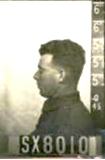
William, the first son of Christina Elizabeth Pearl and William Henry Tobin Westley, was born at Wallaroo on the 19th November 1912. He was given the family name after his father, and also grandfather, William Tobin. Not unexpectedly, William Jnr. quickly became known as Bill. He was one of about nine children, three boys and six surviving girls, Isabel, Sylivia, Gwendoline, Barbara, Doris and Betty. Stanley (known as Gordon) and Jeffrey were Bill’s younger brothers. The family moved to Berri where the boys attended Berri School and became highly regarded for their sporting prowess.
In what appears a strange mix of sports, the Berri Swimming Club organised a boxing tournament in the local Rivoli Theatre in August ‘24, just prior to Bill’s 12th birthday. He and his younger brother, Gordon, opened the programme with a fight that ended in a draw. The Murray Pioneer reported that ‘An entertaining exhibition of four rounds was provided by Gordon and Bill Westley. These two diminutive sons of the ex-lightweight champion displayed a remarkable knowledge of the noble art, and practical appreciation of their display was manifested by a shower of coins.’ The Chronicle also reported that ‘These lads grave a clever exhibition, which was heartily appreciated by a large audience.’ Bill continued to be involved in boxing over the coming years, being described as a ‘promising trainee’ who ‘in time should do well’. In later years, Gordon was also to also face ‘Diver Derrick’ in the ring.
By ’33 Bill had proved to be a very talented footballer playing for the local Berri team, of which his father was Head Trainer. At the end of that season, he was presented with a trophy for the most consistent performer. In appreciation of his work, Bill Senior was also made a presentation for his services. Almost weekly, Bill’s skills were a focus for the Murray Pioneer write up including comments that in ‘35 ‘Westley’s high marking and accurate passing gave him superiority over the Waikerie centremen’. By ’36 Bill was the star centre-man and skipper of his team, being praised for his ‘match winning move’ which could not be countered by the opposition. Bill and his brother, Gordon were quite frequently mentioned for their teamwork on the field and in the best player list. Bill was also gracious in defeat in the ’36 final where Waikerie defeated Berri. His comment post-match in praising Waikerie on their splendid win was that “best team won on the day, and that's how all premierships should be decided.”
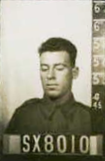
Bill married Kathleen (Jean) with the two living in Renmark where Bill worked as a Motor driver. They had two sons, Peter born on the 6th November 1942 and David. However, with the outbreak of WWII a decision was made by the very close-knit football team for all the players to enlist – en-mass. Bill was aged 27, when he enlisted on June 21st 1940 becoming SX8010 and was allocated to the newly formed 2/48th Battalion. Following training and brief leave to spend time with his young family, Bill boarded the Stratheden on the 7th November, arriving in the Middle East on the 17th November. In less that two weeks, he ran foul of the demanded military discipline and was confined to barracks for three days (but did not forfeit any pay).
In April the following year, Bill was unfortunate to be wounded in his right foot. Back home, the close knit community were anxious to share information about their local ‘boys’ who had signed up together. Sobering news arrived via cablegram in April ’41. It was learned that Bill was not in a serious condition. The newspaper reiterated that Bill, as he was familiarly known in the River districts, was one of the batch of footballers who enlisted "en masse" and was a former captain of the Berri 18. More details emerged when a letter Bill wrote from hospital to his wife was published in The Murray Pioneer in May. ‘Mrs. W. Westley has received a most interesting letter from her husband, who has been wounded in the foot and at the time of writing was in hospital. Although quite naturally the names of the actions were censored the letter gave the information that he was wounded in the foot by a machine gun bullet from a dive bomber. The town in which he was in hospital was raided four or five times a day and they were deliberately bombing the hospital he said. One ward was blown to pieces. Bomb after bomb was dropped and the end of the ward next to the one he occupied was blown off but fortunately there were no casualties. Our hurricane planes went up after the raiders, he said, and shot down eight, anti-air craft guns got two and the Navy three— thirteen out of the twenty three.’ Bill added that ‘the boys out there could not speak too highly of the English soldiers who would stick to the last man.’
In June ’41. SX927 Pte John Morrell in the 2/10th commented that ‘Jock Hood (SX8063, 2/48th) and Bill Westley and Co. are also in the vicinity and their crowd have seen quite a bit of action and are building up a big name for themselves.’ This was to be a regular perception of the 2/48th battalion as the war progressed. (Sadly, 27-year-old Jock Hood died of illness in Queensland in September ’43.)
No mention was made of the long-term effects Bill’s injury would have on his sporting career or that his career with the football team was to be cut short. Bill was hospitalised and inevitably unable to return to his battalion. By August he was medically classified as unfit for service. He returned to Australia in January ’42. Kathleen travelled to Adelaide to meet him in February on his return from active service abroad. The locals were anxious to hear of their other young men with the Murray Pioneer carrying an extensive story reporting that ‘Bill’s original wound healed up nicely but eye trouble due to glare caused him eventually, to be invalided home.’ The newspaper reported that Bill had to return to the city for treatment at the end of this week. Speaking of other members of the Berri Football Club, Bill Westley said that Jock Hood (SX8063, 2/48th) received a nasty wound in the arm and thigh but it had healed nicely and he was back with his unit. Charlie Butcher (SX9562, 2/48th) had not been in good health and was, he thought, back in hospital again. Dick Rix (SX8411, 2/48th) was quite well. Ike Jenkinson (SX7997 2/48th) did a good job at Tobruk and had been promoted. Charlie Reed (SX7955 2/48th) he did not see but was well when last he heard of him. Gerard Woods (SX10126) was in Palestine and Pte. Westley had Christmas, dinner with him. Morrie Mitchell was well. Bill said that he went to see some, of the boys of another battalion but they were all out on bivouac. He was naturally glad to be back in Australia and spoke in highest terms of the worth of the Red Cross.
Back at Wayville to recuperate, Bill was additionally diagnosed with ‘defective vision’. Ongoing rehabilitation at Kapara followed before his eventual discharge in August that year.
Bill’s younger brother, Stanley (Gordon) Westley initially served in the Militia as S26255 before enlisting in July ’42, becoming SX22428. He served with the 149 Light AC/AC Battalion, surviving the war, eventually being discharged on the 13th December ‘45. Youngest brother, Jeffrey also enlisted in July ’42 as SX22390, (having been S25839 and training at Duntroon). He became part of the Z Special Unit, an international group involved in clandestine operations on Borneo. His exceptional leadership as an officer resulted in successful tasks ‘beyond which was reasonable to expect. He proved himself to be a fine leader, an effective administrator and a very capable officer.’ Resultantly, he was awarded an MBE. Jeffrey was the last of the brothers to be discharged on the 23rd January ’46.
By July ’48 Bill was playing golf for his second season, proving to be a natural in the sport to the point where he won the Cup in the Ex-Servicemen’s Golf Competition with a creditable score of 70. The competition was played in conjunction with the open golf cup, which was also won by W. Westley .At the evening presentations, Bill instructed the huge Cup be filled with some good Scotch Whisky and did the rounds of the dinner tables. Bill continued to win a variety of trophies, including in May ’54 a mystery Cup, but no explanation was given about the requirements for his win.
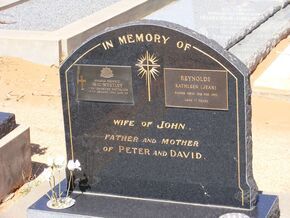
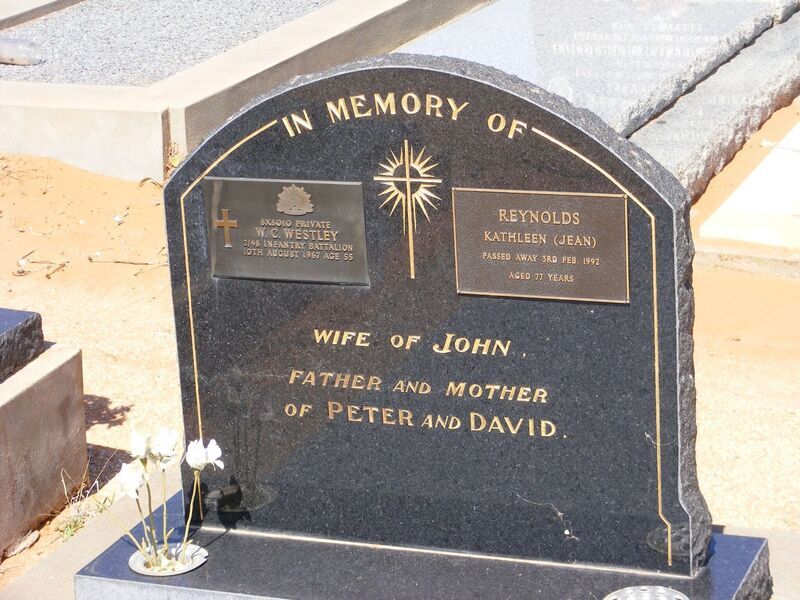
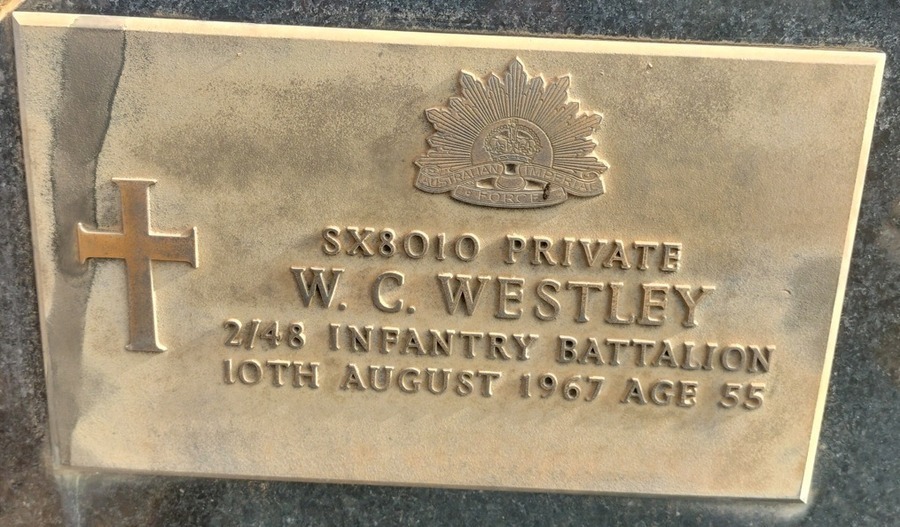
Bill’s father lived to see his sons return home from war. He died aged 77 on the 31st August ’58 and rest in the Berri Cemetery. Less than a decade later, aged 54 Bill died on the 10th August ’67 and also rests in the Berri Cemetery. His wife, Jean lived to be 77 and died on the 3rd February 1992. She now rests with Bill.
Researched and written by Kaye Lee, daughter of Bryan Holmes SX8133, 2/48th Battalion.
Submitted 18 January 2026 by Kaye Lee
Click images to start slideshow.