







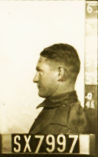
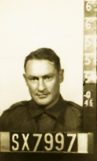
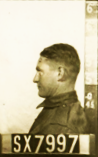
JENKINSON, Harold Rawson
| Service Number: | SX7997 |
|---|---|
| Enlisted: | 5 July 1940, Wayville, SA |
| Last Rank: | Sergeant |
| Last Unit: | 2nd/48th Infantry Battalion |
| Born: | Rose Park, South Australia, Australia, 11 May 1908 |
| Home Town: | Berri, Berri and Barmera, South Australia |
| Schooling: | Not yet discovered |
| Occupation: | Labourer |
| Died: | 18 April 1970, aged 61 years, cause of death not yet discovered, place of death not yet discovered |
| Cemetery: |
Berri Cemetery, S.A. |
| Memorials: | Berri Oval "Diver" Derrick VC Memorial Grandstand & Roll of Honour |
World War 2 Service
| 5 Jul 1940: | Involvement Sergeant, SX7997 | |
|---|---|---|
| 5 Jul 1940: | Enlisted Wayville, SA | |
| 5 Jul 1940: | Enlisted Australian Military Forces (WW2) , Sergeant, SX7997 | |
| 5 Jul 1940: | Enlisted Australian Military Forces (WW2) , 2nd/48th Infantry Battalion | |
| 26 Jul 1944: | Discharged Australian Military Forces (WW2) , Sergeant, SX7997 | |
| 26 Jul 1944: | Discharged | |
| Date unknown: | Involvement |
Ruckman to Rat of Tobruk.
Harry was born in the Adelaide suburb of Rose Park on the 11th May 1908 to Elsie May and John Hamilton Jenkinson. He was one of four children with two sisters, Violet and Katie and a brother, John (Reginald) Warren a jeweller.
Harry, known as ‘Ike’ worked as a labourer in the Riverland area where he was quickly ensconced in the Berri town’s sporting teams of football and swimming. He played for the highly successful and cohesive Berri A Football team, where his work in the ruck was pivotal in creating opportunities for the forward players. This team won the ’35 Grand Final. At the post-match celebrations, Ike was listed amongst the medal winners, unusually being presented with a leather medal, although its significance was not described in the newspaper report. He also served on the football Club’s committee.
Almost inevitably, being on the River, Ike was active in the Berri Amateur Swimming Club, proving to be a talented diver in the ‘Neat and Fancy’ Dive category as well as being successful in races over a variety of distances including the 50- and 100-yard events and handicap races. As with the Football Club, Ike filled the role of secretary for the Swimming Club.
In January ’32, Ike displayed quick thinking when a fire occurred in a pile of empty packing cases in a lane between the Electric Supply Station and a local shop. They were well alight when the alarm was given. Domestic hoses and a chemical extinguisher were used pending the arrival of the brigade and a crowd of helpers quickly assembled, including Ike. He immediately swung into prompt action, toppling the piled up cases to the ground was probably instrumental in preventing the flames from getting a firm hold on the roof timbers of Mr. Richardson's shop. As it was the fire burnt through the fascia board and charred the timber between the ceiling and roof.
Despite the idyllic setting of the River, it was also a place of occasional tragedy. In November ’38 Ike was one of six young men who travelled to a part of the River out of Berri, near Katarapko Island, breakfasting on a moored boat before deciding to go swimming in the afternoon. One of his group noticed that 27-year-old Tom Goodwin was missing after diving into the shallow water. Fellow swimmer, Osborne immediately dived into the water where Tom was last seen, finding and bringing his friend to the surface where Ike applied resuscitation to which Tom responded. However, on gaining consciousness, Tom complained of being badly hurt and felt he was dying. Ike placed his injured friend in his buckboard, making Tom as comfortable as possible and transported him to the Berri hospital, where sadly Tom died the following morning of head and spinal injuries sustained when he dived, possibly hitting the bottom of the river.
Ike had married Elsie Wilhelmena with the two living in Berri and enjoying the company of close friends. The Berri Football team was so cohesive, that when WWII erupted, all players enlisted en-mass. Ike was 32 when he enlisted on the 15th June 1940. In a very early book written by Murray Farquhar, ‘Derrick V.C.’, tribute was made to the huge number of young men from the Upper Murray who had enlisted from Waikerie, Barmera, Berri and Renmark, so many of whom served in the newly formed 2/48th Battalion which came to be regarded as the most highly decorated and decimated battalion. Many of the young men crammed on the same train to Adelaide to enlist together, including Frank and Orville Todd, Ike Jenson, Dank Pfeiffer, Snagger Reid, Bill Westleigh Tom Derrick Bill Milde, Peter Anderson and Wally Fennell.
Just over a week later Ike’s wife, Elsie, Private Thomas Currie Derrick (2nd_A.I.F.), and several others were involved in a car smash at Seekamp's bridge on the Berri -Barmera Road. Four of the occupants were admitted to hospital. They included Derrick, with an injury to ankle (Pte.Derrick was soon moved to Keswick Hospital) and Ike’s wife, Elsie who received head injuries and concussion.
Following brief leave back home, the 22 young men were farewelled, including Ptes. A. Todd, W. Todd, W. Westley R. Tipper, T. Derrick, J. Hood, H. Jenklnison, W. Milde, R. Topperwein, C. Butcher, P. Anderson, C. Read. A. Brand, A. H. Smith, D. Moyle. W. Fennell A. R. Rlx, P. Pfelffer, N. Pfeifler. They were presented with a money belt, a £1 note, and a pair of socks from the Comforts Fund. Ike was soon on his way on the Stratheden, leaving on the 7th November and arriving on the 17th in the Middle East, little knowing he would become one of the highly respected Rats of Tobruk. Almost immediately Ike was promoted to Acting Corporal and by February ’42 was Corporal, undertaking the School of Cookery, which he completed in early March. On his return to the 2/48th Battalion, Ike was promoted to Sergeant.
In Diver Derrick’s diaries, meticulously annotated by Mark Johnston, Derrick wrote on the 13th June ’41 that he “Turned in at 0830, Awakened at 1230 by Ike Jenkinson and (SX8411) Dick Rix, Had a good pow wow, Learnt that our china plate Jock (Jock Hood SX8063) is doing alright, Deutchland reported sunk.”
Early in August ’41 at Tobruk, intense fighting was underway with several injured soldiers near the Water Tower Wadi in the intense heat. Headquarters instructed that these wounded were to be brought in. John Glenn in Tobruk to Tarakan reported that ‘Ike Jenkinson and Billy Hook volunteered and moved forward; they came under machine-gun fire, but succeeded in bringing the wounded out.
A further entry in Derrick’s diary on the 17th August ’41 read ‘Well what a day. Never seen so much dust in my life, though I have the best shack in the coy. Went and had a yarn to Thorpy who is doing ok. Also seen Ike Jenkinson in the midst of an air raid. Had a talkie with him and he is okey doke.”
Derrick again caught up with Ike on the 11th September, writing ‘Same old thing and still going for a hike at night. Fritz arty still sending over plenty and getting ‘em horribly close too. Had a yarn with Ike Jenkinson today and got a decent souvenir.”
Other locals wrote home and mentioned the local ‘boys’ with the news then shared in the Murray Pioneer Newspaper. Private John Morrell wrote that “Recently I have met quite a few of the Berri boys, including Jock Hood, Ike Jenkinson, "Snagger" Reed, and a lot of others.” His description of the living conditions describe well why the troops came to be taunted as ‘living like rats’ and adopting the jibe to become the highly respected title of being Rats of Tobruk. ‘We are all keyed up now watching the events in Russia. Needless to say we are hoping the Reds will be strong enough to deal Hitler a big enough blow to allow us to hop into him from this side somewhere and finish him off. We are leading rather an animal-like experience these days—living in dug-outs and doing our prowling and hunting by nights, but it has Its amusing sides. When an air raid comes over we scamper to our burrows Just like a lot of scared rabbits when they see a man with a gun.
With Bill Westley returning injured in February ’42, locals were anxious to hear of their other young men with the Murray Pioneer carrying an extensive story reporting of other members of the Berri Football Club, Bill said that Jock Hood (SX8063, 2/48th) received a nasty wound in the arm and thigh but it had healed nicely and he was back with his unit. Charlie Butcher (SX9562, 2/48th) had not been in good health and was, he thought, back in hospital again. Dick Rix (SX8411, 2/48th) was quite well. Ike Jenkinson (SX7997 2/48th) did a good job at Tobruk and had been promoted.
Back home, Ike’s wife, Elsie worked as a shopkeeper in Berri, purchasing goods including large quantities of butter and eggs, for which she paid the deliverer in cash over October ’42. Perhaps seeing her good nature as a means to acquire some easy money, the delivery driver failed to write a docket of several transactions with her and kept the cash. Fortunately, his dishonesty was discovered with the deliverer charged with larceny and fined.
Finally Ike, now a sergeant, and the 2/48th were able to return to Australia at the start of February, ’43, via Melbourne, before traveling home to Elsie. A huge welcome home was accorded to the Berri men in the Rivoli Theatre with a large crowd attending. The evening began with dancing, but at 9:00pm the lights were dimmed as The Ode was recited, followed by the singing of Abide With Me, in memory of the fallen. The Berri District Council Chairman extended a hearty welcome to all the returned service men, sharing how proud the district was of their accomplishments. Most of the soldiers present were involved in the battles for Tobruk and El Alamein, others had fought in Syria and New Guinea, and some had been on active service in North Australia. Other men had fought at Darwin and had taught the Japs to fly high and keep their distance. Special mention was made of the honour to welcome men from the several famous battalions, including the 2/48th Battalion.
Perhaps not unexpectedly Ike took several hours extra leave in April ’43 but escaped with a reprimand. Training in the heat and humidity of Queensland ensued with another Catering Course undertaken before Ike left Cairns for Port Moresby in September ’43.
In April that year Ike’s good friend, Sergeant Diver Derrick was given a rousing reception at the Rivoli Theatre on the awarding of his VC and presented with a cheque for £300. In his response, ‘Diver’ recalled his farewell in the same hall more than four years previously. On that evening, his pal, Sergeant "Ike" Jenkinson, had responded on behalf of the boys, and had promised Berri that they would try to be worthy of their town and district. Well, they had tried, and speaking on behalf of the others, "Diver" said that Berri might well be proud of the men from the district, who without exception, had played their part manfully, wherever they had been, and whatever they had been called upon to do. Speaking of the Satelberg "show" he stated that it was 'not a one-man job, but that his whole platoon had played their part. There were 22 of them in all in the attacking platoon, and every man had supported him to the full.
Ike soon returned to New Guinea in September, eventually returning to Brisbane in February ’44. He returned to Berri on Leave in March with others from his battalion, including L/C P., Pfeiffer, Ptes. Dick Rix, Higgs, B. Tipper, G. Jackson and 'Tup" Foreman.
Unfortunately, by May, Ike had succumbed to malaria which probably contribute to his discharge on the 26th July ’44. Less than a year later, on the 24th May, ’45 ‘Diver’ Derrick died of wounds sustained in New Guinea. It was a deeply felt tragedy for the men who had fought alongside of him. Many of the 2/48th continued to place a poignant tribute to Derrick in the local newspapers. In May ’47 the following appeared in the Advertiser :DERRICK. Lt. V.C. D.C.M.—In remembrance of 'Diver' killed Tarakan. Time passes, memories stay.—Inserted by Elsie and Ike. DERRICK, Lt. V.C. D.C.M.—In remembrance of 'Diver,' killed Tarakan. Gone, but never forgotten. — Inserted by Berri boys of 2/48th Batt.
Ike’s mother, Elsie died on the 29th December ’48. Ike and his wife, Elsie continued to remember her in the ensuing years.
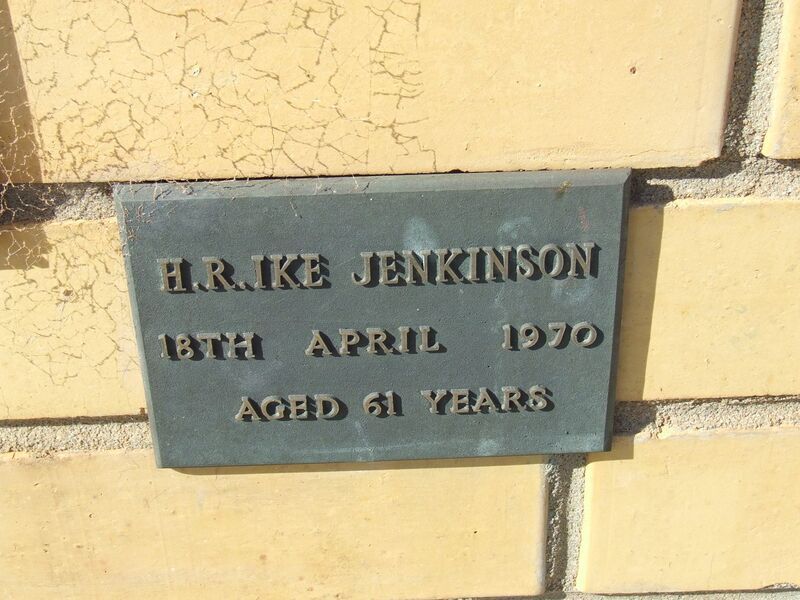
Ike lived to be 71, and died on the 18th April 1970. He was buried in the Berri Cemetery.
Researched and written by Kaye Lee, daughter of Bryan Holmes SX8133, 2/48th Battalion.
Submitted 23 January 2026 by Kaye Lee
Click images to start slideshow.