







PARBS, Samuel David
| Service Number: | SX7773 |
|---|---|
| Enlisted: | 4 July 1940, Adelaide, SA |
| Last Rank: | Private |
| Last Unit: | 2nd/48th Infantry Battalion |
| Born: | Angaston, South Australia, 7 March 1918 |
| Home Town: | Berri, Berri and Barmera, South Australia |
| Schooling: | Keyneton School, South Australia |
| Occupation: | Truck Driver |
| Died: | 28 March 2002, aged 84 years, cause of death not yet discovered, place of death not yet discovered |
| Cemetery: |
Loxton Cemetery, S.A. |
| Memorials: | Berri Oval "Diver" Derrick VC Memorial Grandstand & Roll of Honour |
World War 2 Service
| 4 Jul 1940: | Involvement Private, SX7773 | |
|---|---|---|
| 4 Jul 1940: | Enlisted Adelaide, SA | |
| 4 Jul 1940: | Enlisted Australian Military Forces (WW2) , Private, SX7773 | |
| 4 Jul 1940: | Enlisted Australian Military Forces (WW2) , 2nd/48th Infantry Battalion | |
| 8 Jun 1943: | Discharged Australian Military Forces (WW2) , Private, SX7773 | |
| 8 Jun 1943: | Discharged | |
| Date unknown: | Involvement |
A Talented Man
Samuel was born in Angaston in the Barossa Valley of South Australia. on the 7th March 1918 to Johann Heinrich and Ernestine Pauline Parbs. Johann was a tinsmith and iron worker, skills that Sam later began to learn. Following the death of his first wife, Louise Schulz in 1909 and having two young children to care for, Johann married Ernestine, adding two sons and two daughters, Erna, Oscar, Samuel (known as Sam) and Ada.
Sadly, 42-year-old Ernestine died in the Angaston Hospital in October 1926 when Sam was just eight years old. Less than eight years later, Sam’s 57-year-old father, Johann also died, having been unwell for almost a year.
The children all attended the local Keyneton school where the Parbs family excelled. Being a small country school, sporting competitions were held against other visiting schools, including in ’27 Mt. McKenzie. Of necessity, team sports were frequently mixed girls and boys, as in the Netball (then called basketball) team in which Sam and several other boys played. Sam was noted as an accurate goal-scorer in their one goal win.
At the Keyneton Picnic the following year, Sam blitzed many of the events, being first in the long jump, obstacle, sack and three-legged race plus the quaint Rooster Chase. He continued to repeat these successes in following years adding wins also in flat races, pole vault, hurdles and potato races. (Other Parbs children, Ada, Myra, Ruby, Doreen, Johan Ron and Franz also excelled.) Sam also excelled academically, in ’30 topping Grade V and being awarded a prize for his work in the gardens. Sam was actively involved in a concert held in the Keyneton Hall which raised £11 8/- for the school. With students encouraged to also participate in the Angaston Show, Sam next won a prize for his Safety First Essay.
That year, 1930, Sam became involved in a unique Home Project Club, where learning outside of the classroom and student driven, was recognised and fully supported by the Director of Education. He reported that “The movement has passed the experimental stage and has produced a large number of willing and interested workers, some of whom are making their project a means of livelihood since leaving school. I heartily commend the movement to all teachers and parents." Sam initially shared in the Observer newspaper that “I started my project early in the year, and I like it very much. When I do very much work at once, I can do it better, because I get used to it. My project is tin-smithing, and I make cake cutters, and solder tins. I often clean my soldering iron because it solders better and causes less trouble than a dirty iron.@ He added "While working I keep the spirits of salt away from my face, as it affects the eyes. I do my work in a small shed, where I can safely store my tools. My project is a good one, and I think that I shall continue it after I leave school. For solder, tin, spirits, and soldering iron I spent 6/, and returns from sales of cake cutters, and so on, came to 15/." A profitable enterprise.
By the end of ’31 Sam had gained his Qualifying Certificate with the second highest score for his class. He next chose a quirky, useful project, reported in the Chronicle with Sam’s statement outlining that “'My project is tinkering. I started In July, and my project has brought me in 13/1 profit. I made six kerosene tin lids.” By ’34 Sam had chosen a gardening project, but the year was marked by the death of his 57-year-old father, Johann in the Angaston Hospital. Sam had just turned 16.
Soon after, Sam turned to the increasingly popular sport of bike racing where, again, his fitness featured with him winning the Berri Club aggregate in ’39. The following year Sam competed at Waikerie where he won the first division three-mile scratch race, riding consistently throughout the day, running second in the wheel race to a Broken Hill competitor, and third in the club half-mile.
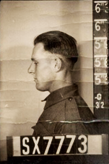
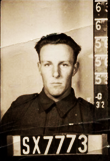
Sam worked as a truck driver, a skill that become particularly useful during the war years. At the time many young men of the area heeded the call for young men as Army recruiters targeted country areas in search of fit, healthy and preferably single young men to answer the call to arms. Aged 22 Sam enlisted on the 24th June 1940 at Glossop and was allocated the number SX7773 immediately being placed in the newly formed 2/48th Battalion. He nominated Otto, the oldest child and his stepbrother, who worked on Wyroo Station to be his next of kin.
As a highly skilled bike competitor, the July issue of Adelaide Sport newspaper noted that ‘Two others well-known in the wheel-game who have joined the A.I.F. are Jack Slack, of the Kilkenny Amateur Club, and Sam Parbs, Secretary of the Berri professionals.’
Enlisting at a similar time was Albert Bahnisch, SX8418 from Berri, also placed in the 2/48th with both being mentioned in the Angaston Leader; ‘More District Men Enlist; Albert Bahnisch, an old Nuriootpa boy, and latterly at Berri, has enlisted with the A.I.F. Sam Parbs, district boy, has enlisted at Berri, and is now in camp with the A.I.F. at Wayville.’ Cruelly less than a year later, 38 year old Albert was killed in action in Libya on the 18th April ’41.
Whether coincidence or pre-destination, the father of Mary Arthur, William Esmond also enlisted at a similar time, as SX7946 and in the same 2/48th Battalion. (William reduced his age by three years to be accepted.) Mary was later to become Sam’s wife.
The newly enlisted men marched to Woodside in the Adelaide Hills for intensive training, with Sam being appointed as an Acting Lance Corporal. They were able to return home on pre-embarkation leave in October, where a huge crown gathered at the Berri Theatre where they were honoured with a social. This was also combined with a farewell for a highly respected local identity, Mrs. P. H. Knappstein, who had been a leading supporter in organising socials for soldiers. A roll call of the ‘Young Diggers’ was made (25 in all, but with five unable to be present.) These included twelve who were also from Sam’s 2/48th Battalion. They included SX9384 Private Arville Todd, (later died of wounds), SX7278 Robert Tipper, SX8063 John Hood (also died of wounds), SX7964 Tom (Diver) Derrick (died of wounds in New Guinea), SX9562 Charles Butcher, SX7067 Peter Anderson, SX5218 Albert Smith, SX6832 Walter Fennell, SX8411 A.R. Rix, SX7242 Paul Pfeiffer, SX7614 Thomas Johns and Sam.
As part of the patriotic farewell, mention was made of the possible spirit of adventure that might have played some part in the enlistment of the boys, but deep down in their heart there was the love of their country. The local citizens of Berri were proud to do honour to their lads with them that evening. It was the largest muster of men the community had honoured. Many of the men were members of the Berri Football Club, including the captain, Jock Hood. The residents wished them all well and assured the young men they would look forward to their homecoming after a successful: victory on the other side. A presentation was then made to each of the soldiers of a money belt, a £1 note, and a pair of socks from the Comforts Fund.
In further remarks, a comment made by the enemy referred to the "polyglot armies" of the Empire. However, all the representative of the returned A.I.F. men commented that "God help them when they met that polyglot army".
Within days, these young men then boarded the Stratheden on the 17th November, arriving in the Middle East the following month, with Sam being further promoted to Acting Corporal, then on disembarking, Corporal.
Country communities were especially proactive in remembering those in the community who enlisted. With Arbour Day a regular event, in July ’41 the Keyneton School chose to plant a tree in the school grounds in honour of their old scholars. These included SX6007 Don Evans of the 2/7th, SX7979 Lindsay Evans (Later KIA), 39936 Percy Gerhardy and Sam Parbs. A young relative of each was chosen to do the planting in an area called the Heroes’ Grove.
At the end of that year, Sam’s sister received a letter in which Sam described how he was fortunate to have leave granted, spending the time in Jerusalem and surrounding Biblical places, including the Dead Sea, River Jordan, churches and places with sacred associations particularly appealing because of their age. He added that some of the buildings were stayed to prevent them from collapsing. His other observation was about the use of donkeys for travelling, moving alongside the latest streamlined motor cars.
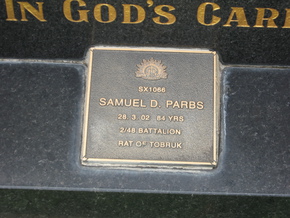
Conditions in the desert proved to be challenging. Despite the taunts of Lord Haw-Haw that the men were ‘living like rats’ in their dusty fly and vermin infected bunkers, rather than destroy morale, the men seized the title Rats of Tobruk as a measure of their strong camaraderie, fighting and endurance skills. It became an unofficial badge of honour. Sam was unfortunate to develop arthritis in his knee over February ’41, spending several weeks convalescing. Knowing he was not physically fit to lead, he requested to revert to being a Private. Jaundice, an Upper Respiratory Tract Infection and poliomyelitis contributed to a dismal start to ’42 and a diagnosis of being temporarily unfit for service. By September he returned to Australia on a hospital ship via Melbourne and thence to Adelaide where he was hospitalised.
Driver Sam and Mary Arthur (Wiliam’s daughter) from Parkside announced their engagement in December ’42, marrying in the Paruna Catholic Church in February the following year. (At the time, Mary’s father, was still serving overseas. An esteemed family friend, Mr. Ern Kupke, walked Mary down the aisle. Despite being unable to physically attend the wedding, William sent a gift of a filigree set comprising brooch, necklet, bracelet, and earrings, from Palestine which Mary wore on the day. Sam chose Mary’s brother, Ralph as his best man.
Hospitalisation, convalescent leave, a fractured femur, unstable right shoulder and knee problems preceded Sam’s definitive diagnosis of Poliomyelitis. Sam was eventually discharged on the 8th June ’43. He and Mary had three children, Patricia Margaret arriving in ’43, followed by Suzanne and Brian. Sam returned to his love of bike riding, being secretary of the Meribah Cycling and Athletics Club, organising a hugely successful Carnival in October ’45 which raised a creditable $133. Sam also acted as a very professional commentator on the microphone. He was an active member of the Cobdogla-Barmera Football Club in the Upper Murray Football Association.
64-year-old Mary died just prior to Christmas, on the 19th December 1985. Aged 84, Sam lived for more than three decades and died on the 28th March 2002. He was buried in the Loxton Cemetery with Mary. He is also remembered at Centennial Park Cemetery in the Garden of Remembrance.
Researched and written by Kaye Lee, daughter of Bryan Holmes SX8133, 2/48th Battalion.
Submitted 14 October 2025 by Kaye Lee


Click images to start slideshow.