







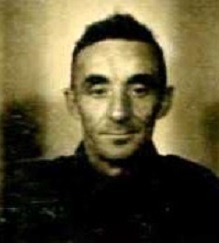
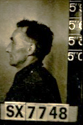
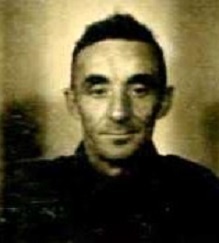
STEWART, Richard
| Service Number: | SX7748 |
|---|---|
| Enlisted: | 3 July 1940, Wayville, SA |
| Last Rank: | Private |
| Last Unit: | 2nd/48th Infantry Battalion |
| Born: | Colerane, Ireland, 24 November 1907 |
| Home Town: | Solomontown, Port Pirie, South Australia |
| Schooling: | Not yet discovered |
| Occupation: | Carpenter |
| Memorials: |
World War 2 Service
| 3 Jul 1940: | Involvement Private, SX7748 | |
|---|---|---|
| 3 Jul 1940: | Enlisted Wayville, SA | |
| 3 Jul 1940: | Enlisted Australian Military Forces (WW2) , Private, SX7748 | |
| 3 Jul 1940: | Enlisted Australian Military Forces (WW2) , 2nd/48th Infantry Battalion | |
| 19 Oct 1944: | Discharged | |
| 19 Oct 1944: | Discharged Australian Military Forces (WW2) , Private, SX7748 |
Little Irish Luck
Richard was born on the 24th November 1907 in Colerane, near the mouth of River Bann, Northern Ireland, between Belfast and Derry. His father, John remained in Ireland when Richard and his brother came to South Australia.
The Depression years in Australia meant that specialised work, including Richard’s trade of carpentering, was scarce, and at the outbreak of WWII Richard was unemployed. He indicated he had worked as a waiter with the Commonwealth Railways and was living at Solomontown, near Port Pirie, a railway hub.
Aged 32 Richard enlisted at Pirie on the 20th June ‘40 to serve in WWII. He was allocated the number SX7748 and placed in the newly formed 2/48th Battalion. Besides his father, he added his sister-in-law Agnes Stewart, who lived in Adelaide, as a next of kin.
Richard’s early days were spent in the pavilions of the Adeliade Showground, before intensive training continued at Woodside in the Adelaide Hills. Brief pre-embarkation leave preceded him boarding the Stratheden on the 17th November, arriving in the Middle East on the 7th December.
Almost immediately, Richard was detached to the Infantry Special Group before returning to the 2/48th, where, in August ’41 he was briefly promoted to Corporal before reverting to Private. He was to become one of the highly respected rats of Tobruk, an unofficial title designed to demoralise the troops, who were living in fly and rat infected sandy dugouts. The taunt of living like rats had the opposite effect and became one owned with pride by the men and their descendants.
Just days later, while on leave, Richard was hospitalised in Jerusalem with concussion and a fractured left maxilla sustained at Haifa on the 15th October. Being off-duty, Richard had been drinking with London born Acting Corporal SX7286 George Pond who had forcibly struck Richard. The severity of the blow meant Richard was hospitalised for two months. A Court of Inquiry was held at Mughazi in December. The injury was declared unlikely to affect Richard’s future military efficiency – but apart from these general facts, no mention was made of action taken or any fines imposed and the details were not added to George Pond’s military records.
Richard was wounded with a gunshot wound to his neck and left side of his back on the 14th July ’42 and lower lumbar GSW spending several days in hospital. At the time orders had been received to capture West Point in a dawn attack. John Glenn in Tobruk to Tarakan described how ‘It was to be a daylight show, and the troops did not like it. As they moved across the flat, German shells whined overhead on their way to Point 26. ‘When the troops were well forward of the start line they came under terrific fire from shells and mortars from the front and left, suffering heavy casualties.’
A list of those from the 2/48th Battalion wounded with Richard appeared in the newspapers. They included SX13682 Pte. Lesley N. Dacey, Midland Junction, WA; SX7501 Pte. Ronald H. Gerlach, Angaston; SX10377 Pte. Alfred E. Inwood, North Adelaide; SX7642 Pte. Donald J. Kerin, Burra;' SX8836 L/Cpl. Martin Meredith, Rosewater Gardens; SX7876 Pte Frank Stevens, Mount Barker; SX7748 Pte. Richard. Stewart, Solomontown; SX12819 Pte. Geoffrey L. Wiese. Bordertown .
Richard was eventually discharged at the end of September. However, conditions he encountered contributed to him developing clinical dysentery followed by enteritis and bronchitis. He was finally able to re-join his battalion in time to return home, via Melbourne at the start of February ’43.
For about a month, Richard was detached as a batman in the Headquarters 21st Australian Infantry Brigade. Training in the tropical conditions of Queensland followed as the troops were prepared for the heat and humidity they would encounter while facing a very different enemy in New Guinea. Richard arrived at Milne Bay in August ’43 but his physical condition contributed to him being classified as being suitable only for duties which ‘required restricted medical fitness.’
By February the following year the tropical conditions saw Richard develop a series of health issues including painful skin blisters, pustular dermatitis, conjunctivitis, deafness and a bacterial infection in his outer ear.
On the 24th April ’44 Richard left Port Moresby on the hospital ship for Brisbane then to an ambulance train for New South Wales. He continued to be plagued by a wide range of health issues, pyoderma, upper respiratory tract infection and contusion of his head and dyspepsia. The latter was attributed to being alcohol related. These issues were in addition to the residual effects of the gunshot wound to his back.
Richard was finally discharged on the 17th November ’44, having been issued with a civilian suit, hat and shoes. He headed to his sister-in-law’s home in Curtis Street, North Adelaide, but expressed the aim of re-joining the Railways if possible, but was prepared to undertake any work ‘for which I am fitted’.
Researched and written by Kaye Lee daughter of Bryan Holmes, SX8133, 2/48th Battalion.
Submitted 4 June 2026 by Kaye Lee
Click images to start slideshow.