







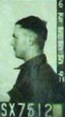
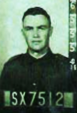
CROSS, Albert Ray
| Service Number: | SX7512 |
|---|---|
| Enlisted: | 2 July 1940, Wayville, SA |
| Last Rank: | Lance Sergeant |
| Last Unit: | 2nd/48th Infantry Battalion |
| Born: | Wallaroo Mines, South Australia, 20 August 1919 |
| Home Town: | Wallaroo Mines, Copper Coast, South Australia |
| Schooling: | Wallaroo Mines Public School, South Australia |
| Occupation: | Farm worker |
| Died: | 19 January 1978, aged 58 years, cause of death not yet discovered, place of death not yet discovered |
| Cemetery: |
Ballarat New Cemetery and Crematorium, Victoria Rose Garden J Row 3 TO2 |
| Memorials: |
World War 2 Service
| 2 Jul 1940: | Involvement Lance Sergeant, SX7512 | |
|---|---|---|
| 2 Jul 1940: | Enlisted Wayville, SA | |
| 2 Jul 1940: | Enlisted Australian Military Forces (WW2) , Lance Sergeant, SX7512 | |
| 2 Jul 1940: | Enlisted Australian Military Forces (WW2) , 2nd/48th Infantry Battalion | |
| 28 Oct 1943: | Discharged | |
| 28 Oct 1943: | Discharged Australian Military Forces (WW2) , Lance Sergeant, SX7512 |
Seriously Injured Three Times.
Albert was born at Lochiel near the Wallaroo Mines on the 20th July 1919 to George Henry ‘Harry’ and Daisy Cross. This area was closely linked to copper mining at nearby Kadina, at its peak in the early 1900’s. Albert’s father, George was a farmer in the area, having a large family. Albert was the ninth of twelve children, including Ernest Alfred Keith August born in1903, Alice Pearl 1906, Ruby Sylvia 1907, Herbert James 1909, Lindsay George 1911 – 1921, Laurence Henry 1913, Allen Steven 1914, Ivy May 1917, Albert Ray 1919, Dorothy Maud 1921, Douglas George 1925 and Frederick Edward in 1927.
Albert was barely two years of age when his nine-year-old brother, Lindsay died in October ’21. The family were strongly involved in their local church, with the younger members paying tribute to young Lindsay, describing him as “always of a bright and cheerful disposition, that it was impossible to be other than fondly attached to him; to know him was to love him”, and expressed their sorrow.
As did all the children, Albert attended the local Wallaroo Mines Public School where he proved to be a capable student, gaining honours (and coming 3rd in his class) in the Grade 7 exams to gain his Qualifying Certificate. He then returned to the family farm and somehow lost his left index finger (according to his enlistment papers).
With the outbreak of WWII and the downturn associated with the Depression, 20-year-old Albert enlisted on the 2nd July 1940. Prior to this date, he ‘tidied up’ several personal and farm goods, including his Chrysler Tourer, described as ‘well shod, new hood, perfect mechanical order’. Other more functional farm good included cocky chaff and a boar before he travelled to the Royal Adelaide Show Grounds for his early army training.
Three of Albert’s younger brothers, Laurence, Douglas, and Frederick all enlisted. 28-year-old Laurence, father of five children, served as S57565 having been ‘called up’ in January ’42. His postings were in South Australia at Port Pirie, Terowie and Largs Bay as a gunner with the Coast Artillery until he was discharged in December ’43. Douglas enlisted in the field in April ’45 as Private SX38851, with the amalgamated 14/32 Battalion. He had been with the Militia as S114366 while working as a wood cutter. With the death of both parents, Douglas nominated Ivy, his sister, as his next of kin. He served in Victoria, New South Wales, Lae, New Britain and Queensland. Frederick also served with the Militia as S115943 before, aged 18 enlisting as SX37379 in June ’45, giving his oldest brother Alfred Ernest as his next of kin. Frederick previously worked as an apprentice hairdresser and assistant tobacconist. He served with the General/Motor Transport Company in New South Wales and South Australia before being discharged in February ‘47.
Prior to boarding the Stratheden on the 7th November, Albert was promoted to Acting Corporal, with a rank of Corporal being confirmed on his arrival in the Middle East in December. He was unaware that the day after boarding the Stratheden, his 58-year-old mother died suddenly at home on the 8th November 1940 leaving seven sons and four daughters. She was buried in the Kadina Cemetery.
In February Albert was transferred to hospital for an arthrotomy of his knee and by March was being treated for a further knee injury.
Albert was to become one of the highly regarded Rats of Tobruk. Ironically, the term was designed to destroy the morale of the men, living in flea and rat-infested dugouts. It had the opposite effect, being seized as an unofficial term reflecting the pride and stoicism of the men.
By January ’42 Albert was promoted to Lance Sergeant. Within six months, he was first wounded in action early in July ’42 with a gunshot wound to his left hip. Back home, The Chronicle was one of the newspapers to carry a list of those wounded in action. Those from his 2/48th battalion, included SX7512 L-Sgt Albert R. Cross, Wallaroo Mines; SX6840 Pte. John F. R. Dixon, Adelaide; SX6969 Pte. Robert M. Harper, Evandale; SX8060 Pte. Archibald J. McFarlane, Cobdogla; SX13O19 A-Sgt. John Murray, Adelaide and SX8039 Pte. Donald F. Priester, Renmark and SX8182 Pte. Maxwell S. Wolter, Renmark.
At the time, Lieut-Colonel Hammer received orders to capture West Point 24 of Tel El Eisa in a dawn attack. John Glenn in Tobruk to Tarakan describes how ‘Before dawn the next morning the silence of the night was shattered by the wicked bark of the 25 pounders, and pin-points of flame danced across the desert.’ This was to be a daylight show and the troops did not like it.‘ When the troops were well forward of the start line, they came under terrific fire from shells and mortars from the front and left and suffered heavy casualties.’ There was a constant call for stretcher bearers.
According to SX8039 Pte. Don Priester, their injuries were sustained during the fierce attack on Tel El Eisa when the carriers were ordered out to take some of the fire. Unfortunately, in doing so, they were forced on to a German minefield by the intense anti-tank fire, resulting in casualties. In a letter headlined as Buried by a Bomb Burst published in the Murray Pioneer of June 1943, Don was quite graphic in his recount. "When Wavell's forces were coming back to go to Greece, we advanced and re-entered Tobruk. On January 1 Jerry attacked and broke in through the perimeter. He broke in with infantry, tanks and artillery. He held the salient he had won. We attacked him with the bayonet and had casualties. I remember Cpl. H. Lock (now a sergeant) being there in the attack. Jerry came in a blinding dust storm, and we could not see more than about 10 yards.”
By early November ’42 Albert was again listed as wounded in action, this time under ‘Now Reported Placed On seriously Wounded list’ which on further examination just prior to Christmas was graded as ‘Seriously wounded’ with a compound fracture of his femur. Finally in January ’43 Albert was removed from all lists. He had sustained a gunshot wound to his thigh, leg and right fibula, inevitably being classified as unfit for service.
Albert returned home via ship, disembarked 25/2/43 with documented injuries to his left thigh, left buttock, femur and fibula. As they berthed, many of the soldiers shared their stories, then printed in the February edition of News. ‘All the men paid tribute to the organisation of the attack at El Alamein. Heavy barrages sent over by the Allies were the turning point, for men who operated between Allied and Axis tanks. during a tank battle on November 3, when the Germans counter-attacked seven times. They expressed the opinion that, had Rommel delayed his retreat a few days longer, practically the whole of the Axis forces would have been wiped out. The number of burnt-out lorries, gun carriers, armoured cars, guns, and other equipment left behind by the Axis was enormous. The equipment was saturated with petrol before it was burnt.
Albert was discharged medically unfit on the 28th October ‘43. He was issued with a suit and returned to Wallaroo. He continued to refine or sell unwanted farm equipment, including a header, heavy dray, his six-year-old horse, and a 120 egg capacity incubator. However, with the post war labour shortage, he continued to advertise for an experienced man for the winter harvest.
George Henry ‘Harry’ Cross lived to see his son return home, despite Albert’s many injuries. Unfortunately, George had continued to experience heart problems and aged 68, died four years after his wife, on the 28th November 1944 and was interred with her at Kadina Cemetery. (In the adjoining grave now rests their sons, the oldest, Alfred E. K. and 7th child Allen Steven.)
In April ’46, the Kadina Soldiers’ Relatives Group gave a banquet for the ex-servicemen where a fulsome dinner was offered, followed by toasts to the returning men and those absent. The Lady Mayoress presented each returned soldier with a gift. Unfortunately, Albert was absent but mentioned by those able to attend.
That year he married Gwenda Lillian Harris a local from Alford and they had a family of three children, Marilyn, Bruce and Michelle. They eventually moved to Terang, Victoria where 58-year-old Albert died on the 19th January 1978. He is buried in the Ballarat New Cemetery and Crematorium in the Rose Garden J Row 3 TO2 under a birch tree. His inscription reads ‘SX7512 Lance Sergeant Albert Ray Cross 2/48 Infantry Battalion "Remembered with love"
Gwenda lived to be 96 years old and died on the 21st January 2023. She now rests with Albert.
Researched and written by Kaye Lee daughter of Bryan Holmes, SX8133, 2/48th Battalion.
Submitted 26 June 2026 by Kaye Lee
Click images to start slideshow.