







HANLEY, Jack Winchester
| Service Number: | SX7129 |
|---|---|
| Enlisted: | 29 June 1940, Adelaide, SA |
| Last Rank: | Warrant Officer Class 2 |
| Last Unit: | 2nd/48th Infantry Battalion |
| Born: | Perth, Western Australia, 23 March 1904 |
| Home Town: | Adelaide, South Australia |
| Schooling: | Adelaide High School, South Australia |
| Occupation: | School Teacher |
| Died: | 11 January 1987, aged 82 years, cause of death not yet discovered, place of death not yet discovered |
| Cemetery: |
Centennial Park Cemetery, South Australia Remembered in the South Australian Garden of Remembrance, Wall 6 Row G. |
| Memorials: |
World War 2 Service
| 29 Jun 1940: | Involvement Warrant Officer Class 2, SX7129, 2nd/48th Infantry Battalion | |
|---|---|---|
| 29 Jun 1940: | Enlisted Adelaide, SA | |
| 29 Jun 1940: | Enlisted Australian Military Forces (WW2) , Warrant Officer Class 2, SX7129, 2nd/48th Infantry Battalion | |
| 11 Dec 1945: | Discharged | |
| 11 Dec 1945: | Discharged Australian Military Forces (WW2) , Warrant Officer Class 2, SX7129, 2nd/48th Infantry Battalion |
A Leader
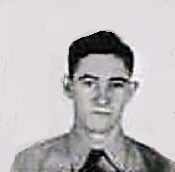
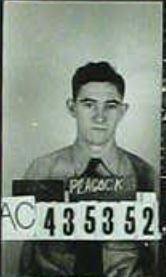
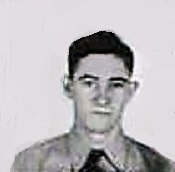
Jack was born in Perth, Western Australia on the 23rd March 1904 to William Francis and Agnes Hutchison Hanley. He initially grew up in the railway siding and wheatbelt region of Pingelly where his father worked as a saddler. Jack was just nine when his 40-year-old mother died in Perth Hospital on the 23rd January 1914. She was buried in the Anglican section of the Karrakatta Cemetery with Wiliam and Jack being named as chief mourners. Many wreaths adorned her grave from Pingelly Church Guild, the Pingelly Agricultural Society, and the Pingelly Race Club. (Rather bluntly, the Perth Hospital published a weekly report of patients admitted, discharged, deaths and those remaining.)
With the death of Agnes, Jack’s maiden aunt, Miss Ellen Hanley adopted Jack and brought him to live with her at Freeling in South Australia. Ellen ran a successful boarding house which provided her an income. She also became a foster mother for another of her nieces, Nelly Lally. Ellen was a tireless worker in her Roman Catholic Church and a strong supporter of the Red Cross and their work.
Jack attended Adelaide High School before becoming a teacher, continuing to successfully pass subjects he studied at the School of Arts over the 20’s and ‘30’s (including Honours in Design and Colour and Dimension Sketching, a Credit in Lettering and blackboard illustration.)
Jack married Gwendoline Edith Pearl (Gwen), with the two living at Grassmere (now known as Kurralta Park.) One of Jack’s later schools was at Hindmarsh where he became firm friends with Ivor Paech and his wife. Ivor described Jack as being ‘a typical Aussie bloke who sported a sharp wit and a dry sense of humour’ with the couples spending evenings together playing bridge, singing to the pianola of listening to the wireless.
The two, Jack and Ivor enlisted together. Much later Ivor’s diaries were collated by Darren Paech into a book, Adelaide to Alamein. It gives a perceptive insight into the lives of these two school-teachers. The night war was declared Jack and Gwen were being entertained with other couples at Ivor’s home in Croydon Park. A unanimous decision was made that it would be ‘one in all in’ if any enlisted. The fall of France was the catalyst for Jack and Ivor to head into Adelaide during a school lunch break to enlist on the 3rd July. Ivor became SX7138 and Jack SX7129 with both being allocated to the newly formed 2/48th Battalion. At that stage, Jack was 36 years old.
Both men were successful at the Physical Training Course of very strenuous exercises. Probably Jack’s leadership skills as a teacher contributed to his early promotion to Acting Sergeant early in November ’40 as the battalion headed overseas on the Stratheden on the 17th November following pre-embarkation leave. During a brief stop-over in Freemantle, the two visited a local hotel where they met a local West Australian who took them in to see the lights of Perth from King’s Park, accepting just one bottle of beer for his kindness.
Ivor and Jack were part of the massive departure of teachers – in some instances causing smaller schools to close. By September ’41 the News published an article outlining that 207 teachers were already on War service, with 50 others having been granted release and awaiting call up. ‘Of those now serving 114 are in the R.A.A.F., 87 in the A.I.F., and six in the R.A.N.’ By that date, two had been killed, four were prisoners of war and Jack was one of five wounded in action.
By the time Jack disembarked in the Middle East in December, his substantive position of Sergeant was confirmed. It took a little time to adjust to local practices and food.
About the 12th April ’41 a confrontation occurred between three German trucks, a motor bike and A Company. Jack’s account of the action is published in John Glenn’s Tobruk to Tarakan;
‘Corporal Frank Pearson slowly walked over to investigate. To the surprise of both, they found they were on opposite sides. Without wasting time, the Italian visitor hopped on his bike and made world time to the rise some 600 yards away, no doubt spurred to the greatest effort by our ant-tank gun, which kept dropping shells some ten yards behind him and never seemed to improve a yard. Whether the last shell finally scored a hit or whether the rider had lost faith in the speed of his machine is hard to say, but the last seen of him was when he hot-footed it over the rise in a cloud of dust.’
Soon after that incident, the men were ordered to ‘stand to’. A staff car soon approached with the men firing on the driver. With the second German occupant surrendering, he shared that he believed Tobruk had fallen and he was about to take charge of the hospital. Nearby troops were anxious to have the privilege of driving the car, a new Mercedes in behind their lines. Sadly, the anti-tank men had different ideas which involved target practice. Just one shot was fired, hitting the bonnet with the result the car burst into flames.
Just three months after arriving in the Middle East, Jack sustained multiple shrapnel wounds and was evacuated to hospital. At that time, on the 16th April a massive attack was underway with German tanks being mistaken by their own troops and coming under fire. At this time B Company was also subjected to intense mortar fire with two Privates being killed instantly. A further mortar bomb fell between Lt. Colonel Douglas and Sergeant Jack Hanley, wounding both but miraculously, they survived.
By the 29th April, Ivor recorded that he heard a Sergeant from the 2/48th Battalion had just been admitted to hospital and felt he should visit. Unexpectedly, it was a well bandaged Sergeant Jack who had been heavily involved in action around Tobruk, including Hill 209. Jack tried to make light of the injuries but was justifiably proud of the praise from General Moreshead for the ‘good show’ he had been involved with.
Finally, by August ’41 Jack was transferred to a convalescent Depot. Not unexpectedly, he craved some freedom and chose to have a day away from hospitals and duty. It cost him two days’ pay.
Newspapers back home carried extensive lists of names of those killed or wounded in that encounter. From Jack’s 2/48th Battalion many names were listed as wounded: They included;
Pte. Robert T. Christie, SX8273, Angaston (later died of wounds); Pte. George A. Cohen, SX8165, Angle Vale; Pte. R. G. Daniels, SX7863, Rosewater Gardens; Pte. Charles S. Deering, SX77O2, Alberton; Sgt. Jack W. Hanley, SX7129, Grassmere; Pte. Ray B. Lovelock, SX7399, Karoonda; Cpl. Francis B. Pearson, SX7056, Kilkenny; Pte. Angus R. Sara, SX9334, Ethelton; Pte. Ronald A. Small, SX7891, Redfern; Pte. E. Smith, SX506O, Ivanhoe (Vic) and Pte. James A. Tregilgas, SX6885, Norwood.
Gwen also received the scant news, knowing only that Jack was alive ‘Mrs . J. W. Hanley. of Grassmere has been informed that her husband, Sgt. J. W. Hanley. was wounded in action on April 17.’ It was a challenging time.
Unfortunately, the extend and severity of Jack’s wounds meant that he was classified as being ‘fit for duties other than those involving field formations’ so by March ’42 he was first promoted to Acting Senior Sergeant and by October to Acting Warrant Officer II. He finally returned to Australia via Melbourne, eventually returning to South Australia in April ’43. His official diagnosis was that he had a gunshot wound to his left thigh and possibly gall stones (cholecystitis) in July.
Sadly, Jack’s aunt and adopted mother, Ellen Hanley, died in the Freeling Hospital on the 21st August ’43. Part of the tribute printed in the Barossa News shared her generosity and community focus. ‘She was for a number of years a member of the Freeling Hospital Board. She was always interested in the work of the Red Cross Society and, particularly during the last War was a very energetic worker for that body. On the death of her sister in-law, she adopted her infant nephew (now Sgt. Jack Hanley, 2nd A.I.F., who has seen service in the Middle East). She also was foster mother to one of her nieces Mrs. A. Heinrich (formerly Miss N. Lally).’ She was buried in the local cemetery.
Jack and his cousin placed a tribute to her in the Advertiser:
‘MRS. A. G. Heinrich and S/Sgt. J. W Hanley (AIF) thank all relatives, friends for letters cards, floral tributes, expressions of sympathy in recent bereavement of their aunt, Ellen Hanley Special thanks to staff Freeling Hospital.’
By September ’44 Jack was posted to Mount Gambier to serve in the Account Section of the Unit Stores. Travelling by train, there were several towns where he was designated to report for duty including Murray Bridge, Lameroo, Bordertown and Naracoorte.
Warrant Officer Jack survived the war and was discharged on the 11th December ’45. He returned to the classroom to continue his teaching career. Whilst he and Gwen had no children of their own, Jack served for ten years as the 2/48th Battalion’s Welfare Club President during the ‘50’s and ‘60’s. He faced just one slight hitch in November ’52 when the sixteen 2/48th Battalion drums, which had been taken overseas with the troops, were to have been presented at a ceremony at Woodside Army base. The ceremony had to be postponed to a ‘future date’ while a search was conducted.
Aged 82, Jack died on the 11th January 1987. He is now remembered in the South Australian Garden of Remembrance, Wall 6 Row G. at Centennial Park.
Jack’s father, William died in August ’55 and was buried in the Narrogin Cemetery, Western Australia.
Researched and written by Kaye Lee daughter of Bryan Holmes, SX8133, 2/48th Battalion.
Submitted 14 July 2026 by Kaye Lee
Click images to start slideshow.