






HUXTABLE, John Edward
| Service Number: | SX6900 |
|---|---|
| Enlisted: | 29 June 1940, Wayville, South Australia |
| Last Rank: | Private |
| Last Unit: | 2nd/48th Infantry Battalion |
| Born: | St Arnaud, Victoria, Australia, 16 March 1910 |
| Home Town: | Broken Hill, Broken Hill Municipality, New South Wales |
| Schooling: | Bourke Ward School, Broken Hill, New South Wales, Australia |
| Occupation: | Miner / Timberman, South Mine, Broken Hill |
| Died: | Stroke, Broken Hill, New South Wales, Australia , 13 March 1957, aged 46 years |
| Cemetery: |
Broken Hill Cemetery, New South Wales Anglican section of the Broken Hill Cemetery, ZB Row 1 Plot 3. |
| Memorials: | Norwood Football Club War Veterans |
World War 2 Service
| 29 Jun 1940: | Enlisted Private, SX6900, Wayville, South Australia | |
|---|---|---|
| 29 Jun 1940: | Enlisted Australian Military Forces (WW2) , Private, SX6900 | |
| 30 Jun 1940: | Involvement Private, SX6900 | |
| 14 Oct 1944: | Discharged Private, SX6900, 2nd/48th Infantry Battalion | |
| 14 Oct 1944: | Discharged Australian Military Forces (WW2) , Private, SX6900 |
Marched to His Own Drum.
John was born in the former gold mining town of St Arnaud, Victoria on the 16th March 1910 to James Henry, a miner and Caroline Adelaide Huxtable. The family soon moved to Broken Hill where James continued to work as a miner alongside the line of lode. John’s family consisted of six brothers and three sisters, including James Henry Jnr., William James, Ernest George, Alfred Thomas, Jeffrey, Dorothy May and Theodora Florence.
The children attended the Burke Ward School where events like Labor Day were celebrated with a picnic. In ’22 two trains left Sulphide Street, taking children and parents to Silverton where food stalls were set up under trees and the children given fruit, a saveloy and roll before competitions began. The Huxtable boys did well in their heats with Jack coming 3rd in the final. The following year, both John (‘Jack’) and Ernest were successful in their "permit to enrol" examination.
13-year-old Jack was lauded for his football performances against the other local school, Alma Public. He scored Burke’s two majors and was named in the best players. Post school, despite the Depression, he found work both as a miner in the Broken Hill South Mine and as a timberman.
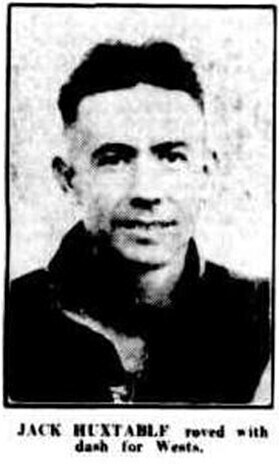
The Huxtable brothers were very sporty and certainly Jack was quite fearless, especially on the football field playing for Wests where his first appearance as a recruit in the senior team was in ’29. His fearlessness not infrequently bordered on reckless behaviour and appearances before a tribunal. In ’30 the umpire charged him with deliberately wasting time resulting in Jack then being banned from playing in West’s next match. Jack was equally capable of putting in a ‘blinder’ of a game. In ’33 he was named as one of West’s most consistent players, producing a good, solid game. He was described as tireless, ‘always in the thick of the fray and enjoying it’ and despite his size, was a good left kick. In August ’34 against Centrals, he was unstoppable, being named as Best on Ground for his tireless roving performance. Despite his lack of height he performed well in marking competitions and contributed four goals to West’s impressive win.
Jack’s wild streak earned him the nick-name of ‘Roughie’ and an appearance as a 24-year-old in the local Police Court on a charge of offensive behaviour and indecent language in the Palais de Danse at the start of 1934. When people resented his actions, Jack wanted to fight them. He was fined £2/10/-or in default, five days' imprisonment. Bravado won, with Jack choosing the five days. Ironically, that year, Jack was praised for his football skill, being a tricky, elusive rover, and one of the best small men, able to ‘turn on a threepenny piece and his left leg kick was excellent.’
The start of the following season was marred by an injury Jack sustained working in the mines, where falling stone crushed his finger, preventing him playing in the opening matches for a month, finally taking the field in the fifth match as 19th man. He soon regained his form by August with the local Barrier Miner reporting that ‘Huxtable played one of his best games to date and his speed and turning ability got him out of many, corners.’ However, this brilliance was again marred by a charge of having deliberately tripping an opposing player.
By May ’37 The Barrier Miner published a profile of key football personalities. Jack’s read ‘Wests' tigerish rover and half-forward, is playing the best football of his career. Some of his displays last year were indifferent, but right from the jump this season he has been well into the thick of the fray and has been outstanding for his team in each match. Clever, elusive groundwork, short passing and safe marking have made him a safe unit through which to attack. His scouting has been keen, and his robust methods have carried him safely through the heaviest of scrimmages.’
This contrasted with impulsive, unsportsmanlike behaviour, including using indecent language and threatening to strike an umpire. Wests, attempted to have the case heard on a Saturday as Jack was working afternoon shift, but there was no compromise, resulting in Jack standing out for a game. Less than two months after the glowing review, in July ’37 a four-year disqualification was imposed on this talented 28-year-old rover. He was charged for throwing an opponent by the neck, using abusive and threatening language, and threatening to strike the umpire. He was found guilty on all charges. West appealed on the grounds it would deprive Jack ‘of an opportunity to gain his life membership of the League’ but this was rejected.
Jack’s 57-year-old mother Caroline died on the 10th July ’38 and was buried in the Methodist section of the Broken Hill Cemetery. Six years later in March ’44, his 59-year-old father James also died.
Jack married Catherine Bess and the two had a son, named John after his father. However, with the outbreak of WWII, 30-year-old Jack and his 31-year-old older brother, James were amongst the early enlistees in June ’40. A large crowd of well-wishers gathered at the Sulphide Street Station to bid au revoir, to the 26 recruits who trained down to Adelaide with free passage provided. Of note was that five of the local Hoare family had enlisted and were also to be placed in the same battalion as Jack. In a generous gesture the local branch of the Returned Soldiers' League provided the enlistees with free breakfast at the Riverton Railway refreshment rooms.
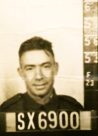
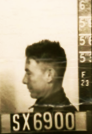
James was allocated the number SX6326 in the 2/43rd Battalion and Jack SX6900 in the newly formed 2/48th Battalion. Their early days were spent in the pavilions at the Wayville Showgrounds before the new enlistees moved to Woodside in the Adelaide Hills. (It was there that a month later, James was discharged as being ‘medically unfit’. He worked as a barman in the Hillside Hotel and undeterred, he re-enlisted early in May ’41. As a member of the Militia he was given the number S17852. Their youngest brother, Geoffrey also enlisted as an 18-year-old in July ’44 as VX84030, having previously served in the Militia. His conduct while serving was very similar to Jack’s, although his longest detention was of 60 days. Having served in Morotai, he was finally discharged on the 29th May ’46.)
Following pre-embarkation leave, Jack boarded the Stratheden on the 7th November, ’40, arriving in the Middle East on the 17th December. He made an early impression in his first months as he struggled with army discipline and rules. His pay disappeared rapidly in fines for conduct prejudicial to discipline, being absent without leave, not attending parades, drunkenness and use of unacceptable language. Similarly, his freedom was severely curtailed while he was confined to barracks for blocks of a week and then fortnight. Eventually in March ’41 he rejoined his unit.
In July, a letter arrived in Broken Hill from Private Jack Hoare, one of four brothers serving with the 2/48th. Besides news of his brother, Joe Hoare, it also contained information about Jack Huxtable. The letter stated that with ' five other men, Huxtable was out on scouting duties when they came across a German patrol. The Australians armed with tommy guns wiped out the patrol before they were aware of the presence of diggers.’ Jack Hoare added that "Roughie" Huxtable had been doing some good work and had been recommended for the 'Military Medal.’ This detail is, however, not contained in Jack’s military records., whereas an attack of scabies later that year noted him languishing in hospital.
Back home in August ‘41 an announcement was made that ‘Jack Huxtable, who is at present abroad with the A.I.F., was granted players' life membership of the League. Huxtable, who recently completed his four-year term of disqualification from League football, could not secure his life membership until the disqualification was lifted. Many representations for the lifting of the disqualification had been made to the League on previous occasions.’ It certainly was a popular decision.
Jack was amongst the soldiers who wrote to Harry Rose, secretary of the South Mine Picnic Fund in February ‘42 expressing appreciation of the committee's efforts. The common theme was that -"There's no place like Broken Hill." A reassuring feature of the letters was that all men in the Far East seem to be itching for "a smack at the Japs”.
Back in Broken Hill, the unbeaten West Premiership team of 1932 prepared to play the 1941 team. Several of the ’32 team serving overseas on active service with the A.l.F. included Jack and Les Williams. The match was a fundraiser for the Queen of Industry in the Spitfire Fund competition. In September Jack wrote poignantly of how he would have liked to have seen the match back home between these two West Teams. 'As you probably know, l was one of the old 1932 team—There must be some kick left in them yet!’ He added ‘I'm afraid I haven't much news: after 6 months in the desert you find you have nothing to say. Still, you could never be lonely there— the fleas and flies see to that. Once again, many thanks for the canteen orders, and I hope the Queen of Industry comes out on top.'
1942 was also marked by injuries that included concussion and facial abrasions causing Jack to be hospitalised for over a week. These were sustained occurred during the relentless fighting in a massive assault to ambitiously take the strategic position of Trig 29. In his book ‘Tobruk to Tarakan’ John Glenn describes that time “which was to be the most bitter and bloody fighting of the war. When next the sun drove away those shadows from the desert, death would have reaped a rich harvest of gallant men. And of the 2/48th Battalion only forty-one weary troops would remain in the field So many of Jack’s fellow 2/48th Battalion were also wounded and many more killed in action. Those wounded with him were listed in November ’42 and included SX10306 Cpt. Robert S. Shillaker, Hackney; SX10329 Cpt. Don Bryant, Seacliff; SX10333 Lt. Robert E. Alexander, Norwood; SX12498 Lt. Kenneth F. Allen. Hayhurst; SX5533 Pte. Hilary M. Lamont. Parkside; SX7108 Pte. Clarence W. Baldwin, Pinnaroo; SX7289 Pte. Ernest H. Chapman, Koongawa; SX7497 L-Cpl. Ron Chinner, Angaston; SX11118 Pte. L. A. Feehan 2/48th Warooka; SX6900 Pte. John E. Huxtable. Broken Hill; SX3871 Pte. Harold. E. Luscombe, Port Pirie: SX8238 Pte. John C. C. Marshall, Wunkar; SX8446 Pte. Ronald R. Matthews, Broken Hill; SX11122 Pte. Laurence McEvoy, Broken Hill; SX12980 Pte. Edward H. Merritt. Adelaide; SX14337 Pte. Colin W. Morgan, Broken Hill; SX9283 Pte. Peter. s. D. Robertson. Karoonda and SX10510 Pte. Leonard B. Spicer. Lameroo.
Once recovered, Jack returned to form with being AWL, not attending parade and being arrested whilst attempting to escape, then was faced with being confined to barracks for 6 then a further 4 days.
At the end of October Jack was wounded in action with gunshot to his leg causing him to be hospitalised. The Barrier Miner announced in November the local men who were casualties. Thirteen South Australians were reported killed in action or died of wounds in the latest Army casualty list. Sixty-two were wounded including Broken Hill men, Pte. J. Huxtable, Pte. L. McEvoy, Pte. C. W. Morgan, Pte. R. R. Matthews.
Jack’s behaviour remained predictable, as were the fines. Finally his battalion left the Middle East in February ’43 heading home to Australia via Melbourne. His return home in April ’43 resulted in a 2-day absence at the end of March and the inevitable fine. His medical condition became a factor because of the gunshot wound to his calf in Queensland and resulted in a return to SA where he was also diagnosed with bronchitis. That year ’44 was also marred by the death of Jack’s father, 59-year-old James in Sydney in March. (His body was returned to Broken Hill for internment.)
Jack was a member of the Railway Druids Lodge, which unanimously voted to invest £200 in the First Victory Loan. Particular note was made of members in the current campaigns, highlighting in the Western Desert ‘Bro. J. E. Huxtable, one of the famous Tobruk Rats, and he was also in New Guinea.’
By August ’44 on his return to SA, the strong recommendation was that Jack ‘should not be returned to his former occupation of miner… he is not fit for duty in a hot humid climate.’ Jack was eventually discharged on the 14th October ’44 and returned to Broken Hill. Despite the recommendation not to return to mining, by the end of November ’44 Jack was reported as being injured by a falling stone at the South Mine during an evening shift. He suffered a lacerated right ear and bruised right shoulder and was treated in Hospital. Jack’s behaviour continued to vacillate, with a charge of acting in an indecent manner opposite the Police Station, attracting a £2 fine, in default four days' imprisonment.
Jack’s previous football skills were evident at a Rising Sun Football Club picnic at Penrose Park in October ’46 where he won the football kick with a 42 yard effort.
Jack’s youngest brother, Jeffrey, having survived his time fighting in Morotai was accidentally killed on the 4th April 1947 following an horrific accident when his ute overturned after an evening at several pubs. Ten months later, Jack sustained another injury, this time to his back, working in the mines in February ’48. He was again taken to surgery for treatment before returning home.
Football continued to feature in Jack’s life. In a fundraising match in August ‘48 for the ‘old Folks Home’ and a tribute to Bill Blackman, the first aid man for the older players throughout their careers. Jack was named to do the scouting around the goalmouth. Soon after a presentation was made at the West Football Club of those who had been awarded Life membership – as had both Jack and Jim Huxtable. A further fundraiser was organised for a past injured player, with Jack ‘Roughie’ Huxtable again donning the gurnsey for an ‘old Timer’s match in September ‘54
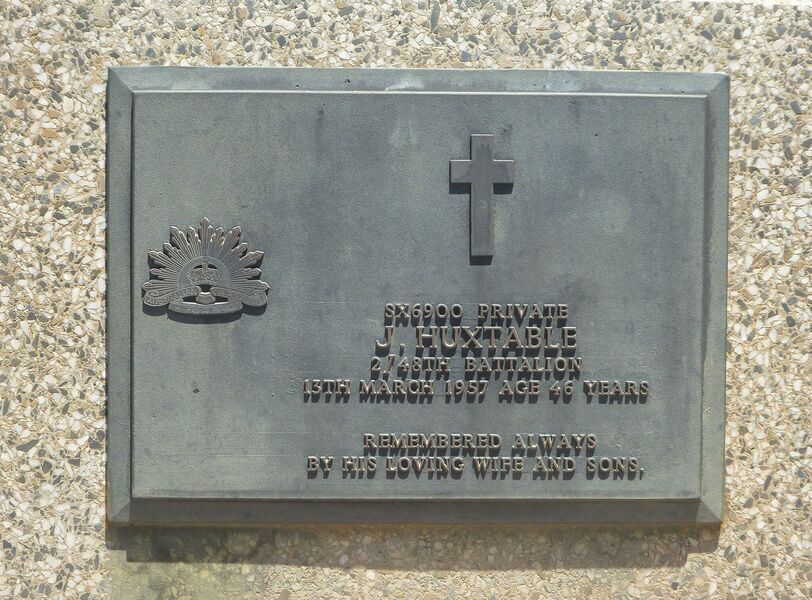
Aged just 46, Jack, who had been working as a timberman, died on the 13th March 1957. He now rests in the Anglican section of the Broken Hill Cemetery, ZB Row 1 Plot 3. ‘Remembered Always by His Loving Wife and Sons.’
Researched and written by Kaye Lee, daughter of Bryan Holmes SX8133, 2/48th Battalion.
Submitted 22 February 2026 by Kaye Lee



Click images to start slideshow.