





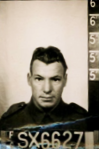
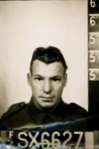
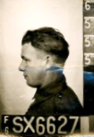
COOL, Harold
| Service Number: | SX6627 |
|---|---|
| Enlisted: | 24 June 1940, Wayville, SA |
| Last Rank: | Private |
| Last Unit: | 2nd/48th Infantry Battalion |
| Born: | Wilcannia, New South Wales, Australia, 9 March 1919 |
| Home Town: | Wilcannia, Central Darling, New South Wales |
| Schooling: | Wilcannia Public School, New South Wales, Australia |
| Occupation: | Transport and Mail driver. |
| Died: | 26 January 1973, aged 53 years, cause of death not yet discovered, place of death not yet discovered |
| Cemetery: |
Wilcannia Cemetery, New South Wales |
| Memorials: |
World War 2 Service
| 24 Jun 1940: | Involvement Private, SX6627 | |
|---|---|---|
| 24 Jun 1940: | Enlisted Wayville, SA | |
| 24 Jun 1940: | Enlisted Australian Military Forces (WW2) , Private, SX6627, 2nd/48th Infantry Battalion | |
| 19 Oct 1945: | Discharged | |
| 19 Oct 1945: | Discharged Australian Military Forces (WW2) , Private, SX6627, 2nd/48th Infantry Battalion |
First of Four Brothers to Enlist
Sydney Arthur Cool as a 13-year-old rode his bike from Sydney to Wilcannia on the Darling River, New South Wales, where he first gained employment on local Stations. Wilcannia was a thriving port in the riverboat era. Sydney soon met local, Maud with the two marrying and raising a large family of eight children. According to his enlistment papers, Harold James Murray Cool was the third son, arriving on the 9th March 1919 (although the plaque on his headstone suggests 1920.) He had two older brothers John Arthur and Peter Charles, a younger brother Sydney Robert (‘Robert’) and a sister, Lily. His younger siblings included Tosca, Gwen and William (Bill).
Entertainment in Wilcannia was creative. The Friendly Societies (Druids and Oddfellows) in September ’26 held a hugely popular Plain and Fancy Dress Junior Ball for the local young people with over 120 attending. Harold’s father Syd was one of the organisers of what became a huge financial success The Cool children were well represented with Bob, Jack, Peter and Harold choosing to go in plain attire as did Lily.
As an 11-year-old Harold was part of a Far West church camp group from Wilcannia, Broken Hill, Tibooburra and other towns, which travelled to Sydney, staying at Manly in December ’31. The visit included an excursion to Bradley’s Head for their first sighting of a warship, the H.M.A.S. Canberra. Unfortunately for Harold, a wind gust caught his felt hat (which he described as ‘with no corks’) and it sailed overboard. Fortunately, his poor start to the day was soon forgotten as the children viewed the large guns, able to smoothly spin.
While at the Camp, as part of the far West Children’s Health Scheme the children were given an overall health check with one child treated for a cleft palate and another for an eye lost when struck by a cricket ball. They returned via train to Broken Hill with the Wilcannia and Tibooburra children, Harold included, returning home by coach.
The older Cool children attended the local Wilcannia Public School where Harold was presented with his Certificate at the end of the ’32 school year.
Post school, Harry worked as a transport and Mail driver. In April ’38 he and Lionel Oreen, a son ot the manager of Green Brothers, took just five trips to transport 2000 sheep from Koralto Station. Green Brothers claimed this as a record load of sheep on a motor lorry. The Barrier Miner newspaper reported that ‘Green Brothers put Into service one ot the biggest trucks In Australia. It is a 10-ton Leyland three-decker Diesel-engined truck, and on it they carried 416. shorn hoggetts from Koralto Station to Broken Hill. While previously large numbers of sheep were carried by trucks in the western districts of New South Wales for several years, but this is believed to constitute a record.’ At the time there was a scarcity of feed in the outback which would have led to the deaths of many of the sheep had action not been taken to send them down to South Australia to fatten them for buyers. Should rain fall, the livestock would be returned
That year Harold was also in charge of the New South Wales Lands Department Recreation Club which competed against a similar Queensland Club in cricket, golf and tennis. Soon after, WWII erupted.
Claiming to be 21, Harry initially enlisted on the 24th June 1940 in Broken Hill, the first of his siblings to heed the call for enlistees. He was amongst 17 young men from Wilcannia whose names were published in the Western Grazier as having enlisted. and was allocated the number SX6627. Enlisting at the same time was John Huxtable SX6900 and Murray Frederick Farquhar both of whom would serve in the same 2/48th Battalion. Harold chose to not register his full names of Harold James Murray Cool, settling for just Harold Cool.
A large crowd of well-wishers gathered at the Sulphide Street Station to bid au revoir, to the 26 recruits who trained down to Adelaide with free passage provided. Of note was that five of the local Hoare family had enlisted and were also to be placed in the same battalion as Harold. In a generous gesture the local branch of the Returned Soldiers' League provided the enlistees with free breakfast at the Riverton Railway refreshment rooms.
Harold’s parents soon moved to live in Bondi, Sydney where Sid became manager of the Hardware Department of Knox and Downs, and an Alder man and Deputy Mayor. Their second son to enlist was older brother, 23-year-old John Alfred, a shed hand in civilian life, who enlisted the following year on the 3rd March ’41 at Paddington, NSW. He was allocated the number NX68461 in the 2/4th Battalion. John (known as Jack) served in the Middle East, returning in ’42. He then served in the Northern Territory in the Command Pay Office, then South Australia before being discharged on the 14th November ’45.
29-year-old Peter, an engine driver, was the third son to enlist in Melbourne on the 30th July ’42, becoming a Leading Aircraftman 59743. He was discharged on the 18th September ’46. He was followed by a fourth son, 20-year-old Robert (Sydney Robert), who, having served with the Militia, enlisted the following year in February ’43 as NX151674, becoming a Lance Corporal. He served in New South Wales, Queensland and New Guinea before being discharged on the 2nd April ’46.
Harold was allocated to the newly formed 2/48th Battalion, spending his early days in the pavilions at the Wayville Showgrounds before the new enlistees moved to Woodside in the Adelaide Hills for intensive training.
Following pre-embarkation leave Harold embarked on the Stratheden on the 7th November, disembarking in the Middle East on the 17th December. Almost immediately, Harold’s background in driving through the outback contributed to him being graded as a Group III Driver Mechanic. Harold was used to being very independent as a civilian, but by February the following year he was severely punished, being confined to barracks for six days for ‘conduct to the prejudice of good order and military discipline’. It was his first and only severe reprimand.
Back home, any news of their young men serving overseas was shared through the Western Grazier newspaper, which reported in 1941 that ‘The latest news received of the two brothers, Jack and Harold Cool, finds Jack In Palestine and Harold at Tobruk. The latter sent a specimen of the leaflets dropped from the German aircraft urging the defenders of Tobruk to surrender. The leaflets were designed to destroy morale of the men who were living in dusty dugouts ‘like rats’ – which prompted the taunt. In a typical Australian response the taunt was quickly adopted and became an unofficial title of honour, with the men proudly calling themselves Rats of Tobruk – a badge of honour.
In October that year parcels were sent by the Wilcannia Patriotic League and contained enough good things to ensure the boys of a good Christmas dinner. It has been suggested by the committee who packed the parcels that any knitted goods or linen should be washed and well aired before they were sent to the League for packing. The reason behind the request was that the recipients were often in localities where water was scarce. Little did those back home know how scarce water was.
In December ’41 ' Pte. Harold Cool in a letter to his father, wrote that his battalion was drafted from Tobruk to 'somewhere' in Palestlne, where he contacted brother Pte. Jack Cool, who describes vividly his visits to scenes of Biblical interest. Among them being the site of the Manger, now marked by a church, and the relics and wealth of interest therein.’ Harold mentioned having received parcels and papers from the Patriotic League, which together with the Wilcannia people had shown him many kindnesses. Other men from the district also mentioned having met the Cool brothers were Ptes. Ray Linnett, Ernie Anderson, and Keith Blacker.
Finally, Harold’s battalion returned to Australia via Melbourne in February ’43. However, it was not the anticipated joyous homecoming as Harold’s mother, 53-year-old Maud had died on the 10th January and word had not reached Harold overseas. Their father, Syd was also convalescing after a stroke.
Harold’s battalion headed to Queensland to train in the tropical conditions they would next experience in New Guinea, against a very different enemy. Brother Bob also served in the same area. However, before sailing Harold underwent dental surgery for an abscess before travelling to Port Moresby arriving at the end of September ’43. Unfortunately, gum boils caused him to return to Queensland and eventually Sydney for hospital treatment. Both Harold and Bob took time to send letters of appreciation for the comforts received from the Wilcannia community, with the letters being particularly appreciated by the members of the Wilcannia Patriotic League for their thoughtfulness.
By this time Harold had also become asthmatic, then being classified as medically fit for restricted duties in March ’44. Harold was also spending time with Betty Bradman from Rose Bay. They married in September that year at St Michael’s Church, with friends coming from Wilcannia. Continued ill health contributed to Harold’s discharge on the 19th October’45. While visiting Walenda, Harrold shared that he was hoping to make his home between Ivanhoe and Wilcannia and had been fortunate to gain employment in the area as the Tilpa Mail driver. Despite challenging road conditions caused by widespread rain in August ‘47, Harold was praised for his reliability in getting the mail through to areas like Ivanhoe.
Harold was able to spend time with his 75-year-old father until the latter’s death in November ’47. The following year Harold was part of the carrier haulers who were taking wool through Broken Hill and Ivanhoe for West Darling Transport.
In a huge coincidence, Harold’s parents in law visited Wilcannia in February ’48 with news of their departure for England in the 'Stratheden', the same vessel in which Harold had sailed to the Middle East at the commencement of the war. Post war, Betty’s father, Mr. Bradman was prominent in his involvement with the Sydney Returned Soldiers League.
In ‘49 Harold left Wilcannia to reside in Dubbo. Soon after, Harold and a Dubbo friend, William Seabrook also an ex-soldier, having survived on Army rations during the war, were unfortunate to visit Cameron Park. There they ate meat sandwiches and unfortunately both suffered ptomaine poisoning, resulting in an unwelcome stay in the Wellington District Hospital until they recovered.
Aged 52, Harry died on the 26th January 1973 (25th January on his war records) and now rests in the Wilcannia Cemetery, NSW where a simple plaque records ‘Remembered by his brothers and sisters’.
Researched and written by Kaye Lee, daughter of Bryan Holmes SX8133, 2/48th Battalion.
Submitted 9 March 2026 by Kaye Lee
Click images to start slideshow.