







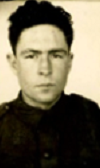
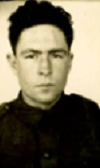
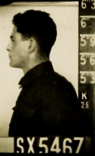
WELLS, William Andrew Noye
| Service Number: | SX5467 |
|---|---|
| Enlisted: | 15 June 1940 |
| Last Rank: | Corporal |
| Last Unit: | 2nd/48th Infantry Battalion |
| Born: | North Adelaide, South Australia , 6 March 1919 |
| Home Town: | Thorngate, South Australia |
| Schooling: | St Peter’s College, Hackney, South Australia |
| Occupation: | Law Student |
| Died: | 18 November 2004, aged 85 years, cause of death not yet discovered, place of death not yet discovered |
| Cemetery: |
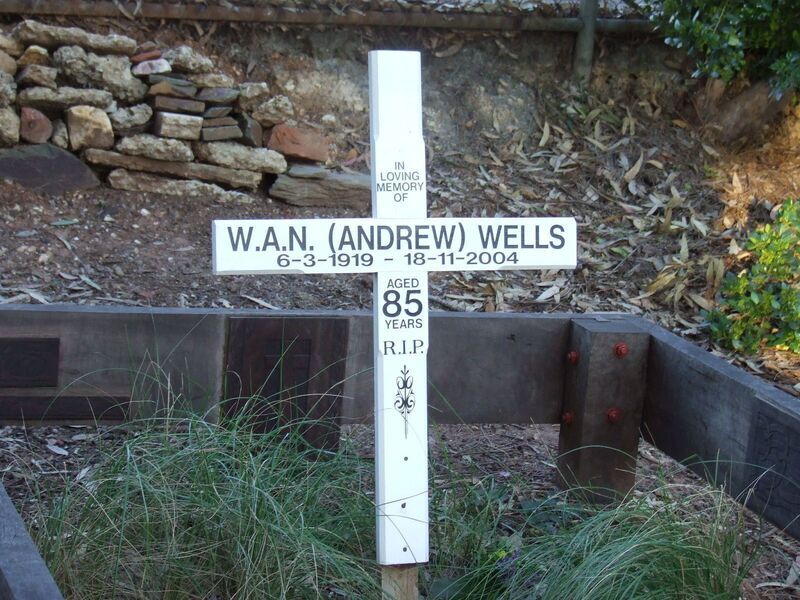
Glen Osmond (St. Saviour) Anglican Cemetery, South Australia Area C, Plot 014 |
| Memorials: | St Peters - St Peter's College WW2 Honour Roll |
World War 2 Service
| 15 Jun 1940: | Involvement Corporal, SX5467 | |
|---|---|---|
| 15 Jun 1940: | Enlisted Adelaide, SA | |
| 15 Jun 1940: | Enlisted Australian Military Forces (WW2) , Corporal, SX5467 | |
| 15 Jun 1940: | Enlisted Australian Military Forces (WW2) , 2nd/48th Infantry Battalion | |
| 22 Jul 1944: | Discharged |
Rhodes Scholar, Rat of Tobruk.
William Andrew Noye, born on the 6th March 1919 at North Adelaide was the only son of Alfred Cuthbert and Angelica Leslie Wells. William had a sister, Elizabeth Wynne who later became a Sydney journalist.
William was variously known as W.A.N. Wells or more familiarly as Andrew but seemed to be comfortable as William. His early schooling was at Queen’s College before he attended his father’s alma mater, St Peter’s College at Hackney. There William proved to be a talented student in both academic and sporting fields. He held leadership roles as a prefect, was school vice-captain and held the same role in Wyatt and Allen House. He undertook the traditional sports of tennis, cricket and football, gaining school colours for football and tennis as well as captaining the tennis team. As was traditional, he served with the College’s Cadets, achieving the rank of Lieutenant.
Post school, William chose to study Law at Adelaide University, beginning in ’38, displaying his academic aptitude by winning the prestigious Stow Prize that year – an exceptional year where he was one of four students to have received the award for showing outstanding merit in two or more subjects in the law examinations. His studies were in Bachelor of Civil Law and Bachelor of Arts (in jurisprudence). William continued to play tennis for the university as well as joining the3rd Field Ambulance A.M.F. in 1939. However, WWII intervened and 21-year-old Andrew enlisted on the 15th June ’40 being allocated the number SX5467 and placed in the newly formed 2/48th Battalion.
He was also chosen as South Australia’s Rhodes Scholar for the following year, having topped every law subject in which he was examined. Consequently, he was granted leave without pay from the Army to enable him to sit for the Adelaide University’s exams with the ultimate aim of studying at Oxford in jurisprudence and philosophy. He was involved in army training at Woodside in the Adelaide Hills, before eventually boarding the Stratheden on the 17th November, arriving in the Middle East a month later. Almost immediately he was graded as Group II Intelligence and quite rapidly promoted to Corporal, then almost immediately to Sergeant.
By that time, back home relatives had established a very active 2/48th Battalion Unit, with 300 members, meeting fortnightly at Torrens Hall. They kept in regular contact with families, visiting those unwell or with new babies plus raising money for the Comfort Fund and organising events for soldiers’ children. William’s mother, Angelica undertook the role of Treasurer.
By February the following year William attended Signal School, undertaking numerous courses over the ensuing years. In July ’41 he requested to revert to the rank of Private but continued to be heavily involved in Signals School as an Instructor. Just month later in August he was promoted to Acting Sergeant at the same time being diagnosed with jaundice. Finally, he and the battalion were able to return to Australia via Sydney and well-earned leave. He had also earned the unofficial but highly respected title of being a Rat of Tobruk. Ironically the description was designed to destroy the morale of the soldiers, but had the opposite effect.
William’s father, Alfred wrote to the local Advertiser in December ’42, quoting from ‘a front line dugout of the 9th Australian Division (part of the 8th Army) in Egypt, dated October 25.’ In it the writer, most probably William, highly praised Polaroid glasses as being ‘worth more than their weight in gold. Besides giving me excellent practice in plane recognition, they are an efficient safeguard if there is the possibility of attack by a 'doubtful stranger.' The glasses show plane markings at heights when the plane is invisible to the naked eye." He praises the American invention for eliminating glare without impairing full vision. The glasses were given to the writer on his departure for the Middle East in November 1940. He believed that the glasses were immensely valuable to all ground defence forces and observers against enemy air attacks and should be made standard equipment to all such forces.
Training in Queensland followed as the Battalion prepared to face a very different enemy in the tropical conditions of New Guinea. William arrived in Milne Bay in August ’43. Three months later he escaped with a reprimand for conduct assessed as being prejudicial to good order and military discipline. He returned to Brisbane in March ’44 becoming friendly with a W.A.A.A.F. before he was finally discharged on the 22nd July ’44.
The following year he returned to his Law studies at Adelaide University, being awarded both the David Murray Scholarship in Law and selected as a Rhodes Scholar. Through Oxford University he achieved a Bachelor of Arts (in jurisprudence), and Bachelor of Civil Law.
By December ’46 William and Eleanor Caroline Jacobs of Unley Park announced their engagement. Eleanor had previously been a highly successful students and school captain at Walford College. They had four children.
Quaintly, there was some debate about the two SA Rhodes Scholars, who in ‘49 won Eldon Scholarships at Oxford, being granted the awards, as the recipients were from ‘a dominion’. The law scholarships-endowed by Lord Eldon, Lord Chancellor of England, more than 100 years previously had been modernised years ago, but consideration had not been made that a dominion student would be worthy of the scholarships. Following extended deliberation, the two SA men, R. A. Blackburn and Andrew Wells, were deemed to be deserving of the £200 a year each for three years. Lord Eldon's original idea was to financially support young barristers until they had established a practice.
By June ’49 William obtained his Bachelor of Civil Law degree, with first-class Honors. He had completed three years at Oxford University. He then applied for admission as a practitioner, eventually becoming a barrister and later a Supreme Court Judge in South Australia. Further public recognition followed, including in1977 The Honourable Mr Justice, 1988 Officer of the Order of Australia. Further recognition followed at the hands of talented artist, John Dowie, who in 1987 created a bust of Wells that is displayed in the Grenfell Street Lands Title Office. (That same year, Dowie created a bust of Elizabeth II for Parliament House in Canberra, with a duplicate at Windsor Castle.)
Andrew was the author of several legal books including Evidence and Advocacy (1988) and Law, Judges and Justice for the Community (1991).
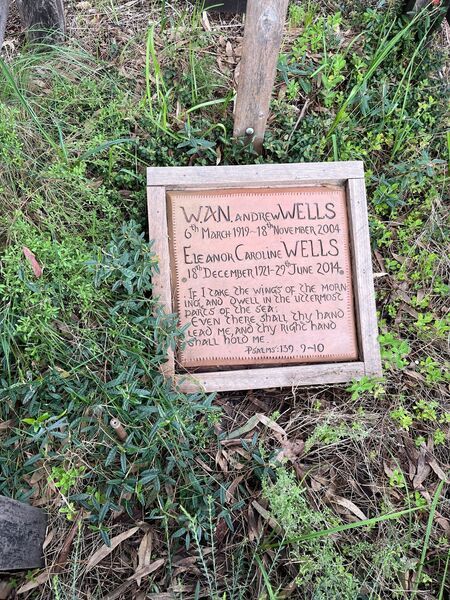
Aged 85, William died on the 18th November 2004 and was buried in the St Saviour’s Cemetery, Glen Osmond in Area C Plot 014. He is also remembered at Centennial Park Cemetery in the SA Garden of Remembrance, Wall 030 Row T. His wife, Elanor lived to be 92. She died on the 29th June 2014 and now rests with William.
Researched and written by Kaye Lee, daughter of Bryan Holmes SX8133, 2/48th Battalion.
Submitted 2 February 2026 by Kaye Lee
Click images to start slideshow.