




CAIN, Leo Moses
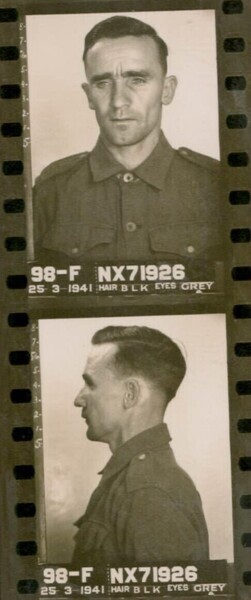
| Service Number: | NX71926 |
|---|---|
| Enlisted: | 25 March 1941 |
| Last Rank: | Private |
| Last Unit: | 2nd/20th Infantry Battalion |
| Born: | Coonabarabran, New South Wales, Australia, 4 June 1910 |
| Home Town: | Coonabarabran, Warrumbungle Shire, New South Wales |
| Schooling: | Not yet discovered |
| Occupation: | Sawmill Hand |
| Died: | Illness, Thailand, 1 July 1943, aged 33 years |
| Cemetery: |
Kanchanaburi War Cemetery |
| Memorials: | Australian War Memorial Roll of Honour, Ballarat Australian Ex-Prisoners of War Memorial |
World War 2 Service
| 3 Sep 1939: | Involvement Private, NX71926 | |
|---|---|---|
| 25 Mar 1941: | Enlisted Australian Military Forces (WW2) , Private, NX71926, 2nd/20th Infantry Battalion |
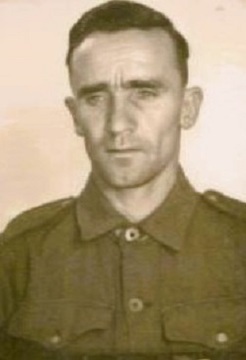
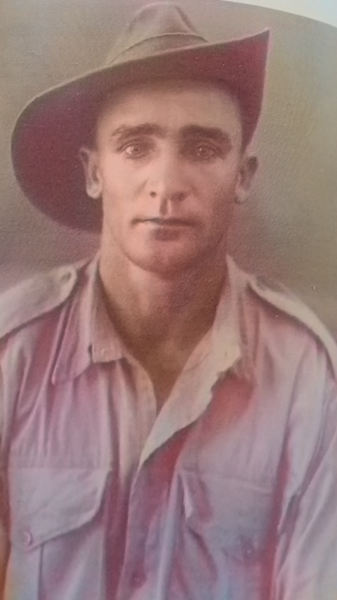
Leo Cain
Coonabarabran 1942 a telegraph from the War Department involving Private Leo Moses Cain had arrived. His parents, mother Eliza Cain and step father Charles Rutley had just been informed their son was posted as missing in action. A month later 25th April 1942, and not known yet to his parents, Private Cain and the Australian Prisoners of War (POW) at Changi Prison formed ranks at 0715 hours to hold the ANZAC Day Dawn Service. Another Telegram arrived September 1943 saying Leo was “believed to be a POW”. Finally, his parents were given firm hope to cling to from the Japanese in November 1943 that Private Leo Cain was alive.
Leo had been working at a Sawmill in Coonamble when he decided to enlist in the Australian Imperial Forces in 1941. With the threat of Japan entering the war Leo’s Battalion, the 2/20th, was sent to Singapore Island. He was sent onto mainland Malaya where he was stationed when Japan entered the War. Leo’s Battalion were led over the causeway from Malaya to Singapore by bagpipers playing “Hielan Laddie” to begin to set up defensive positions. A week later the British surrendered to the Japanese and the 2/20 Battalion were ordered to lay down their rifles that night and march into Changi Prison to begin three and a half years of hell as prisoners of Japan.
What waited for Leo after Changi was work on the infamous Thai Burma Railway with D Force that built railway lines and cuttings in Hellfire Pass. After leaving Singapore he travelled to the area called Canton Buri in Thailand where for a few weeks he was involved in carting ballast and packing railway sleepers to the bridge over the River Kwai. From here he was moved by foot through the jungles to his last camp, 125km further on called Tarso, a hell camp that’s cemetery would end up holding 860 men. Rain and mud brought many diseases, cholera, malaria, fever, beriberi, diarrhea and dysentery and worse of all tropical ulcers.
ANZAC Day 1943 saw the sick and starving D Force of which Leo was one, form up in a dawn parade. Their worst period was about to start as the railway line had come to a rock hill and the Japanese started a “speedo” period where the sick and hungry diggers of D Force were beaten daily. The cutting was finished in August the last 6 weeks involved work every day, no rest for 12 to 18 hours with wood fires lighting the cutting up at night giving it the name “Hellfire pass”. This section of the Burma Thailand Railroad cost the lives of 700 POW and the cutting saw 69 men beaten to death.
By October 1943 the Hospital Camp at Tarso was overflowing with sick injured and dying men sent there as Hellfire Pass was complete. All were ill from overwork, beatings, starvation. The hospital was poorly run by a Doctor from the British Army Medical Corps. By now Leo was laying in the hospital totally worn out, malaria diarrhea and his body in a poor state. No medical supplies and rations had gotten worse as they had been cut. Lucky for the sick and injured an Australian Army Surgeon showed up at the camp, Doctor Weary Dunlop. Weary gave the British Doctor in charge a very public dressing down for letting the hospital and its supporting workers get so bad. Weary soon had some better food and medicine starting to flow through by using the Thai black market and by appealing to the Japanese.
Leo Cains condition had become far worse along with hundreds of others as dysentery was spreading throughout the hospital. This rest period saw a lot of Australian diggers die. Men with dysentery lay on the bamboo racks surrounded by their mates looking after each other. On the 1st July 1943, Private Leo Moses Cain died in Tarso Hospital, Thailand. He was buried in the cemetery with a service carried out by a thin starving Australian Military Padre dressed in a G String made of old shorts called Rev Harry Thorpe, who had enlisted in Dubbo.
Leo had turned 33 years of age a month before his death. He is today laid at rest in Kanchanaburi War Cemetery in Thailand. Although his parents Eliza and Charles back home were told he had been confirmed by Japanese he was a POW in Singapore 23 November 1943 and they had hope he was alive, Leo was already deceased five months beforehand. His parents would not get told of his death until September 1945. His Battalion, of the 900 men that disembarked in Singapore by wars end 561 had died and 122 lay injured. 2,815 Aussie Diggers died working on the railway as slaves to Japan. ANZAC Day 2024 we remember the sacrifice given by locals like Leo in every town across the Warrumbungle area.
Submitted 5 November 2025 by Mick Estens
Click images to start slideshow.