








OSBORNE, Alexander Henry
| Service Number: | 159 |
|---|---|
| Enlisted: | 20 August 1914, Enlisted at Melbourne, Victoria |
| Last Rank: | Private |
| Last Unit: | 5th Infantry Battalion |
| Born: | Bourke, Victoria, Australia, 1893 |
| Home Town: | South Melbourne, Port Phillip, Victoria |
| Schooling: | Not yet discovered |
| Occupation: | Farm Labourer |
| Died: | Killed in Action, Gallipoli, Turkey, 27 April 1915 |
| Cemetery: |
No known grave - "Known Unto God" |
| Memorials: | Australian War Memorial Roll of Honour, Lone Pine Memorial to the Missing |
World War 1 Service
| 20 Aug 1914: | Enlisted AIF WW1, Private, 159, 5th Infantry Battalion, Enlisted at Melbourne, Victoria | |
|---|---|---|
| 21 Oct 1914: | Involvement Private, 159, 5th Infantry Battalion, ANZAC / Gallipoli, --- :embarkation_roll: roll_number: '8' embarkation_place: Melbourne embarkation_ship: HMAT Orvieto embarkation_ship_number: A3 public_note: '' | |
| 21 Oct 1914: | Embarked Private, 159, 5th Infantry Battalion, HMAT Orvieto, Melbourne |
Help us honour Alexander Henry Osborne's service by contributing information, stories, and images so that they can be preserved for future generations.
Add my storyBiography contributed by Faithe Jones
Alexander Henry Osbourne, Regimental No. 159 was born 17th May 1893 in Carlton to Alexander Sweetman a bricklayer and Amy Osbourne. At 2 weeks of age he was made a Ward of the State by the Department for Neglected Children, due to neglect by his mother. Alex spent his early childhood in foster homes in Richmond before being sent to the Bayswater Boys Home in September 1903 at the age of 10. In July 1908 at the age of 15 he was “boarded out” with Mr Winzar a farmer at Marong, meeting with misadventure in June 1909 when he dropped a match whilst cleaning up around a haystack, resulting in the loss of the haystack valued at $100. He was arrested by Mounted Constable Priestly and returned to the Department of Neglected Children (Bayswater Boys Home). His next “boarding out” was to Thorpdale, initially with Mr A Singleton and then with Janet and James Young of Cloverlea, Thorpdale in late February 1910. Living with the Youngs provided stability for Alex, he became a labourer working in the Wooreen area, joined the Australian Natives Association (Leongatha) and became a part of the Young family, relocating with them to Dandenong Road Oakleigh in 1914 prior to his enlistment.
Alex was one of the first to enlist joining the 5th Battalion of the Australia Infantry Forces regimental number 159 on 20th August 1914 in South Melbourne aged 21. His enlistment papers describe him as 5’4”, 9st 6lbs florid complexion, grey eyes and brown hair. Following initial training in Broadmeadows he embarked on 21/10/1914 on the Orvieto, part of the convoy of 38 Australian transports or troopships (36 from Albany and two from Fremantle) and 10 New Zealand transports which departed Albany, Western Australia 1st November 1914, destined for war in Europe. In transit the ships were ordered to disembark the force in Egypt, with soldiers and horses being located in British military camps around Cairo where training continued.
Early on the morning of 25 April 1915, Allied forces landed on the Gallipoli Peninsula in Ottoman Türkiye. Troops of the Australian and New Zealand Army Corps (ANZAC) landed north of Gaba Tepe (Kabatepe) headland, on a beach later called 'Anzac Cove'. Documents indicate that Alex was under Captain Clement and died on the 2nd Ridge soon after landing. Private Sidney Ward No. 1095 reported “on the 25th April 1915 about 2 or 3 o’clock during the landing at Anzac, he was within a few yards of (Alexander) Osbourne. Osbourne took cover behind a bush and was immediately shot in stomach”. Private McKay No. 284 confirmed that he saw Alexander wounded by a bullet and left him lying on the ground for dead. Alex has no known grave. He is commemorated on Panel 25 of the Lone Pine Memorial.
Courtesy of Avenel
Biography contributed by Carol Foster
Son of Amy Osborne of Bourke, Victoria.
Next if kin given as a friend Janet Mary Young of Dandenong Road, Oakleigh, Victoria.
Medals: 1914-1915 Star, British War Medal, Victory Medal issued to Jane Young.
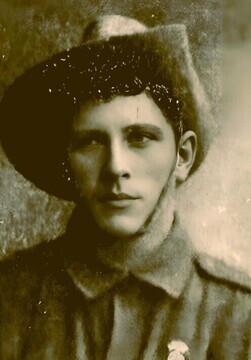
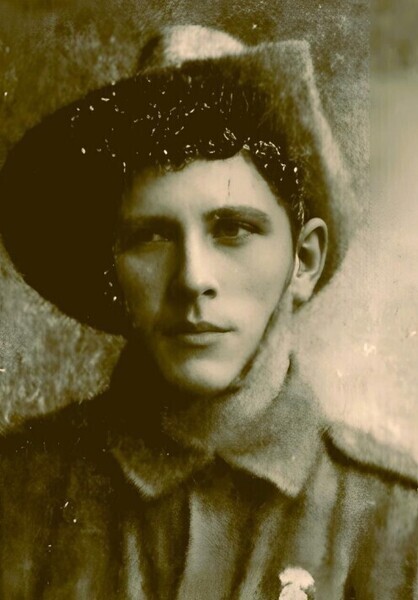
Click images to start slideshow.