







CURPHEY, Douglas Theodore
| Service Number: | VX30278 |
|---|---|
| Enlisted: | 5 June 1940 |
| Last Rank: | Sergeant |
| Last Unit: | 2nd/22nd Infantry Battalion |
| Born: | Auburn, Victoria, Australia, 1 January 1917 |
| Home Town: | Auburn, Boroondara, Victoria |
| Schooling: | Auburn Central State School, Victoria, Australia |
| Occupation: | Salesman (W.P.T. Thompson, leather merchants) |
| Died: | Died at sea (Montevideo Maru), South China Sea, 1 July 1942, aged 25 years |
| Cemetery: |
No known grave - "Known Unto God" |
| Memorials: | Australian War Memorial Roll of Honour, Ballarat Australian Ex-Prisoners of War Memorial, Rabaul Memorial, Rabaul Montevideo Maru Memorial |
World War 2 Service
| 3 Sep 1939: | Involvement VX30278 | |
|---|---|---|
| 5 Jun 1940: | Enlisted Australian Military Forces (WW2) , Sergeant, VX30278, 2nd/22nd Infantry Battalion |
Help us honour Douglas Theodore Curphey's service by contributing information, stories, and images so that they can be preserved for future generations.
Add my storyBiography contributed by Rod Hutchings
The smell of tanned hides and leather dyes fills the warehouse on Burwood Road. Douglas Theodore Walter Curphey was a salesman before he was a soldier. He worked for W.P.T. Thompson, leather merchants, moving between the stacks of heavy skins and the ledger books. In 1940, he was a single man living with his parents, Theodore and Daphne, at 57 Kooyongkoot Road in Auburn. Life was measured in sales cycles and the familiar rhythms of suburban Melbourne.
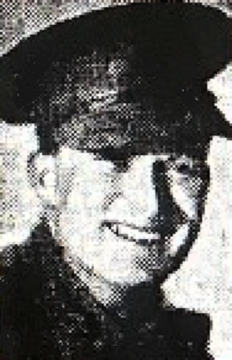
The ball hits the post and the Hawthorn crowd groans in the sharp Saturday sun. Douglas Theodore Walter Curphey played for the Seconds long before he wore a uniform. He was a product of Auburn Central State School, a young man who found his place on the footy oval and the basketball court. He played basketball for the Australian Army Service Corps, a hint of the military life that would eventually claim him. He was lean, standing for his medical in May 1940 with brown hair, blue eyes, and a small scar on each groin from an old appendectomy. He had already served in the Militia with the 2nd Division Cavalry, but on 5 June 1940, he walked into Royal Park and signed up for the Special Forces.
He was posted to the 2/22nd Infantry Battalion in July 1940. He was a man who took to the structure of the Army; within six weeks of enlistment, he had risen from Private to Acting Sergeant. In February 1941, he stood on the deck of the HMAT Neptuna as it pulled away from the Melbourne pier. He was heading for Rabaul, New Britain. The 2/22nd was sent to form the core of "Lark Force," a small garrison tasked with defending a vital airfield and deep-water port.
In Rabaul, the heat was a physical weight. Curphey spent time in the Military Hospital with a bout of tonsillitis in early 1941, but he returned to his unit as the shadow of the Japanese advance lengthened across the Pacific. When the invasion finally came on 23 January 1942, the defense was overwhelmed by a massive Japanese task force. The order "every man for himself" was given. Curphey was captured at Massawa. He became a prisoner of war, one of hundreds of men from the 2/22nd held in the camps around Rabaul.
On 1 July 1942, he was marched onto the hold of the Montevideo Maru. The men believed they were being moved to forced labour in Hainan. Instead, off the coast of the Philippines, the ship was sighted by the American submarine USS Sturgeon. Unaware that the vessel carried over 1,000 Australian prisoners, the Sturgeon fired four torpedoes. The ship sank in eleven minutes. There were no Australian survivors.
Theodore Curphey sits at a desk in Hawthorn, ten years after the war, holding a tired pen. Douglas Theodore Walter Curphey was gone, but the record was still open . In October 1954, from his home at 22 Elm Grove in Parkville, Theodore wrote to the Army. He needed a Certificate of Death to settle his son’s affairs with the State Savings Bank. For twelve years, the family had lived in the grey space between "missing" and "presumed dead". The Army’s response arrived by registered mail in December 1954—a formal, cold confirmation of a loss that the family had carried since the winter of 1942.
The record is now silent on the salesman from Auburn. His name is cast in bronze on the Rabaul Memorial and etched into the stone at Ballarat. He remains where the Montevideo Maru settled, in the deep silence of the South China Sea
Lest we forget
Rod Hutchings
Director, Virtual War Memorial Australia
Click images to start slideshow.