






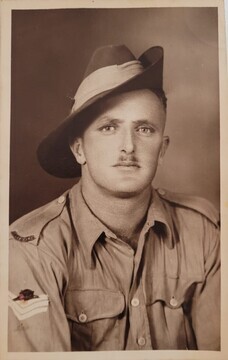
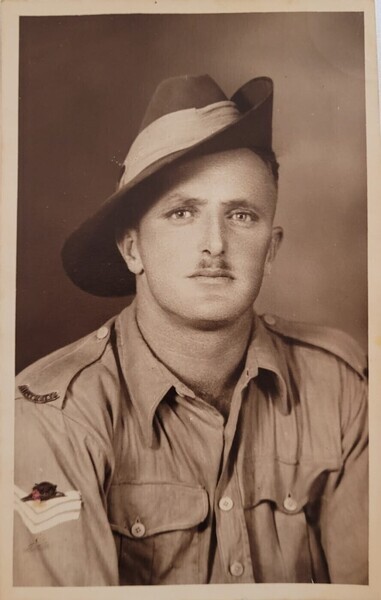
FOWLER, John Joseph
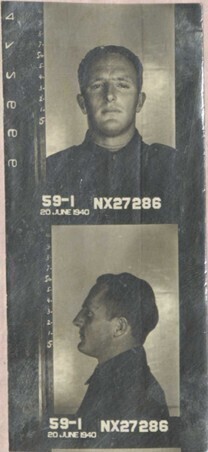
| Service Number: | NX27286 |
|---|---|
| Enlisted: | 20 June 1940 |
| Last Rank: | Sergeant |
| Last Unit: | 2nd/15th Field Regiment |
| Born: | Quirindi, New South Wales, Australia, 22 March 1917 |
| Home Town: | Quirindi, Liverpool Plains, New South Wales |
| Schooling: | Not yet discovered |
| Occupation: | Tractor/ Machinery driver |
| Died: | Illness, Thailand, 4 October 1943, aged 26 years |
| Cemetery: |
Thanbyuzayat War Cemetery, (Burma) |
| Memorials: | Australian War Memorial Roll of Honour, Ballarat Australian Ex-Prisoners of War Memorial, Quirindi & District Memorial and Clock Tower |
World War 2 Service
| 3 Sep 1939: | Involvement Sergeant, NX27286 | |
|---|---|---|
| 20 Jun 1940: | Enlisted Australian Military Forces (WW2) , Sergeant, NX27286, 2nd/15th Field Regiment | |
| 29 Jul 1941: | Embarked Australian Defence Forces (ADF)_Australian Regular Army, NX27286, 2nd/15th Field Regiment, embarked on the TSS 'Katoomba' for Singapore | |
| 15 Jan 1942: | Involvement fought in battles at Muar, Bakri, Parit Sulong and Singapore | |
| 15 Feb 1942: | Imprisoned Prisoner of War following the surrender of Singapore |
Help us honour John Joseph Fowler's service by contributing information, stories, and images so that they can be preserved for future generations.
Add my storyBiography contributed by Anthony Fowler
Unfortunately, there is only minimal information about the early life of John Joseph Fowler, before the time of his enlistment in the Australian army. He was born on the 22nd March 1917, as one of six children of George Fowler and Mary Catherine Fowler (née Ryan), who had married in 1902. Their family home was in Quirindi, a small country town located in the mid-north of New South Wales.
John Joseph Fowler, who was known to his mates as Jack, enlisted into the Australian army at Paddington, Sydney on the 20th June 1940, at the age of 23 years and 3 months old. His Service Record indicates that at that time, he was single, still living at home, was a Roman Catholic, and his occupation was tractor, machinery driver. It appears that he immediately commenced artillery training.
On the 22nd November 1940, he was ‘taken on strength’ and transferred to the 2/15th Field Artillery Regiment that had been formed only ten days earlier. This new Regiment was initially based at Ingleburn, but in early 1941 moved to the Holdsworthy Camp. Whilst based there, the Regiment undertook training exercises and manoeuvres including some with the 27th Australian Infantry Brigade, with whom they established a strong bond. On the 29th July 1941, the Regiment departed Sydney for their overseas deployment. They were taken by train to Darling Harbour where they boarded the TSS ‘Katoomba’. They steamed in convoy to Perth via Melbourne. In Perth, the members of the 2/15th Field Regiment transferred to the Dutch troop ship the ‘Sibajak’. The convoy departed Fremantle on the 8th August 1941 and arrived in Singapore on the 15th August. On disembarkation, the 2/15th Field Regiment went into camp at Nee Soon, where they commenced training to develop the skills for the upcoming confrontation. They moved to Tampin, Malaya on the 10th September 1941, associated with the 4th Anti-Tank Regiment where they continued training for several months. In late November, the 2/15th Regiment was finally equipped with the British-made, 25-pounder gun howitzers that they had been looking forward to. Furthermore, around this time, the Regiment was reconfigured from two to three batteries, which involved establishing the new 65th Battery that consisted of ‘E’ and ‘F’ Troops. Each troop was assigned four of the 25-pounders. Jack Fowler was assigned to ‘F’ Troop.
In early December 1941, the international political situation deteriorated to the extent that war with Japan was imminent. The six Troops of the 2/15th Field Regiment were deployed to various places around Johor, the southern State of Malaya, to defend aerodromes. On the 7th December 1941, the Japanese executed their surprise attack on those vessels of the US Pacific naval fleet that were anchored in Pearl Harbor, Hawaii, signalling the commencement of hostilities in the Pacific and South East Asia. Early in the morning of the 8th December, Japanese troops landed in southern Thailand and northern Malaya, from where they were to progress southward through Malaya, pushing the defending Allied forces southwards, with the ultimate goal of taking the Island of Singapore.
On the 9th January 1942, the order came for the six Troops of the 2/15th Field Artillery Regiment to head north to meet the approaching Japanese forces in northern Johor. At Yong Peng, the 29th and 30th Batteries of the Regiment continued north-west to the Segamat District to help defend the Segamat Road down which the main Japanese force was expected. Alternatively, ‘E’ and ‘F’ Troops of the 65th Battery, continued to the city of Muar located on the south-west coast. There, in association with the 45th Indian Brigade, they were to stop the southward advancement of the Japanese forces down the western side of the Malayan Peninsula.
By the 10th January, the guns of ‘E’ and ‘F’ Troops were deployed in the vicinity of Muar, anticipating the approach of the Japanese forces. Then, throughout the week from the 15th to 22nd January, the Australians and Indians were engaged in numerous bloody and brutal battles with the Japanese. The capacity of the Japanese force that came down this western side of the peninsula was formidable and had been severely underestimated, involving thousands of troops, many battle-hardened and proficient in jungle warfare. Despite the efforts of the Indian infantry and the thousands of shells fired by ‘E’ and ‘F’ Troops, it was impossible to stop the Japanese advance. After the withdrawal from Muar, the Allied forces were sent reinforcements from the 2/29th and 2/19th Infantry Battalions of the 27th Infantry Brigade. There were further brutal battles at Bakri and then at Parit Sulong. However, the Allied troops were continually overwhelmed and had to withdraw. Many Australian and Indian troops were lost. On the 22nd January 1942, the retreating convoy was stuck on the western side of the bridge at Parit Sulong, and under constant attack. Of the surviving troops, those that were capable of undertaking a cross-country trek were ordered to leave the blocked convoy and their injured comrades and to head into the jungle to attempt to make it by foot back to Yong Peng, to rejoin the retreating Westforce. Sergeant Jack Fowler was able to withdraw from Parit Sulong and to undertake this trek. Furthermore, he helped guide a large group of Allied soldiers, including some injured, to eventually reach Yong Peng late on the 23rd January. Only about 25% of the Australian forces who had fought in the battles at Muar, Bakri and Parit Sulong made it back to Yong Peng. All their equipment including the 25-pounder gun howitzers were lost.
Over the following week the Allied forces continued to be pushed back through southern Malaya towards Singapore. The members of the 2/15th Field Artillery Regiment crossed the causeway to Singapore Island on the night of 30th/31st January. There, they were deployed facing northwards across the Strait of Johor. On the 8th February 1942, the full-scale Japanese assault on Singapore commenced. During the defensive action over the following week, the six Troops of the 2/15th Field Regiment were deployed at various places around the island. The Allied defence of Singapore failed. On the 15th February, in the face of the relentless Japanese attack and the deaths of thousands of civilians, the garrison commander Lieutenant General Arthur Percival gave the order for the Allied forces to surrender. On the 17th February 1942, the surviving members of the 2/15th Field Regiment including Jack Fowler, along with other Australian troops commenced the walk to the eastern end of Singapore Island, where they entered into occupation of Birdwood Camp in the Changi Prisoner of War Camp, located a short distance from Selarang Barracks.
Between February 1942 and June 1944, Selarang Barracks were the primary quarters of the captive members of the AIF. It was primarily a transit stop from where working parties were deployed to elsewhere around the island and to further afield. These included the Bukit Timah Working Party, which under instruction had to build a memorial and Shinto Shrine to commemorate the Japanese soldiers who had died in the battle for Singapore. The Allies were also allowed to build a memorial to their own dead. The working party involved approximately 500 Australian POWs, mainly from the Artillery and Infantry battalions including Jack Fowler and other members of the 2/15th Field Regiment. The working party constructed the road, stairs up the hill as well as the two memorials. These were both unveiled in ceremonies on the 7th December 1942.
After completion of the war memorials on Bukit Timah, Jack Fowler was sent as a member of ‘F’ Force to work as slave labour on construction of the infamous Thai-Burma Railway. This force involved seven thousand Australian and British POWs. Of the thirteen trains that were required to transport ‘F’ Force from Singapore to Ban Pong in Thailand, Jack Fowler was on the first one that departed from Singapore on the 18th April 1943. After five days crushed into steel rice wagons during the slow journey, they arrived at Ban Pong. Here, they learnt that they then had to trek 300 km north-west along the route of the railway to their assigned work area located up near the Thai-Burma border. Following the ‘Death march’ and then based at the Shimo Songkurai Workcamp, Jack Fowler endured the terrible conditions of long hours of forced labour during the monsoon season. The poor weather and muddy conditions in the jungle restricted the re-supply of workcamps which meant that the POWs were on minimal rations. By August 1943, Jack Fowler’s health was deteriorating as he suffered from dysentery and malaria, but apparently did avoid the cholera epidemic, which killed many others. Along with many other sick POWs he was forced to walk to the Kami Songkurai Workcamp. There, his condition deteriorated and he became sicker and weaker. He died on the 4th October 1943, at the age of only 26 years. He was buried at Kami Songkurai. His death occurred just two weeks before the two lines of the railway being constructed from the north and south were joined up at Konkoita on the 17th October 1943. Of the different forces of POWs sent to work on the railway, ‘F’ Force experienced the worst of the conditions in terms of the monsoon, food deprivation, as well as illness and disease. They suffered the highest death rate.
After surrender of the Japanese that marked the end of the war in South East Asia and the Pacific, work commenced almost immediately to locate the cemeteries and individual graves of those Allied soldiers who had died during the construction of the Thai-Burma Railway. The grave of Jack Fowler was located at Kami Songkurai. Later his remains were exhumed and he was subsequently re-interred at the Thanbyuzayat War Cemetery, Burma (Myanmar), most likely by late 1945 or early 1946. His gravesite is marked with the permanent marker of a bronze plaque. He was posthumously granted the award of ‘Mention in Despatches’, a testament to his bravery, leadership, and endurance under harrowing conditions.
Click images to start slideshow.