








SNOOK, Graham Ernest
| Service Number: | 415743 |
|---|---|
| Enlisted: | 31 January 1942 |
| Last Rank: | Flight Sergeant |
| Last Unit: | Not yet discovered |
| Born: | Perth, Western Australia, 28 August 1922 |
| Home Town: | North Perth, Vincent, Western Australia |
| Schooling: | North Perth State School, Western Australia |
| Occupation: | Clerk |
| Died: | Flying Battle, Baltic Sea, 17 September 1943, aged 21 years |
| Cemetery: |
No known grave - "Known Unto God" Runnymede Memorial, Surrey, England, United Kingdom |
| Memorials: | Australian War Memorial Roll of Honour, International Bomber Command Centre Memorial, Kings Park Western Australia State War Memorial, Runnymede Memorial |
World War 2 Service
| 3 Sep 1939: | Involvement Flight Sergeant, 415743 | |
|---|---|---|
| 31 Jan 1942: | Enlisted Royal Australian Air Force, Flight Sergeant, 415743 |
Help us honour Graham Ernest Snook's service by contributing information, stories, and images so that they can be preserved for future generations.
Add my storyBiography contributed by Geoff Tilley
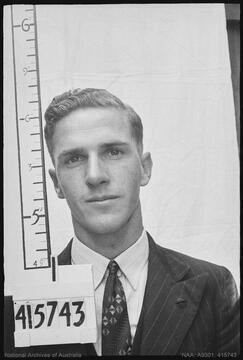
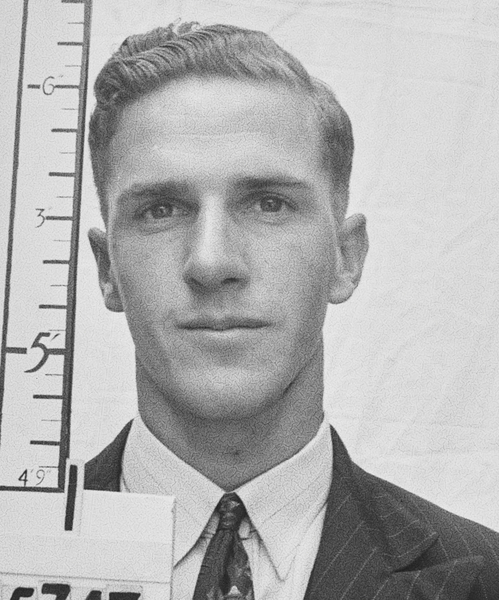
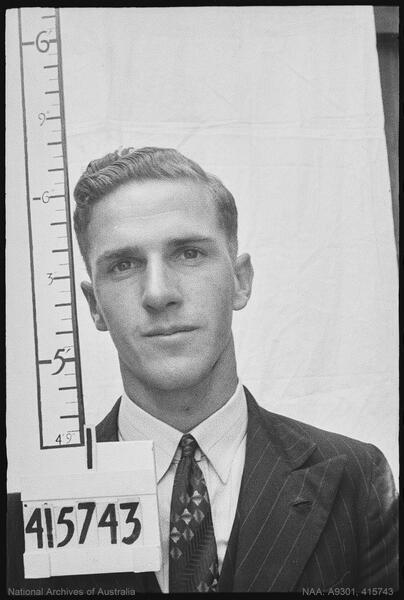
Graham Ernest Snook, known as Jim, was born in Perth, Western Australia, in August 1922. He was the only son of Harry Graham Snook and Henrietta Pearl Galloway of Mount Lawley and grew up with his two sisters.
Jim received his education at North Perth School before attending Leederville Technical College. After completing his studies, he gained employment as an insurance clerk with Western Assurance in Perth. Away from work he enjoyed an active sporting life, particularly tennis and Australian Rules football.
Jim enlisted in the Royal Australian Air Force (RAAF) at Perth on 31 January 1942. Following enlistment he travelled to No. 1 Initial Training School at West Sale, Victoria, where he commenced his aircrew training. His aptitude led to selection as an Air Gunner, one of the most hazardous aircrew categories in Bomber Command.
In November 1942, Jim embarked from Melbourne for overseas service. Like many Australian airmen bound for Britain, his journey included a stop in the United States. Arriving in England in April 1943, Jim continued his specialist air gunner training at RAF establishments before receiving his operational posting in July 1943 to No. 138 Squadron RAF at RAF Tempsford, Bedfordshire.
No. 138 Squadron was unlike most bomber squadrons, it formed the RAF's Special Duties force, operating under the direction of the Special Operations Executive (SOE). Rather than bombing industrial targets, the squadron undertook clandestine night missions deep into enemy-occupied Europe, delivering secret agents, weapons, explosives, radios, ammunition, and supplies to resistance organisations fighting German occupation.
By September 1943 Jim had become a member of the crew of Handley Page Halifax Mk II JD156, coded NF-W. On the evening of 16 September 1943, the crew assembled at RAF Tempsford for Operation Flat 5, an SOE mission to deliver supplies to the Polish Home Army at the dropping zone known as Obraz in German-occupied Poland.
Halifax JD156 took off from Tempsford at 1826 hours, joining other aircraft from No. 138 Squadron heading east across the North Sea toward occupied Europe. The flight initially progressed without incident. After crossing the Danish Peninsula of Jutland and while flying over the Kattegat, the Halifax was intercepted by a German Junkers Ju 88-night fighter of 11. /Nachtjagdgeschwader 3, flown by Oberleutnant Johann Hiendlmayr.
The German fighter attacked with cannon fire, striking the Halifax, and setting its port inner engine ablaze. along with the belly fuel tank also caught fire.
Pilot Flight Sergeant Lloyd Trotter realising that the aircraft was rapidly becoming uncontrollable, he attempted to gain altitude to allow the crew to abandon the aircraft by parachute. However, with one engine disabled and the fire spreading, the heavily loaded Halifax would not climb. With no other option, Trotter ditch the burning aircraft into the sea off Norsminde, Denmark.
Four members of the crew succeeded in escaping the sinking aircraft into the cold waters of the Kattegat. Inflating their Mae West life jackets, they drifted in the darkness for almost two hours. The burning wreckage had been observed from the Danish coast, prompting local fisherman to put to sea in search of survivors.
The Danish fishermen located the survivors taking them to the Norsminde Gamle Kro (Old Inn), provided them with food, warmth, and medical attention. One badly burned airman destroyed confidential papers in the inn's stove, while the innkeeper treated the burns before a doctor arrived. Shortly afterwards German Forces took the airmen into custody.
Following the war, Flight Sergeant Trotter provided a statement recalling:
"Flight Sergeant Snook was alive and uninjured up to the time the aircraft ditched in the Baltic. Trotter and the other three who became prisoners of war escaped from the aircraft and were two hours in the water before being taken prisoner. No others were seen to escape from the aircraft, and he believed that Flight Sergeant Snook and the other two crew members had lost their lives when the aircraft ditched."
The body of Sergeant Henry Johnston had washed ashore in Denmark, where he was buried at Frederikshavn Cemetery. The body of Flying Officer James Reid Bradley was later recovered near Helgenæs and laid to rest in Randers North Cemetery, Denmark.
Flight Sergeant Graham Ernest Snook was never found. Officially recorded as having lost his life at sea on 17 September 1943. He was 21 years of age.
Jim has no known grave, where he is commemorated on the Royal Air Forces Memorial at Runnymede, Surrey, England for airmen who have no known resting place.
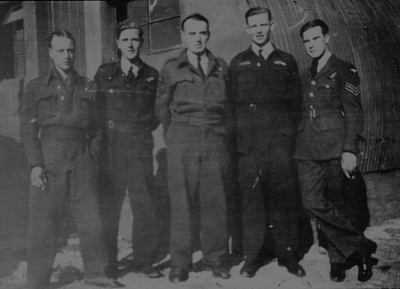
Crew Members of Halifax JD156 (NF-W).
Flight Sergeant Lloyd Alfred Trotter (RAAF) – Pilot – Prisoner of War
Sergeant Samuel Francis (RAF) – Flight Engineer – Prisoner of War
Flying Officer James Reid Bradley (RCAF) – Navigator – Killed
Flight Sergeant George Thornton Jones (RAF) – Bomb Aimer – Prisoner of War
Sergeant Henry Johnston (RAFVR) – Wireless Operator – Killed
Flight Sergeant Graham Ernest Snook (RAAF) – Mid-Upper Gunner – Killed
Flight Sergeant Donald Robert Quinlivan (RAAF) – Rear Gunner – Prisoner of War
Click images to start slideshow.