







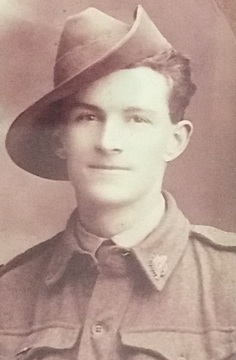
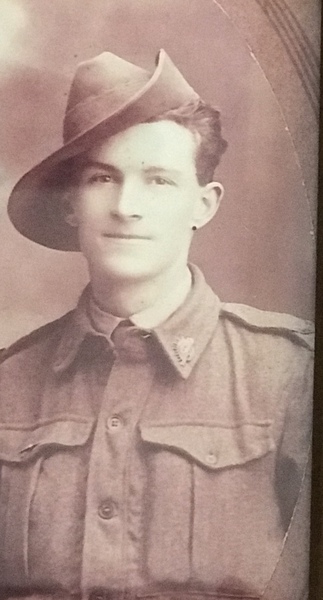
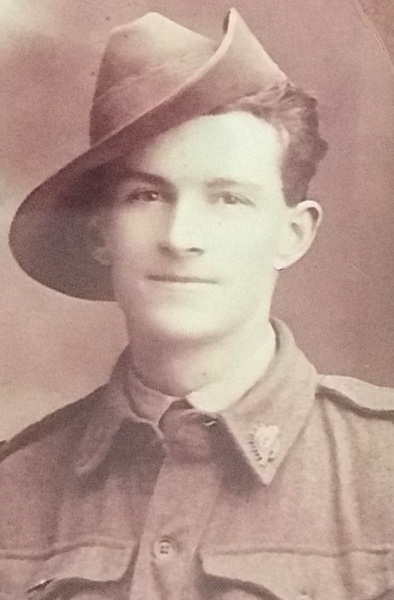
HARRISON, Herbert James
| Service Number: | 3074 |
|---|---|
| Enlisted: | 16 October 1916, Melbourne, Victoria |
| Last Rank: | Private |
| Last Unit: | 37th Infantry Battalion |
| Born: | Devon, Victoria, Australia, 16 May 1894 |
| Home Town: | Yarram, Wellington, Victoria |
| Schooling: | North Devon School, Victoria, Australia |
| Occupation: | Labourer |
| Died: | Natural Causes , Miles, Queensland, Australia, 31 October 1982, aged 88 years |
| Cemetery: |
Miles General Cemetery, Qld RSL |
| Memorials: | North Devon State School Honor Roll, Tarra Valley Whitelaw State School Pictorial Honour Roll |
World War 1 Service
| 16 Oct 1916: | Enlisted AIF WW1, Private, 3074, Melbourne, Victoria | |
|---|---|---|
| 19 Feb 1917: | Involvement AIF WW1, Private, 3074, 37th Infantry Battalion, Enlistment/Embarkation WW1, --- :embarkation_roll: roll_number: '17' embarkation_place: Melbourne embarkation_ship: HMAT Ballarat embarkation_ship_number: A70 public_note: '' | |
| 19 Feb 1917: | Embarked AIF WW1, Private, 3074, 37th Infantry Battalion, HMAT Ballarat, Melbourne | |
| 25 Apr 1917: | Involvement AIF WW1, Private, 3074, 37th Infantry Battalion, The HMAT Ballarat was torpedoed by a German U-boat in the English Channel. All troops and crew were safely evacuated into lifeboats and to the south east coast of England. | |
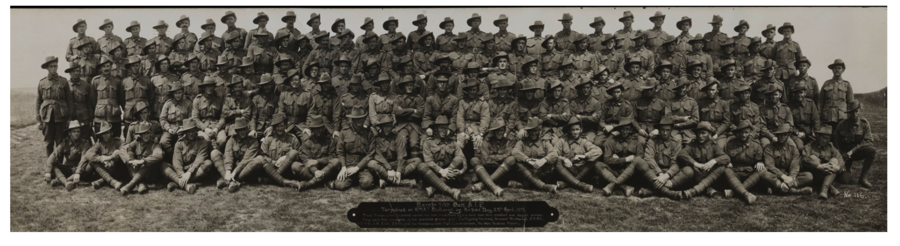
| 1 Oct 1917: | Involvement Private, 3074, 37th Infantry Battalion, 2nd Passchendaele , Involved in the closing stages of the Battle of Passchendaele. | |
| 25 Mar 1918: | Involvement Private, 3074, 37th Infantry Battalion, German Spring Offensive 1918 | |
| 4 Jun 1918: | Wounded Private, 3074, 37th Infantry Battalion, German Spring Offensive 1918, Injured while serving in the line near Villers-Bretonneux in northern France. He was severely wounded suffering gunshot wounds to the head and back. | |
| 23 Feb 1920: | Discharged AIF WW1, Private, 3074, 37th Infantry Battalion |
Help us honour Herbert James Harrison's service by contributing information, stories, and images so that they can be preserved for future generations.
Add my storyBiography contributed by Julie Gundry
Herbert James Harrison (Service No. 3074)
War Service
37th Battalion, Australian Imperial Force – World War I
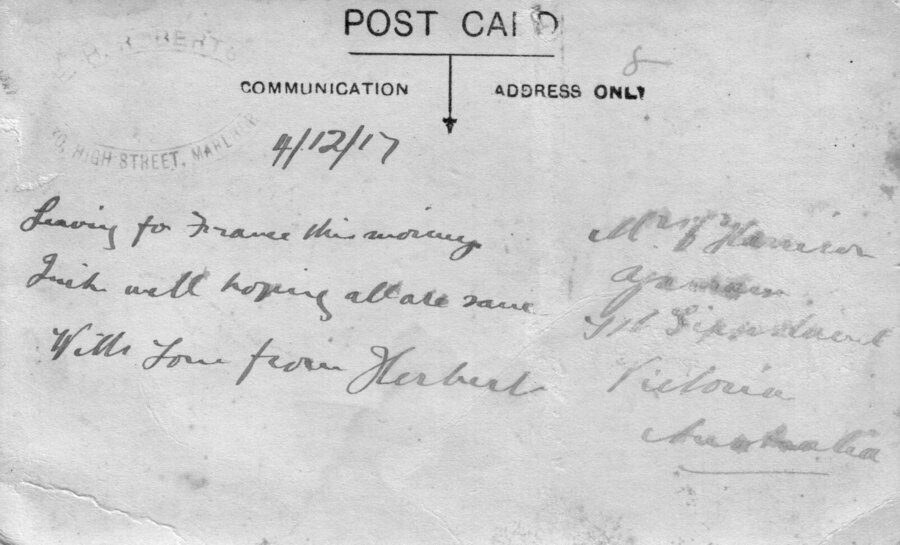
Herbert James Harrison enlisted in Melbourne in 1916, joining the Australian Imperial Force during one of the most demanding periods of the First World War. Like many young Australians, he underwent initial military training at home before embarking for overseas service, leaving Australia on 19 February 1917, aboard the troopship HMAT Ballarat.
The journey to England was long and hazardous. Troopships travelled in convoy across the Indian Ocean, around Africa, and into the increasingly dangerous waters of the English Channel, where German submarines were actively targeting Allied shipping. On 25 April 1917—Anzac Day—Bert's ship was torpedoed by a German U-boat. Despite the seriousness of the attack, the evacuation was carried out in an orderly manner and all troops and crew survived. Bert and his fellow soldiers were rescued and landed safely in England, an early brush with danger before even reaching the battlefield.
After arrival, Bert continued training in England, but his progress was interrupted by illness. In July 1917, he was hospitalised with bronchial pneumonia at Tidworth military hospital. Conditions in the crowded and damp training camps often led to respiratory illness, particularly among men who had just completed long sea voyages. His recovery delayed his deployment to France, meaning he joined his battalion later than many of his peers.
By late 1917, Bert reached the Western Front in Belgium during the closing stages of the Battle of Passchendaele. This campaign is remembered for its appalling conditions—deep mud, constant shellfire, and waterlogged trenches. His time in this phase of the war was likely limited, and he was again hospitalised briefly in France in December 1917, reflecting the harsh and unhealthy environment soldiers endured.
In early 1918, Bert became fully engaged in front-line service as the war entered a critical phase. During the German Spring Offensive, Allied forces were pushed back across the Somme region, and Australian units were rushed south to help halt the advance. Bert served in the defensive fighting around Amiens, where conditions were dangerous and relentless. Unlike the static trench warfare of earlier years, this period involved rapid movement, constant pressure, and frequent exposure to artillery, machine-gun fire, and sniper activity.
On 4 June 1918, while serving in the line near Villers-Bretonneux in northern France, Bert was severely wounded, suffering gunshot wounds to the head and back. This occurred during ongoing front-line operations in a contested sector north of the town, where Australian troops were holding and improving positions in preparation for further action. His wounds were serious and resulted in his evacuation from the battlefield, marking the end of his active service at the front.
Following medical treatment and recovery, Bert was returned to Australia in December 1918 aboard the Somerset shortly after the end of the war.
His service reflects a journey marked by interruption and adversity: surviving a submarine attack, enduring illness, experiencing the harsh conditions of the Western Front, and ultimately being seriously wounded in action. While his time in combat was not long, it coincided with one of the most dangerous phases of the war, and his contribution forms part of the broader story of Australian soldiers who served under extreme conditions during World War I.
Post-War Life and Family
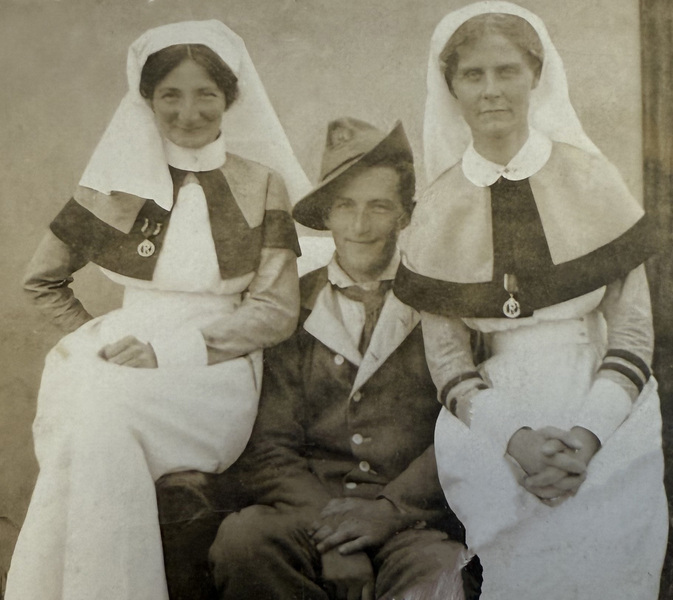
On 30 October 1918, Bert married Ada Grace Gordon at the RC Cathedral, Ashley Place, London, in the Our Lady Chapel. Ada, a Scottish Red Cross nurse, had first met Bert while he was recovering from pneumonia at Tidworth Military Hospital in 1917. They returned together to Australia in December 1918, settling at Yarram, Victoria, where their first son, John, was born soon after.
The transition to civilian life was difficult. Ongoing effects from his wounds, recurrent illness, and periods of depression made steady employment challenging.
They selected land at Whitelaws Track in the early 1920s, but it was virgin country—isolated and demanding—and progress was slow. Seeking family support, Ada returned to South Africa with her sister Meta in the mid‑1920s, where their second son, Hunter, was born. As she prepared to return to Australia, Ada was struck down with malaria and pneumonia and died in December 1925.
Following Ada’s death in 1925, the family was divided: John and Hunter remained in South Africa and were raised by Ada’s sisters Meta, Elizabeth and Anne. Unfortunately, Bert was never to see his sons again, although he kept contact and sent monetary support. Hunter and his wife Helen and son Desmond would later migrate to Australia. They were sponsored by Elvira Hair (nee Harrison - Hunter and John Patrick’s half sister). John Patrick’s son, Patrick and his wife Mandy also made Australian their new home.
As Bert struggled to re-establish himself, he travelled to visit his uncle, David “Doc” Reville, an original selector at South Dulacca, Queensland. Choosing to remain there, he began a new chapter in the district. It was here he met Flora Fluerty, whose family were also original selectors at “Kingston,” South Dulacca.
Bert faced challenges with the ongoing effects of recurrent illness and periods of depression. Even so, Bert worked where he could—dairy farming, carpentry, running a butcher’s shop, blacksmithing—relying heavily on Flora’s support to sustain the family.
This period marked a turning point in Bert’s life - a move away from the hardships of post-war Victoria to the challenges of a new beginning in Queensland, shaped by resilience, loss and the determination to rebuild. With Flora, Bert went on to raise five children: Elvira, Roy, Howard, Sheila, and Thomas.
After settling in Queensland, Bert and Flora brought with them the dairying knowledge and farming skills they had developed in Victoria, but the harsher climate and more unpredictable conditions of the Queensland bush demanded constant adaptation. Success depended on resilience, innovation, and hard work. They gradually adjusted their methods to suit the tougher environment, experimenting with more suitable cattle breeds and steadily purchasing additional land to expand and improve their livelihood. Despite the hardships of rural life, they placed great importance on education and opportunity for their children, believing strongly in the value of hard work, learning, and community contribution. Through perseverance, the family became recognised as pioneers within the local rural community. Beyond the farm, they played an active role in district life, serving as executive members and supporters of many local organisations and clubs, helping to shape the social and community fabric of the region for future generations.
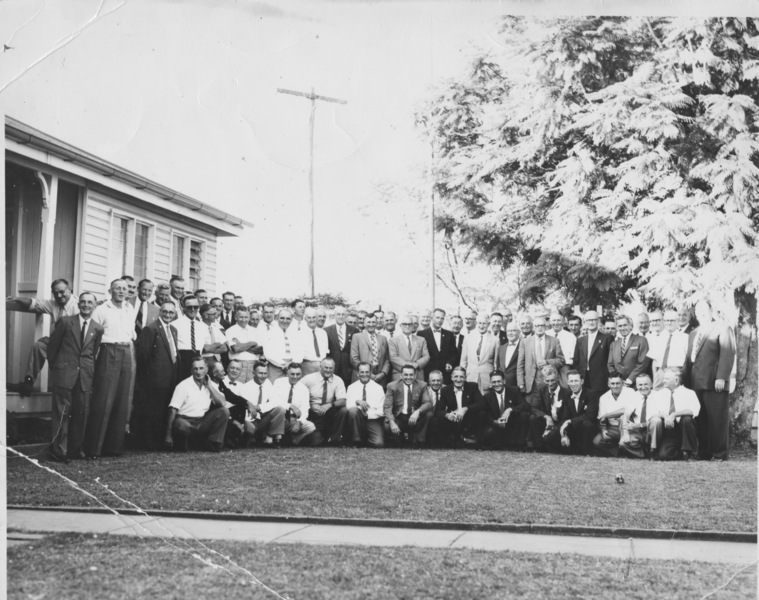
Bert was a founding member of the Dulacca R.S.S.A.I.L.A. in 1938, and was later awarded life membership in recognition of his service, reflecting a lifelong commitment to comradeship and community.
Reflection
Bert’s life traces a hard line from war to endurance. He survived a torpedo attack before reaching the front, endured illness, fought in a critical phase of the war, and carried severe wounds for the rest of his life. The years that followed were marked by loss, separation, and constant effort to rebuild. Yet through it all, he continued—working where he could, moving where opportunity allowed, and building a family across two chapters of his life. His story is not one of ease, but of persistence in the face of hardship, and it reflects the broader experience of many who returned from war and quietly carried its consequences for the rest of their days.
Julie Gundry.
Research Sources
Primary Records
National Archives of Australia (NAA). Service Record: Herbert James Harrison (No. 3074), Australian Imperial Force. Digitised record series B2455.
Australian War Memorial (AWM). Embarkation Roll and Nominal Roll: 37th Battalion, AIF.
Australian War Memorial (AWM). Unit War Diaries: 37th Battalion (1917–1918).
Maps and Operational Material
British War Office. Trench Maps, France Sheet 62D (June 1918 editions).
Australian War Memorial (AWM). Operational and message maps: Morlancourt / Villers-Bretonneux sector, June 1918.
Official Histories
Bean, C.E.W. Official History of Australia in the War of 1914–1918. Volumes covering the Western Front, 1917–1918.
Contextual and Supporting Sources
Australian War Memorial (AWM). Background articles on the 37th Battalion and Western Front campaigns.
Secondary histories of HMAT Ballarat (A70) and Australian troopship movements, 1917.
Prepared for family history and commemorative use. Dates, locations, and events are based on official records and corroborated historical sources available through the National Archives of Australia and the Australian War Memorial.
This document was prepared with the assistance of artificial intelligence tools to support the synthesis and organisation of historical material. All information has been reviewed against the primary and secondary sources cited above, and responsibility for interpretation and presentation rests with the author/compiler.



Click images to start slideshow.