



TYQUIN, Ignatius William
| Service Number: | QX24304 |
|---|---|
| Enlisted: | 24 October 1941 |
| Last Rank: | Sergeant |
| Last Unit: | 2nd/5th Armoured Regiment |
| Born: | Brisbane, Queensland, Australia , 15 January 1919 |
| Home Town: | Brisbane, Queensland |
| Schooling: | St. Laurence's College, Brisbane, Queensland, Australia |
| Occupation: | International Rugby League player/captain |
| Died: | 17 August 1999, aged 80 years, cause of death not yet discovered, place of death not yet discovered |
| Cemetery: | Not yet discovered |
| Memorials: |
World War 2 Service
| 24 Oct 1941: | Involvement QX24304 | |
|---|---|---|
| 24 Oct 1941: | Enlisted | |
| 24 Oct 1941: | Enlisted Australian Military Forces (WW2) , Sergeant, QX24304, 2nd/5th Armoured Regiment | |
| 27 Mar 1946: | Discharged | |
| 27 Mar 1946: | Discharged Australian Military Forces (WW2) , Sergeant, QX24304, 2nd/5th Armoured Regiment |
Help us honour Ignatius William Tyquin's service by contributing information, stories, and images so that they can be preserved for future generations.
Add my storyBiography contributed by John Dinnen
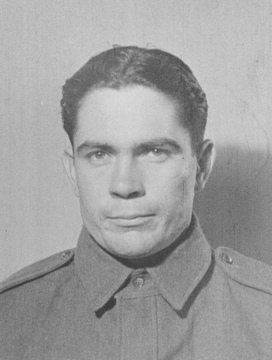
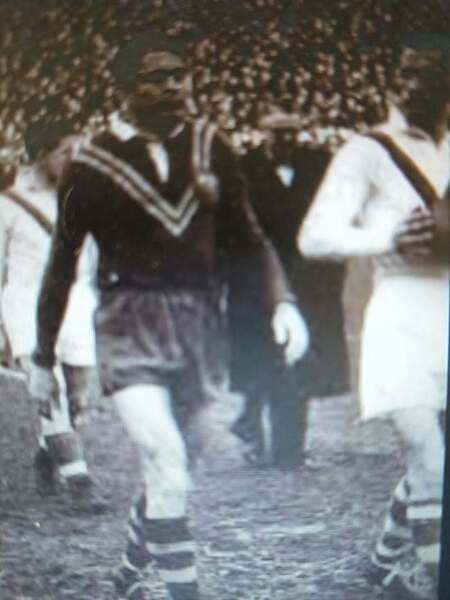
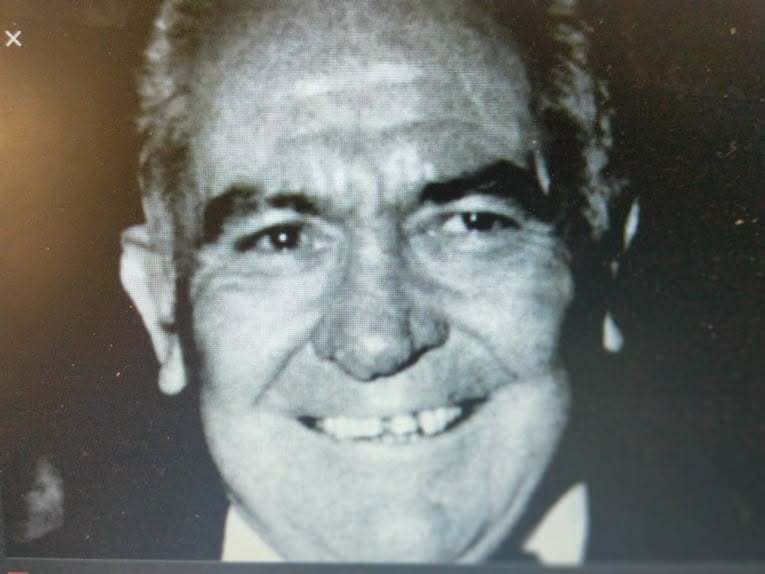
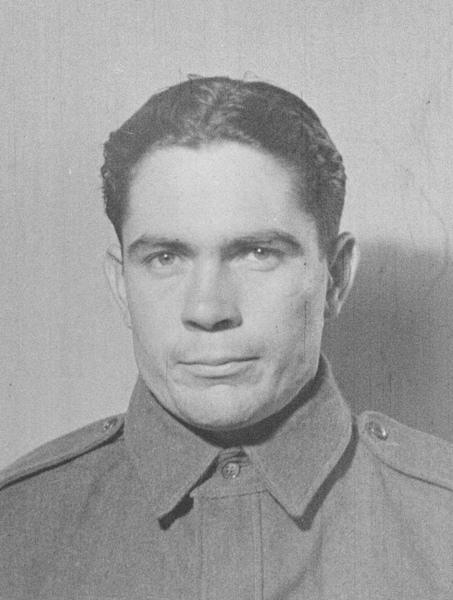
Ignatius William (Bill) Tyquin - Australian Rugby League Kangaroo number 248 and Captain.
Bill was born in 1919, coincidentally during the last global pandemic, the Spanish influenza. Bill was the first of three Tyquin brothers to attend Laurie’s from the nearby suburb of West End.
Tom learnt his rugby league at Laurie’s and this was complemented by playing at South’s in Brisbane as a junior, upon leaving school Tom began to build a very impressive name in the game. He was a tall, strong and very fast of foot Lock forward and was clearly establishing a reputation in 1940 when Brother’s Rugby League offered Tom a position and so he bit the bullet and switched clubs for only one year prior to accepting receiving and accepting an offer from the St. George Dragon’s in Sydney.
Upon arriving in Sydney for the 1941 season Bill made an immediate impact and was subsequently selected for the New South Wales team (two caps), he made his debut for NSW on Saturday the 19th of July 1941 at the Gabba Cricket Ground in a 23-16 victory of Queensland.
Remarkably, in that match he lined up against another SLOB in Doug McLean, a former Wallaby and member of the McLean Rugby dynasty, notably Doug scored a try in that match.
The NSWRL season culminated in the Grand Final on the 30th of August 1941 in front of a crowd of 39,957 at the Sydney Cricket Ground. Early in the match the 22 year old Bill formed the opinion that the Eastern Suburbs Prop and fellow NSW representative Jack Arnold was intent on inflicting a torrent of pain upon the St. George backs, but Bill was equally intent upon stopping that from happening.
Evidently Bill did a thorough job and ended up being ordered off the field by Referee Tom McMahon for an early shower after a one on one ‘donnybrook’ with Arnold.
Bill's efforts were not in vain, as St George went on to defeat the Minor Premiers by 31-14.
That match was Bill’s last NSWRL for five years as World War 2 intervened and whilst the European theatre was raging the Japanese had every country in South-East Asia and beyond worried about their intentions in the region.
Meanwhile Bill, as an elite athlete could have elected to remain playing his chosen sport however that was not the style of man he was, and in October 1941 he enlisted in the Australian Army, he was assigned to the 2/5th Armoured Regiment and was quickly promoted to the rank of Sergeant (QX24304).
As the war was coming to a conclusion in 1945 and whilst still enlisted in the army, Bill successfully set about resurrecting his League career and was selected for the Queensland representative team (12 caps).
In 1948 Bill was belatedly selected for the Australian team for the test series against New Zealand, he made his debut on the 29th of May, 1941 in front of 55,866 Sydneysiders for the first test which was won by the Kiwi’s 21-19.
The second test was held at the Gabba on the 12th of June and in front of a crowd of 23,013 spectators Bill scored a try to help the Kangaroo’s to a 13-4 victory and the series was drawn.
Later that year the 1948 Kangaroo touring team to England and France was named and Bill was honoured to be named the Vice-Captain.
After suffering losses in the first two Tests against Great Britain and rumours of disharmony in the team, Bill took over the Captaincy of the touring party for the third Test and the subsequent tour of France. Under Bill’s leadership the Kangaroo’s returned a 9-1 win/loss ratio after the poor start in England, of 39 matches Australia won 26 and lost 13.
This arduous tour over a six month period took a significant physical and mental toll on the players and it was a great credit to Bill’s leadership that the team finished the tour with such success on and off the field and is a measure of his ability to bring people together and inspire them to achieve highly.
Furthermore, at the conclusion of the tour each of the 28 players and two managers received a 420 Pound bonus for their efforts.
To give context to Bill’s character it must be mentioned that he captained Australia during a period of Australian social history marked by rampant religious bigotry. Being an Irish Catholic he had his work cut out to manage and foster the plethora of relationship challenges in the team, the Queensland/New South Wales rivalry, the Catholic/Protestant/Freemason bigotry, and even left/right wing opposing political philosophies.
In charting a clear path for the team through this mess of prejudice, Bill demonstrated that he was indeed a fine leader of men.
When Bill finally called an end to his representative Rugby League playing career it had spanned a period of 15 years, from 1941 until 1956 which was of course interrupted by his service in Worl War Two. A detailed playing record is available at .
In his post playing career Bill was a leader in the Queensland Rugby League administration as well as being elected the President of South Rugby League Club for a record 21 consecutive terms. Such was his standing at South’s, in 1978 the home of the Souths Magpies at Davies Park in West End was officially named the Bill Tyquin Oval.
Away from Rugby League Bill was also the President of the Queensland Irish Association for many years and was later awarded the Order of Australia Medal for services to Rugby League and his community.
Sadly, Bill died at the age of 80 on the 17th of August, 1999, a life well lived.
Click images to start slideshow.