

BALL, Hugh Hanley Ephrus
| Service Number: | 966 |
|---|---|
| Enlisted: | 10 February 1915, Horsham, Victoria |
| Last Rank: | Sergeant |
| Last Unit: | 9th Light Horse Regiment |
| Born: | Horsham, Victoria, Australia, 14 February 1896 |
| Home Town: | Pimpinio, Horsham, Victoria |
| Schooling: | Not yet discovered |
| Occupation: | Farmer |
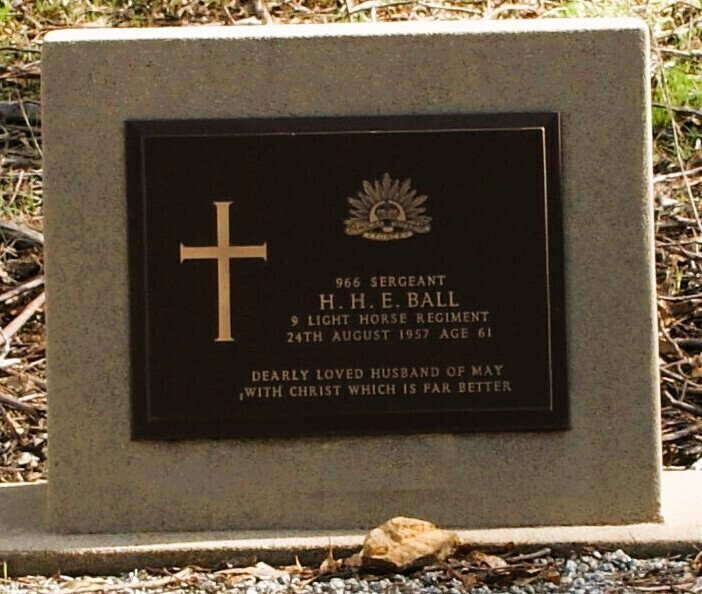
| Died: | Natural causes (war service related), Castlemaine, Victoria, Australia, 24 August 1957, aged 61 years |
| Cemetery: |
Castlemaine General Cemetery, Victoria |
| Memorials: | Pimpinio War Memorial |
World War 1 Service
| 10 Feb 1915: | Enlisted AIF WW1, Private, 966, Horsham, Victoria | |
|---|---|---|
| 22 May 1915: | Involvement AIF WW1, Private, 966, 9th Light Horse Regiment, Enlistment/Embarkation WW1, --- :embarkation_roll: roll_number: '2' embarkation_place: Melbourne embarkation_ship: HMAT Afric embarkation_ship_number: A19 public_note: '' | |
| 22 May 1915: | Embarked AIF WW1, Private, 966, 9th Light Horse Regiment, HMAT Afric, Melbourne | |
| 5 Aug 1915: | Involvement AIF WW1, Private, 966, 9th Light Horse Regiment, The August Offensive - Lone Pine, Suvla Bay, Sari Bair, The Nek and Hill 60 - Gallipoli | |
| 27 Aug 1915: | Wounded Private, 966, 9th Light Horse Regiment, ANZAC / Gallipoli, Bomb wound (right forearm amputated, both eyes removed) | |
| 3 Jul 1916: | Discharged AIF WW1, Sergeant, 966, 9th Light Horse Regiment |
Help us honour Hugh Hanley Ephrus Ball's service by contributing information, stories, and images so that they can be preserved for future generations.
Add my storyBiography contributed by Stephen Brooks
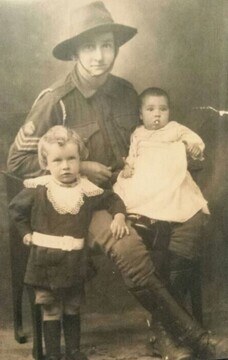
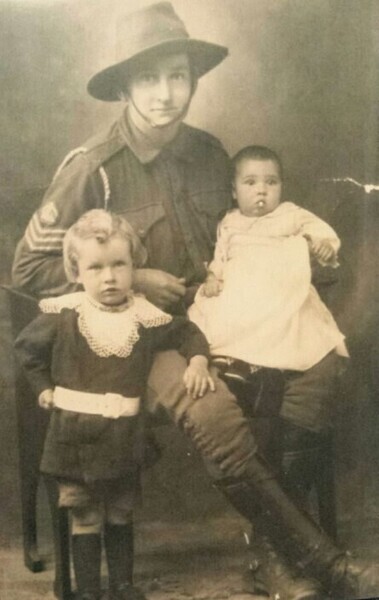
Hugh Ball, a farmer from Horsham, enlisted at age 19.
He was a member of the 9th Light Horse and joined his unit on Gallipoli on 5 August 1915.
The 9th Light Horse Regiment suffered 50 per cent casualties attacking Hill 60 on 27 August 1915. Ball was severely wounded during this action, sustaining injuries caused by a “bomb explosion while in open ground between the trenches on Hill 60 - Gallipoli”
Story has it that Sergeant Ball had jumped out of the trenches to rescue two wounded mates who lay in open ground, and he dragged them both back into the trenches. The explosion that injured him so badly was caused by a jam tin bomb prematurely igniting as he was in the act of throwing.
Sergeant Ball lost one eye in the explosion, a week later the other eye was removed and his right forearm was amputated, pieces of shell were removed from the right side of his face, his ear was badly damaged and he had wounds to both lower limbs. At this stage he had been evacuated to Alexandria Hospital, in Egypt.
Upon his return to Australia in October 1915 he spent time in hospital having numerous surgeries and it was whilst in hospital Sergeant Ball learned how to read and write in braille.
In 1921 he married Roberta May Kennedy and they eventually settled in Castlemaine running a poultry farm in Harcourt.
He passed away during 1957, at 61 years of age, and his war service attributed to early death.
The Melbourne Argus published an article on 27 November 1915 regarding the return of Hugh Ball to Melbourne, under the heading,
THE BLIND COME HOME.
“Pathetic incidents were witnessed at the Base Hospital yesterday when Hugh Ball, one of the wounded soldiers who returned from Gallipoli on Saturday, was met by his father and mother, who had come from Horsham to take him home. He has been granted two weeks leave of absence; then he must return to the hospital, for he is not yet convalescent.
Ball has had both eyes shot out, he lost his right hand through the premature explosion of a bomb that he was in act of throwing, and he has received other severe injuries that he has not yet recovered from. This fortnight's leave was given to him because the medical authorities thought that the change at the quiet country home might brace him up for what he may yet have to undergo. For the rest, he needs no bracing up; sightless, irretrievably maimed (at 19 years of age!), he was always one of the most cheerful patients in the hospital, and his comrades testify to the splendid unflagging optimism that he showed throughout the voyage. There are stories of his courage and resource on the field of battle. One can well believe them; and if as it has been said of old, the gods love the sight of a brave man struggling with misfortune, then young Ball, sight-less, helpless, but altogether unconquered, must have won a higher need of praise than we can give him.
Hardest of all that he has gone through, perhaps, was that meeting yesterday. The father, old and white-haired, broke down when he took his blind young son into his arms. The mother, younger and stronger, was quiet and self-contained. Only her white, drawn face (which the son could not see) showed what she was suffering.
The ladies who are providing the refreshment stall at the hospital had sent for a taxi-cab, and they gave the little party a heartfelt "send-of." Just before they left, another patient, Tom Skehill, of Hamilton, who has also lost the sight of both eyes, was led up that he might shake hands with his friend in misfortune. It is not so easy for two newly blind men to shake
hands and it was only after some fumbling about in the darkness that overshadowed them that then hands met. ‘Good-bye, Hughie,’ ‘Good-bye, Tom, old boy.’
The chief actors in this little scene, reaching blindly for each other's hands, and each smiling into the face that he would never see again, were quite cheerful, but there were few dry eyes amongst those who were looking on.”

Click images to start slideshow.