








DONALDSON, Alexander Everitt
| Service Numbers: | 2650, 2650A |
|---|---|
| Enlisted: | 23 July 1915 |
| Last Rank: | Private |
| Last Unit: | 9th Infantry Battalion |
| Born: | Ipswich, Queensland, Australia, 28 October 1890 |
| Home Town: | Crows Nest, Toowoomba, Queensland |
| Schooling: | Charleville State School, Queensland, Australia |
| Occupation: | Labourer / Butcher |
| Died: | Killed in Action, Belgium, 20 September 1917, aged 26 years |
| Cemetery: |
No known grave - "Known Unto God" Menin Gate Memorial, Ypres, Flanders, Belgium |
| Memorials: | Australian War Memorial Roll of Honour, Crows Nest (Qld) War Memorial, Ipswich Men and Women of Ipswich WW1 Roll of Honour, Ypres (Menin Gate) Memorial |
World War 1 Service
| 23 Jul 1915: | Enlisted AIF WW1, Private, 2650, 25th Infantry Battalion | |
|---|---|---|
| 21 Oct 1915: | Involvement Private, 2650, 25th Infantry Battalion, Third Ypres, --- :embarkation_roll: roll_number: '15' embarkation_place: Brisbane embarkation_ship: HMAT Seang Bee embarkation_ship_number: A48 public_note: '' | |
| 21 Oct 1915: | Embarked Private, 2650, 25th Infantry Battalion, HMAT Seang Bee, Brisbane | |
| 27 Feb 1916: | Transferred AIF WW1, Private, 9th Infantry Battalion | |
| 20 Sep 1917: | Involvement Private, 2650A, 9th Infantry Battalion, Third Ypres, --- :awm_ww1_roll_of_honour_import: awm_service_number: 2650A awm_unit: 9th Australian Infantry Battalion awm_rank: Private awm_died_date: 1917-09-20 |
Help us honour Alexander Everitt Donaldson's service by contributing information, stories, and images so that they can be preserved for future generations.
Add my storyBiography contributed by Ian Lang
# 2650A DONALDSON Alexander Everitt 9th Infantry Battalion
Alex Donaldson was born in Ipswich to parents Alexander and Sarah Donaldson on 28th August 1890. The family moved to Charleville for a time where young Alex attended school. By the time that Alex presented himself for enlistment in Brisbane on 23rd July 1915, the Donaldson family had settled at Crows Nest where Alex, according to his mother, was an assistant in a butchery.
Alex advised the recruiting officer he was 23 years and 9 months old. He also stated his occupation as labourer. Alex was sent to the Enoggera Camp where he was placed into the 6th reinforcements of the 25th Battalion which had recently departed for Egypt. While in camp, Alex was charged with drunkenness, being absent for a day and using insulting language towards a non-commissioned officer. He was fined two days pay and spent 3 days confined to camp. The 6th reinforcements proceeded to Pinkenba Wharf by train on 21st October 1915 where they embarked on the “Seeang Bee” for overseas. The reinforcements arrived in Egypt on 22nd December, just as the last Australians were being evacuated from Gallipoli. Alex had to spend some time in isolation at the 4th Auxiliary Hospital with a case of mumps which he had probably acquired in the cramped conditions of the troop transport.
Once discharged from hospital, Alex joined the great pool of reinforcements that had been assembled in the various camps in Egypt. The 25th Battalion had been evacuated from Anzac in December 1915 and after a short stay on the island of Lemnos returned to Egypt. There was an excess of reinforcements to fill the few places within the 25th but another Queensland Battalion, the 9th, which had been on Gallipoli since the first day (it was one of the first battalions ashore) had an urgent need for reinforcements to fill vacancies created by the expansion of the AIF in which half of the 9th’s original strength were transferred to a new battalion, the 49th. On 27th February 1916, Alex transferred to the 9thBattalion, part of the 3rd Brigade of the 1st Division AIF, where Alex was taken on strength in “A” Company. To avoid confusion with another man in the ninth with the same regimental number, the letter A was added to Alex’s number.
The 9th Battalion, then with almost half its number being reinforcements without any battle experience, departed Egypt on 27th March 1916 and crossed the Mediterranean to Marseilles, thence to the northern sector of the Western Front by train.
General Haig, Supreme British commander on the Western Front planned a major offensive in the south of the British sector through the Somme River valley for the summer of 1916. It was to be the largest battle of the war so far, and was timed to commence on the 1st of July. The attack was a disaster, with the British suffering 60,000 casualties on the first day, 20,000 of whom were killed. In spite of this, Haig was determined to push on and the 1st, 2nd and 4th Australian Divisions were moved south from the Armentieres sector to Albert to take part in the Somme offensive.
The village of Pozieres half way between Albert and Bapaume, sat on the highest point of that part of the Somme battlefield. The 1st Division was tasked with capturing the village on 22nd July. Under an artillery barrage, the men of the 3rd Brigade on the right of the advance line rose up from the start tapes and moved towards the ruined village. During this advance, Alex received a gun shot wound to his left upper arm. With his arm roughly bandaged and in a sling, Alex reported to a casualty clearing station where he was assessed before being placed on an ambulance train and taken to a hospital on the French coast. On 27th July, Alex boarded the Hospital Ship “Panama” which took him to Southampton and then onto another ambulance train to Wales where he was admitted to the 3rd General Western Hospital in Cardiff on 29th July. The speed with which Alex was taken out of the battle to hospital is a credit to the British medical authorities and the thoroughness of the transportation planning which had been put in place in anticipation of the Somme campaign.
X-Rays confirmed that the wound to Alex’s arm had been caused by a bullet passing through his arm without damaging bone or nerves and within a few weeks he was sufficiently recovered to be discharged to a furlough, probably with his arm still in a sling. During his two weeks of leave, Alex would have had the opportunity to see the sights in and around London. Alex reported back to the 9th Training Battalion at Larkhill on Salisbury Plain on 23rd September. Six days later, Alex was on his way back to France from Folkstone. He reported to the Australian Infantry Depot at the huge British training and transit base at Etaples where he was to spend two months. On the 2nd December, Alex rejoined his battalion.
During the winter of 1916/17, the Germans constructed a 150 kilometre long defensive barrier, which the British labelled the Hindenburg Line, some distance to the east of their previous positions astride the Somme. As the German forces began a strategic withdrawal to this new position in the spring, the British forces (including the AIF) cautiously followed, taking the towns of Flers and Bapaume along the way. By the first week in April, elements of the 5th British Army, which included two Australian divisions, came up against the Hindenburg defences at Bullecourt. For six weeks, the British commanders put divisions into the fight in an attempt to break through the Hindenburg Line, but the line held firm. Failure at Bullecourt convinced the British command of the futility of throwing division after division against the formidable defences of the Hindenburg Line. Attention turned to the Ypres salient in Belgian Flanders.
The 1st Division AIF which had endured much of the heavy fighting in the latter half of 1916 at Pozieres, Mouquet Farm and then Bullecourt was scheduled for a long period of rest to allow the battalions to spend time taking on reinforcements, training and engaging in inter battalion sports while in comfortable billets well behind the front in Northern France.
The plan for the 3rd Battle of Ypres (most often referred to as Passchendaele) was based on a strategy of “Bite and Hold” in which small strategic gains, supported by overwhelming firepower, would provide a series of stepping stones along the line of the Ypres to Menin Road. The first phase involved driving the enemy off the Messines Ridge, which the Germans had occupied since 1914. This was achieved after heavy fighting and the firing of nineteen underground mines on 7th June 1917. The 1st Division of the AIF was not part of the Messines battle but their turn would come soon.
On the 9th September, the men of the 1st and 2nd Divisions moved up to positions at Steenvoorde in preparation for an assault on Westhoek Ridge, the high ground that overlooked the main route east from the ruined city of Ypres; the Menin Road. A detailed model of the ground had been constructed with planks suspended over the sand so that officers and NCOs could familiarize themselves with the battlefield and the objectives they were expected to take. The 9thBattalion, in conjunction with the other three battalions of the 3rd Brigade were in position at the jumping off tapes by midnight of the 19th and at 5:40am on the 20th, a massive artillery barrage crashed down on the German positions. As the barrage crept forward, the infantry kept pace, dealing with isolated pill boxes and gun emplacements whose occupants quickly surrendered. The Battle of Menin Road was, by the terms of the time, a great success. During the advance, it was reported that Alex Donaldson was killed in action on 20th September 1917.
Upon hearing the news of her son’s death, Sarah Donaldson wrote to the authorities asking for further information; but none was forthcoming. She eventually received a parcel of Alex’ personal belongings which included a wallet, scarf, sewing kit, photos and cards and a testament. Alex Donaldson’s remains were never located. He is one of 56,000 men, including 6,178 Australians, who served in the Ypres campaign and who have no known grave. Their names are inscribed on the Portland Stone Tablets under the arches of the Menin Gate Memorial to the Missing in the City of Ypres. Since the 1930s, with only a brief interval during the German occupation during the Second World War, the City of Ypres has conducted a ceremony at the Memorial at dusk each evening to commemorate those who died in the Ypres campaign. The ceremony concludes with the laying of wreaths, the recitation of the ode, and the playing of the Last Post by the city’s bugle corps. This ceremony draws large crowds daily.
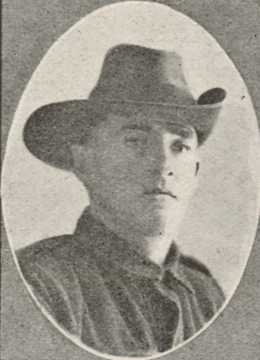
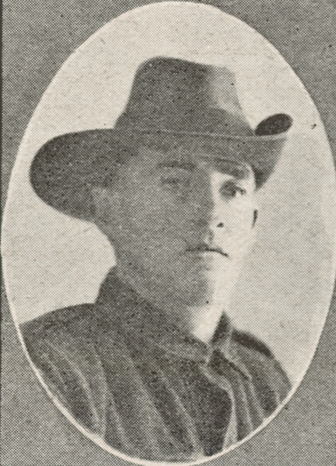
Click images to start slideshow.