







VAN GELDER, Malcolm Montague
| Service Number: | 17021 |
|---|---|
| Enlisted: | Not yet discovered |
| Last Rank: | Major |
| Last Unit: | 17 Construction Squadron |
| Born: | Gunnedah, New South Wales, Australia, 4 June 1933 |
| Home Town: | Not yet discovered |
| Schooling: | Warwick High School, Queensland, Australia |
| Occupation: | Army Officer |
| Died: | Cancer, Clare Holland House, 5 Menindee Drive, Barton, Australian Capital Territory (ACT), 16 August 2008, aged 75 years |
| Cemetery: | Not yet discovered |
| Memorials: |
Vietnam War Service
| 26 May 1964: | Involvement Australian Army (Post WW2), Major, 17021 | |
|---|---|---|
| 26 May 1964: | Involvement Australian Army (Post WW2), 17021, Official Duty (from 4 Field Troop, Far East Land Force). | |
| 26 Feb 1968: | Involvement Australian Army (Post WW2), Major, 17021 | |
| 3 Sep 1968: | Involvement Australian Army (Post WW2), Major, 17021, 17 Construction Squadron |
Help us honour Malcolm Montague Van Gelder's service by contributing information, stories, and images so that they can be preserved for future generations.
Add my storyBiography contributed by Hamish Robson
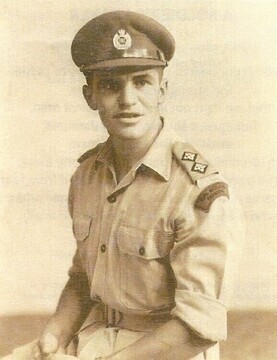
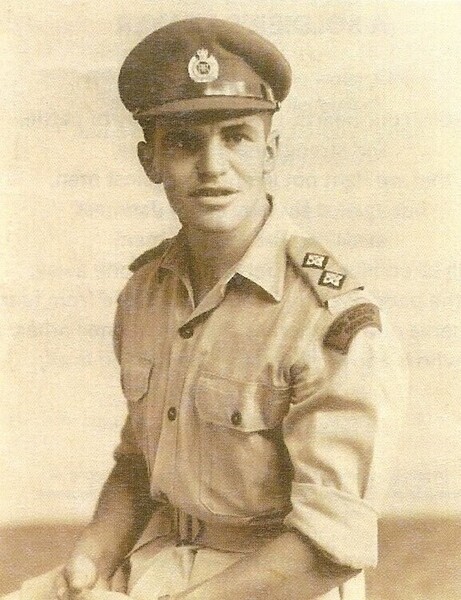
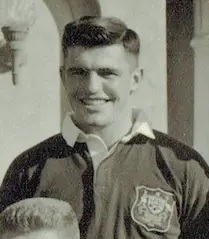
Malcolm van Gelder described himself as the “Least Classic of the Classic Wallabies”. Perhaps he should have described himself as a “Unique Classic Wallaby” as he not only represented four ‘States’ but he scored a try in each Wallaby game he played! He is also looked on as the first Wallaby from South Australia, but more on this later.
Malcolm was born in Gunnedah on 4 June 1933. He was educated at Warwick High School, Queensland, where he played rugby as a hooker and breakaway in the Warwick Schools’ Competition. Following high school, in 1952, Malcolm entered the Royal Military College Duntroon, where he was a member of the Duntroon First XV and played as a breakaway during his four years at the College.
Duntroon played in the ACT competition and were Canberra Cup and Premiership winners in 1955. He had regular games against Combined GPS, Combined High Schools (CHS), Hawkesbury Agricultural College and City Colts. While at Duntroon, Malcolm played for ACT in representative matches, including the inaugural match against Victoria in 1955. Before graduating as an officer in the Australian Army from Duntroon, Malcolm excelled at sports, gaining full colours for Rugby, Tennis and Boxing. He was the RMC middleweight boxing champion in 1952, and on graduation in 1955, he was awarded an Honour Cap for Rugby.
Following graduation from Duntroon, with the rank of Lieutenant in the Royal Australian Engineers (RAE), and while still in the army, Malcolm studied at the University of Adelaide during 1956-7, when he played for Adelaide University, for South Australia, and for Australian Combined Universities. Adelaide University won the Kanematsu Cup, for Southern States Universities, at inter-varsity in Hobart in 1956, and also beat Queensland University prior to a narrow loss against Sydney University.
In 1956-1957, playing for South Australia, he participated in the 1957 Wallaby trials for the team which went to Britain, France, USA and Canada, following earlier matches in the Southern States carnival in Perth, and matches against NSW Country and the New Zealand All Blacks.
In 1958, he returned to Canberra and played with Easts, and it was from Easts that he was selected for the 1958 Wallaby tour of New Zealand. The records show that he was selected as a breakaway from South Australia, the confusion resulting from the fact that he was from South Australia at the time of the 1957 trials. He has been explaining this anomaly ever since!
Strictly, he is the ACT’s first Wallaby. The lead-up to Wallaby selection in 1958 was quite a saga. After completing his studies at the University of Adelaide, he was posted on attachment to Papua New Guinea Public Works Department; returned to Canberra as an engineering instructor at RMC Duntroon, played with Easts and was selected for the ACT, NSW Country and the NSW II team in the Wallaby trials.
In 1958, he played for ACT against the visiting Maori, for NSW Country against NSW City and for NSW II against Victoria.
In the 1958 Wallaby tour, Malcolm played in only two provincial games, against Southland and Manawatu, scoring a try in both games. He may have played more games, but for injury and the fact that the team captain, “Chilla” Wilson and John Thornett were also breakaways in the team.
On return to Australia, and following promotion to Captain, Malcolm spent six months at the Maralinga atomic test site. He then attended the School of Military Engineering at Casula, NSW, and played for Parramatta in the Sydney competition.
In 1959, he played for North Harbour against South Harbour on 23 May at North Sydney Oval.
Malcolm was posted to 21 Construction Squadron at Puckapunyal, Victoria, in 1959, but missed out on playing against the visiting Lions on residency grounds. But one week later, he played for Victoria against Australian Universities, and in later years was selected for Victoria on several occasions, playing against NSW in 1959 and 1961.
While in Victoria, Malcolm played for Harlequins and the Army through to 1961. He played for a Combined Victoria/South Australia team against New Zealand at Orange in 1960 when he scored a try running past the famous All Black full-back Don Clarke. He played for Victoria against Queensland at Manly Oval on 11 May 1961, winning 14-9, but then losing to NSW 28-12. During his time in Victoria, there was a lively Army and inter-service rugby competition; 21 Construction Squadron challenged and defeated 17 Construction Squadron, the premier Sydney army team. Wallaby Danny Kay was also in the 21 Construction team and represented Victoria at this time.
Later in 1961, Malcolm was posted to Darwin on attachment to the RAAF 5 Airfield Construction Squadron and essentially disappeared from the mainstream rugby scene.
From 1961 to 1964, he played a number of service games in Darwin, Malaysia, and Thailand.
In 1965, he returned to Australia as a Major and represented Combined Services against the visiting Californian Bears and against several State teams, including Queensland, ACT and Victoria.
In 1965, he captained the Australian Combined Services in Canberra against the Prime Minister’s XV. The rival captain was John Thornett, by now an old acquaintance!
In 1966, while attending the Army Staff College at Queenscliff, Victoria, Malcolm played for Geelong in the Victorian second-grade competition. His team won the competition.
In 1967, while at Holsworthy, NSW, he played with 23 Construction Squadron, which he commanded, in the NSW Army competition and coached the Army team in the Inter-Services competition.
From 1968 to 1969, Malcolm commanded 17 Construction Squadron in Vietnam and played inter-unit rugby regularly. In 1969, Malcolm returned to Canberra and finished his playing career with East’s third grade, at the age of 39, and played his last game against RMC Duntroon on the same ground where he had started training at RMC in 1952 at the age of 18.
His playing career turned to refereeing in 1969; he refereed 466 games in the ACT, but he can also count other games as a referee in the UK, USA, Papua New Guinea, and Korea. He refereed his last game in Seoul in 2001, aged 68, in a game between Seoul ex-pats and a US Army team. What a saga, what a career!
Malcolm enjoyed his army career, which included overseas service in Malaysia, Thailand and Vietnam. His specialty was airfield construction; his non-engineering responsibilities included personnel planning and military tactics instruction.
In 1972, Malcolm, with the rank of Lieutenant Colonel, resigned from the Regular Army after 20 years' service and joined the Commonwealth Public Service as a Second Division Officer in the Department of Territories and later the Department of the Capital Territory. He continued army service in the Active Reserve with the rank of Lieutenant Colonel until 1983.
In 1989, he resigned from the Public service to become a lawyer, having graduated in law in 1986.
In 2007, he continued to practise as a solicitor as a sole practitioner. While in the Army and in the Public Service, Malcolm completed a number of military and academic programs. These include: 1955 - graduated Royal Military College, Duntroon; 1956 - Bachelor of Technology (Civil Engineering), University of Adelaide; 1964, Bachelor of Economics, University of Queensland; 1966 - Graduate, Staff College, Queenscliff, Victoria; 1967 - Master of Engineering Science, University of New South Wales; 1970 - Graduate, Joint Services Staff College, Canberra; 1974 - Master of Economics, Australian National University, Canberra; 1986 - Bachelor of Laws, Australian National University, Canberra; and 1990 - Fellow. Institution of Engineers Australia.
Malcolm married Helen Nicholson in Melbourne in 1959. Their three sons, James, Timothy, and Nicholas, had their rugby introduction in the ACT Junior Rugby competition, playing for Easts, and then at Tudor House, Moss Vale. All three played rugby at Geelong Grammar School, Victoria, with two, James and Timothy, going on to play for Ormond College and Melbourne University. Nicholas played and toured with the Victorian Schoolboys, meeting up with Ewen McKenzie. He went on to St Paul’s College, Sydney University, where he continued his rugby under the watchful eye of Tony Abbott. After graduation, he played with Sydney University, Old Haileyburnians in London, and in South Korea.
Biography contributed by Hamish Robson
Service;
Branch; Army
Service Number; 1/7021
Corps; Royal Australian Engineers
1952; Enlisted into the Royal Military College, Duntroon, Canberra
1955; Graduated from RMC
1958; Promotion to Captain
1959; Posted to the 21 Construction Squadron at Puckapunyal, Victoria
1959; Represented the Australian Army in Rugby Union
1961; Posted to the RAAF 5 Airfield Construction Squadron, Darwin
1961 – 1964; Posted to Malaya and Thailand
1964 26 May -04 Jun 1964 ; Official Duty (from 4 Field Troop, Far East Land Force)
1965; Promoted to Major
1965; Represented the Combined Services and also Captained the team
1968 26 Feb - 27 Aug 1968; Posted to the 17th Construction Squadron, Vietnam
1968 3 Sep - 25 Feb 1969; Posted to the 17th Construction Squadron, Vietnam
1968 – 1969; Commanded 17 Construction Squadron in Vietnam
1972; Rank Lieutenant Colonel
1972; Resigned from the Regular Army
1983; van Gelder continued army service in the Active Reserve with the rank of Lieutenant Colonel

Click images to start slideshow.